
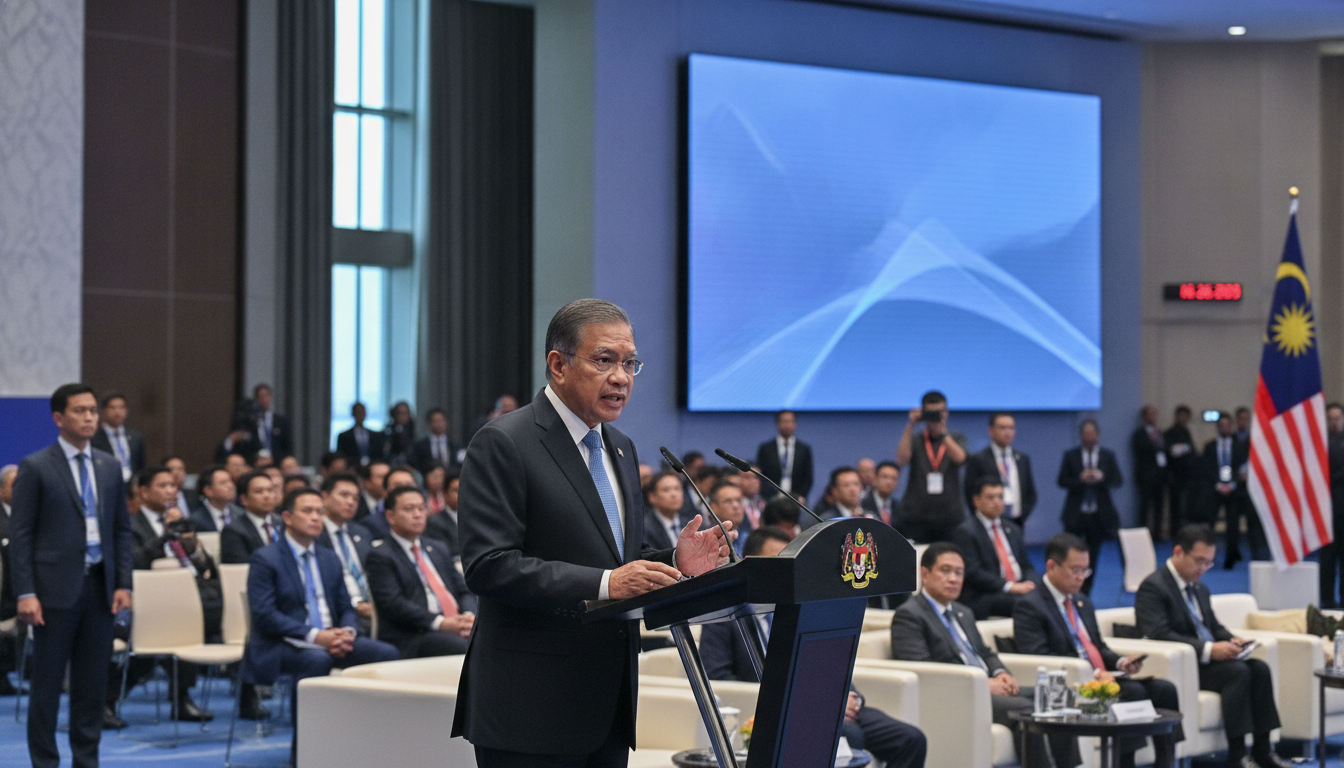
Anwar warns against “weaponizing interdependence” at Future of Asia forum
Malaysian PM Anwar Ibrahim warned at the Future of Asia forum in Tokyo that “weaponizing interdependence” by major powers is creating strategic vulnerabilities for middle-ranking nations.
TOKYO — Malaysian Prime Minister Anwar Ibrahim on June 10, 2026, told delegates at Nikkei’s Future of Asia forum that the growing interconnectedness of trade, finance and technology was being turned into a geopolitical tool. He said weaponizing interdependence is making middle-ranking nations more exposed to coercion and sudden economic shocks.
Anwar’s core warning in Tokyo
Anwar framed his remarks around the idea that economic ties once thought to bind states together are now being used as instruments of pressure by dominant powers. He argued that reliance on integrated supply chains and cross-border financial links can become leverage in disputes, increasing the risk for countries that lack the heft to deter coercive measures.
The prime minister pointed out that middle-ranking nations, which often sit between major blocs, face particular difficulty navigating competing demands and sudden shifts in access to markets, technology and capital. He urged a reassessment of how global interdependence is governed to reduce asymmetric vulnerabilities.
How interdependence is being used as leverage
Observers at the forum noted several mechanisms by which interdependence can be weaponized, including sanctions, export controls, restrictions on critical technologies, and targeted financial measures. These tools can disrupt trade flows, constrain access to inputs and raise the cost of doing business for affected countries.
Panelists said that even non-binding pressure, such as reputational campaigns or secondary sanctions risks, can force firms and governments to choose sides, with outsized effects on nations that depend on a limited set of partners. Anwar’s remarks highlighted the political as well as economic dimensions of these dynamics.
Risks faced by middle-ranking nations
Middle-ranking nations, as Anwar described them, typically have substantial economic linkages but lack the diplomatic or military clout to shape outcomes when tensions escalate. That creates a scenario where economic integration can translate into strategic fragility rather than mutual strength.
The prime minister warned that such states may be forced into costly hedging strategies, diverted investment, or abrupt policy shifts that undermine long-term development. He emphasized that the burden falls disproportionately on countries that are neither small islands nor great powers, but occupy an intermediate position in the global order.
Policy options and resilience measures discussed
Speakers at the forum outlined a range of responses policymakers can consider to blunt the effects of weaponized interdependence. These included diversification of supply chains, deepening regional trade links, and strengthening domestic regulatory frameworks to shield critical sectors.
Others advocated for multilateral mechanisms to limit extraterritorial application of domestic measures and to create predictable rules for technology transfer, investment screening and export controls. Experts stressed that resilience requires both economic and diplomatic tools, with clearer dispute-resolution pathways to reduce the incentive for coercion.
Implications for ASEAN and regional cooperation
Anwar’s intervention underscored the challenge for Southeast Asian countries that have cultivated ties with multiple major partners. ASEAN members must balance economic opportunity with strategic autonomy, a point several regional delegates reiterated after the speech.
The forum discussion suggested growing support for pragmatic cooperation on supply-chain mapping, shared stockpiles for critical inputs, and joint legal protections for cross-border trade and investment. Such measures, supporters said, could help middle-ranking nations maintain open markets while reducing sudden exposure to geopolitical pressure.
Business and investor reaction
Business leaders at the forum warned that policy uncertainty tied to weaponized interdependence could deter long-term investment and slow the restructuring of global value chains. Many firms said they were already reallocating sourcing and production but that such moves are costly and time-consuming.
Investors highlighted the importance of transparent government signals and consistent rules to underpin commercial decisions. They argued that predictable multilateral frameworks, combined with targeted resilience policies, would be more effective than unilateral defensive measures that fragment markets.
The debate in Tokyo reflected wider anxieties about how global economic integration will evolve amid intensifying strategic competition. Anwar’s appeal for a recalibrated approach to interdependence adds a prominent voice to calls for policies that protect sovereign space without abandoning the gains of open trade.
As governments and businesses digest the implications, the question will be whether regional and global institutions can move quickly enough to provide the legal and practical tools middle-ranking nations need to navigate a more fraught international economy.

