
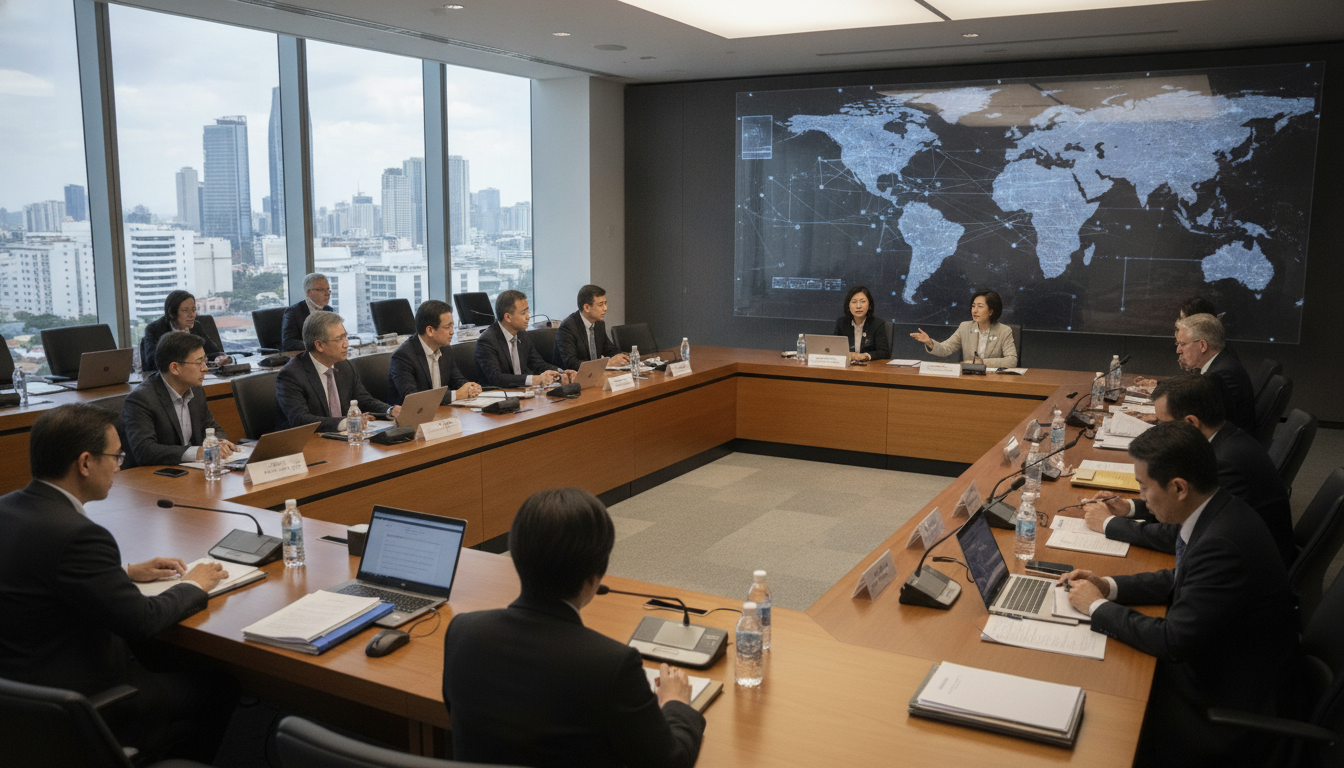
Multilateral institutions face ‘hard time’, ADB chief Masato Kanda warns
Masato Kanda says multilateral institutions face a ‘hard time’ amid geopolitical strain and AI disruption, urging ADB and WTO to anchor international order.
Tokyo — Asian Development Bank President Masato Kanda warned that multilateral institutions face a "hard time" as geopolitical tensions and rapid advances in artificial intelligence reshape global cooperation. Kanda made the remarks during a public appearance in Tokyo, stressing that established organizations must adapt to maintain stability in the international system. His comments highlight rising concern across Asia about the capacity of global institutions to respond to simultaneous political and technological challenges.
Kanda frames the challenge
Kanda told attendees that the combined pressures of great-power rivalry and technological disruption are testing the resilience of multilateral institutions. He argued that these strains risk fragmenting the rules-based system that underpins trade, development finance and cross-border cooperation. The ADB president called for renewed commitment by member states to preserve and update existing frameworks rather than abandon them in favor of unilateral approaches.
Kanda’s remarks reflect a wider anxiety among policymakers that institutions created in a different era may be ill-equipped to handle faster, more complex crises. He emphasized that adaptation will require clearer mandates, faster decision-making and closer coordination among agencies. The message is both a warning and an appeal for pragmatic reforms to prevent erosion of international governance.
AI disruption intensifies governance gaps
Officials at the forum noted that artificial intelligence is not only an economic opportunity but also a governance challenge that transcends borders. Rapid AI development is accelerating shifts in labor markets, information flows and strategic competition, creating new risks that existing treaties and multilateral rules do not fully address. Participants said multilateral institutions must develop norms and technical capacities to manage these cross-cutting effects.
Experts at the event highlighted gaps in regulation, surveillance and ethical standards around AI that could amplify geopolitical tensions if left unchecked. They called for multilateral platforms to coordinate standards, share best practices and invest in capacity building for vulnerable economies. Without such cooperation, disparities in technological readiness could widen, undermining regional stability and development goals.
ADB and WTO urged to anchor the order
Kanda singled out the Asian Development Bank and the World Trade Organization as central institutions that should help anchor the international order. He suggested these bodies could provide practical avenues for cooperation by focusing on investment, trade rules and infrastructure finance that knit regional economies together. Reinforcing core institutions, he said, would reduce incentives for nations to pursue protectionist or unilateral policies.
Policy-makers at the forum stressed that the ADB’s role in financing development projects gives it leverage to promote regional integration and resilience. Meanwhile, they argued, the WTO remains essential for preserving predictable trade relationships even as it faces its own governance challenges. Strengthening both institutions, they said, would send a signal that multilateralism can be modernized rather than discarded.
Funding and governance reforms on the agenda
Delegates discussed concrete reforms to give multilateral institutions greater agility and legitimacy. Suggestions included streamlined decision-making processes, improved transparency, and diversified funding models that reduce overreliance on a few major donors. Several speakers also urged mechanisms to ensure developing economies have a stronger voice in setting priorities and access to technical assistance.
The conversation acknowledged political limits: reform will require consensus-building among countries with divergent interests. Still, proponents argued that incremental changes—such as faster disbursement mechanisms for emergency finance or clearer guidelines for public-private partnerships—could yield meaningful improvements. They emphasized that practical reforms can restore confidence more quickly than broad institutional redesigns.
Regional implications for Asia’s development
Analysts said the outcome of current debates will have immediate consequences across Asia, where development needs remain large and geopolitical competition is intensifying. Countries in the region rely on multilateral finance and trade frameworks to support infrastructure, climate adaptation and poverty reduction. A breakdown in cooperative mechanisms, they warned, would complicate efforts to mobilize private capital and coordinate cross-border projects.
Asian governments present at the forum signaled willingness to engage in reform conversations while protecting their strategic autonomy. The prevailing view among commentators was that Asia’s resilience will depend on a mix of stronger regional arrangements and revitalized global institutions. Achieving that balance, they said, requires technical work and diplomatic patience.
Kanda’s warning has reignited debate over how multilateral institutions should evolve to remain effective in a fast-changing world.
Observers expect a series of follow-up meetings among development and trade officials in the coming months to translate broad principles into actionable steps. The urgency of the task is clear: without timely reform and renewed cooperation, the institutions that have underpinned decades of economic growth and stability could face lasting erosion.

