
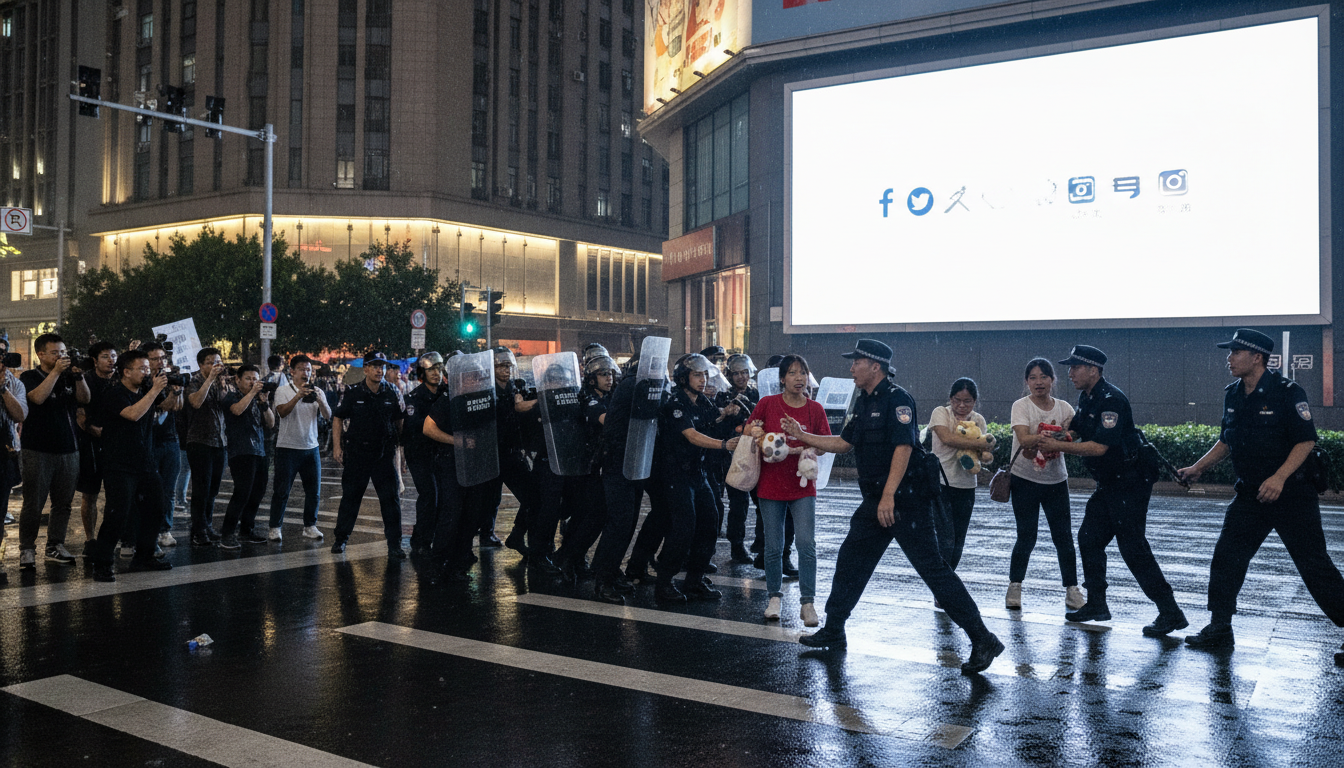
Chongqing protest over alleged animal abuse dispersed as censors remove social media posts
A rare Chongqing protest over alleged animal abuse was dispersed by police, with social media posts taken down by censors as public concern about animal welfare grows across China.
Police Disperse Crowd in Chongqing
An unusual Chongqing protest convened this week after allegations of animal abuse drew local residents into the streets. Police moved swiftly to disperse the crowd, underscoring authorities’ low tolerance for any mass demonstration, even when centered on social or animal welfare issues. Witnesses described officers arriving promptly and directing people to leave the area, with no large-scale violence reported.
Local law enforcement framed the dispersal as a public order measure, saying gatherings should follow administrative procedures rather than form spontaneously. The quick response reflects an established pattern in which Chinese authorities prioritize social stability over public demonstrations. The dispersal has nevertheless drawn attention because the catalyst was a civilian grievance related to pet welfare.
Online Posts Removed by Censors
In the hours after the Chongqing protest began, social media posts documenting the event and the alleged abuse were removed or became difficult to find. Netizens reported that images and videos were taken down, and trending threads disappeared from major platforms. The pattern of deletion highlights the role of digital curation in shaping public debate on sensitive incidents.
State censors commonly limit circulation of content that could spur mass gatherings or challenge local administration, and posts about the Chongqing protest appear to have been treated as such. The removals hindered independent verification of details and limited the flow of firsthand accounts beyond private messaging groups. Activists and observers warned that rapid censoring can stifle public discussion on issues like animal welfare that are increasingly important to many citizens.
The Allegations at the Center
Public anger that sparked the Chongqing protest centered on an alleged case of animal abuse that residents said warranted greater scrutiny. Those who rallied called for an investigation and for accountability from parties implicated in the incident. Organizers framed the demonstration as a plea for basic animal protections rather than confrontation with authorities.
Details of the allegations circulated initially on social platforms and through word of mouth, but official confirmation remained limited after the censoring of posts. Local veterinary and animal welfare advocates urged a transparent inquiry, saying clarity would help calm community concern and demonstrate that such complaints are taken seriously.
Pet Ownership and Rising Public Concern
Pet ownership in China has grown substantially in recent years, and the presence of companion animals in urban households has sharpened public sensitivity to mistreatment. Many Chinese city dwellers now view pets as family members, and cases involving cruelty can provoke strong emotional responses. The Chongqing protest is part of a wider trend in which social norms around animal care are evolving rapidly.
This cultural shift has coincided with a more vocal civil society on specific causes, including stray animal management and welfare standards. While formal legal protections for animals remain limited compared with some other countries, grassroots activism and public pressure are increasingly visible. The convergence of emotional engagement and social media has made incidents involving animals more likely to attract attention and action.
Local Officials’ Response and Messaging
Local officials in Chongqing emphasized the need for lawful channels to register complaints and discouraged spontaneous assemblies. Municipal statements framed the dispersal as necessary to maintain public safety and prevent disruption. Officials also stressed that relevant departments would handle allegations according to existing regulations, though they provided few immediate details.
Transparency advocates and some participants pressed authorities for clearer communication about any investigations and for access to findings. Public confidence in official follow-up will be a key factor in whether similar protests arise in the coming weeks. Observers noted that how local authorities balance prompt law enforcement with credible inquiry will shape public perception of their responsiveness.
Wider Implications for Public Protests and Advocacy
The handling of the Chongqing protest highlights tensions between evolving civic concerns and the state’s approach to public expression. When social grievances intersect with issues that command widespread sympathy — such as animal welfare — authorities face a dilemma between managing order and addressing substantive demands. The rapid censoring of online material further complicates efforts to build trust and ensure accountability.
Civil society actors and NGOs watching the case say it could influence how future advocacy is organized, possibly pushing groups toward more formalized channels or private networks. At the same time, the episode illustrates the power of social media to raise awareness quickly, even when platforms attempt to limit circulation.
The Chongqing protest offers a window into changing public priorities in Chinese cities and the constraints those priorities confront. As pet ownership continues to rise and incidents of alleged mistreatment spur public reaction, officials will increasingly need to reconcile stability concerns with the demand for transparent responses and clearer animal welfare measures.

