
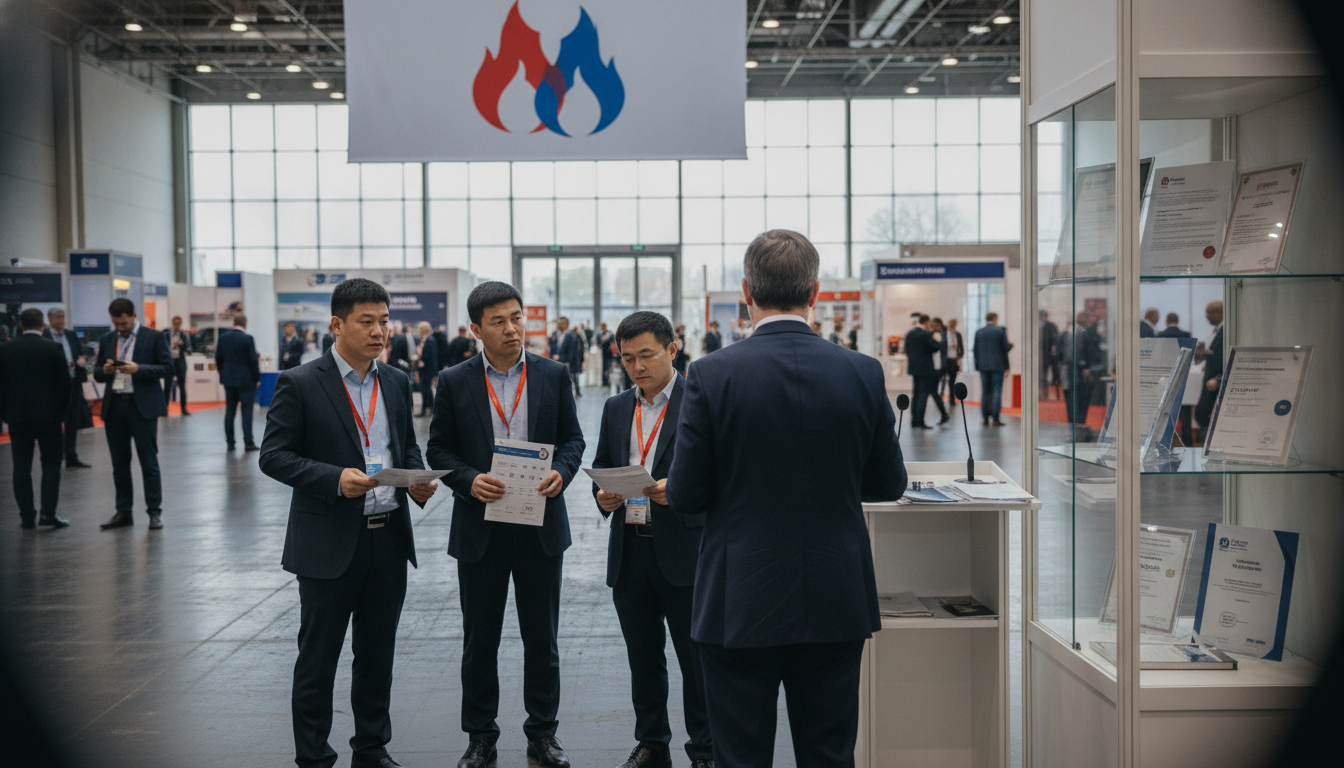
Chinese firefighting equipment surge at Hanover fair stalls over EU certification hurdles
Chinese firefighting equipment manufacturers showed up in force at the Hanover trade fair, but lack of EU certification is slowing market entry and growth.
Nearly 300 Chinese companies showcasing firefighting and civil protection products converged on Hanover, Germany, seeking to expand sales across Europe. Chinese firefighting equipment was a dominant presence on the show floor, with exhibitors displaying extinguishers, protective gear and systems tailored for new risks such as lithium‑ion battery fires. Despite strong interest from manufacturers, many firms told buyers and regulators that absence of recognized EU approvals and testing capacity is preventing large‑scale market access. The imbalance between supply and accepted certification highlights the regulatory and commercial challenges that will shape the sector’s expansion in Europe.
Scale of Chinese participation at the Hanover exhibition
Nearly three hundred exhibitors from China focused specifically on firefighting and civil protection, marking the largest non‑EU contingent at the event. Company delegations ranged from family‑run manufacturers to larger industrial groups, all targeting dealer networks and institutional contracts across the continent. The visible presence included product demonstrations, multilingual brochures and tents dedicated to export strategy, signaling clear intent to compete in European markets. Organizers and attendees noted the sheer volume and variety of Chinese offerings compared with previous years.
Product innovations aimed at European needs
Exhibitors emphasized product lines developed for recent hazards, including extinguishers designed for lithium‑ion battery fires and modular systems for urban rescues. Shaoxing‑based Xingli Safe Way Fire, for example, promoted an extinguisher marketed specifically for battery‑related fires, positioning it for use in logistics hubs and transport fleets. Several firms highlighted adaptations for EU operating conditions, such as corrosion‑resistant materials and multilingual labeling. Despite these technical upgrades, companies acknowledged that innovation alone will not guarantee acceptance without formal conformity documentation.
Certification shortfalls and regulatory roadblocks
A recurring theme at the fair was the gap in European‑accepted certifications, including CE marking supported by appropriate conformity assessment for firefighting apparatus. Many Chinese manufacturers lack testing from accredited EU laboratories or notified bodies, a prerequisite for procurement by public agencies and major private buyers. Differences in technical standards and fragmented national approval regimes across EU states add complexity for exporters seeking a single market approach. Buyers and distributors at the show repeatedly cited certification as the principal obstacle to placing larger orders.
Commercial strategies and attempts to bridge the gap
Faced with regulatory barriers, several Chinese firms are pursuing partnerships with European distributors and testing houses to secure local approvals. Some companies are establishing small sales offices or representatives within the EU to handle documentation, aftersales service and warranty obligations required by buyers. Others plan staged market entry, targeting non‑regulated consumer segments first while building dossiers for public procurement. Trade mission organizers said training sessions on EU standards and conformity procedures were among the most attended seminars during the exhibition.
European procurement concerns and safety expectations
European purchasers and safety officials at Hanover stressed that firefighting equipment must meet long‑term reliability and interoperability standards. Procurement officers said incident liability and lifecycle maintenance, not just product price, drive purchasing decisions for municipal and industrial contracts. Recent high‑profile incidents involving lithium batteries have made institutions more cautious and more demanding about validated performance in specialized scenarios. Insurers and certifiers present at the fair urged buyers to require independent third‑party testing and traceable production records as conditions of contract.
Market outlook and implications for trade relations
If Chinese manufacturers overcome certification hurdles, they could undercut prices and expand supply for European buyers facing tight budgets. That potential has prompted discussions among industry associations about harmonizing testing pathways and creating clearer channels for overseas suppliers to obtain EU conformity evidence. At the same time, European producers warn that rapid market entries without equivalent oversight risk undermining safety standards and long‑term confidence. Regulators are likely to respond with stricter enforcement of certification rules and closer scrutiny of imported firefighting equipment.
Chinese firefighting equipment companies attending the Hanover fair demonstrated strong commercial ambition, but concrete progress in European markets will hinge on accredited testing, local service capabilities and compliance with complex national and EU rules. Until those certification and procurement conditions are widely met, many firms will remain on the perimeter of large public contracts despite abundant product supply and growing technical know‑how.

