
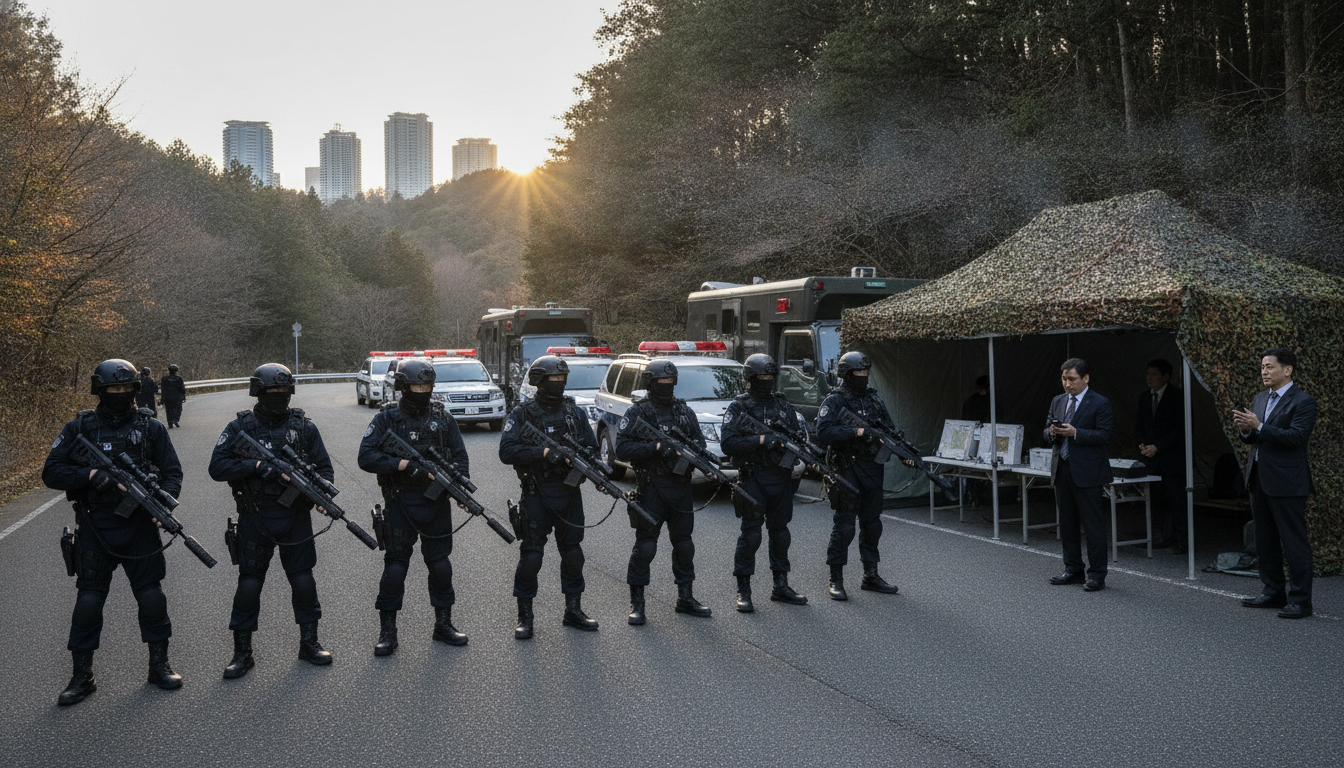
Tokyo police set up bear removal project team to back municipalities amid rising urban sightings
Tokyo police on June 12, 2026 launched a bear removal project team to assist municipalities when hunters cannot, coordinating rifle units and local authorities.
Tokyo Metropolitan Police on June 12, 2026 formed a bear removal project team to respond to growing reports of bear sightings within the capital’s outskirts. The new project team is intended to support municipalities and hunting groups when local capacity for emergency culling is exceeded, and it will coordinate deployment of rifle-equipped units if needed.
Metropolitan Police Launch Bear Removal Project Team
The Metropolitan Police Department announced the creation of a project team on June 12 to address multiple recent bear sightings in Tokyo suburbs. The team brings together police station chiefs responsible for affected districts, a specialized rifle unit known as the shooting team, and senior MPD officials to coordinate responses.
Officials described the unit as complementary to municipal efforts rather than a first-responder replacement, stepping in when city or town governments cannot carry out emergency culling. The formalization reflects concern over bears appearing in residential areas and the need for a structured, rapid response.
Stations Included and Areas of Concern
The project team includes officers from six police stations where bear sightings have been reported: Ome, Itsukaichi (Akiruno), Fussa, Hachioji, Takao (Hachioji), and Minami-Osawa (Hachioji). These locations lie on the western fringe of Tokyo, where housing developments meet forested terrain that can harbor bears.
Local authorities and the Metropolitan Police will exchange sighting information and coordinate responses to incidents in neighborhoods and commercial zones. The presence of bears in populated districts has raised public safety concerns and prompted calls for clearer operational roles between municipalities, hunting associations and the police.
When Police May Authorize Rifle Units
Under the new arrangement, municipalities retain primary responsibility for emergency gun hunts and culling operations, often carried out by hunting associations and contracted professionals. The Metropolitan Police project team will act when those parties are unable to respond or when officials judge police intervention is necessary to protect public safety.
In such cases, the superintendent-general may order the deployment of on-scene teams that include the rifle-capable shooting unit. The shooting team is trained to use rifles in limited circumstances; deployment decisions will be driven by immediate risk to residents and the inability of local responders to mitigate that risk.
Training and Capacity-Building for Rifle Teams
Metropolitan Police sources said the shooting unit has begun exercises tailored to bear incidents, reflecting the different tactical and safety considerations involved in wildlife culling. Training covers target identification, engagement protocols to minimize risk to bystanders, and coordination with municipal authorities and wildlife experts.
The project team is also intended to improve communication channels between police, local governments and hunting associations, streamlining requests for assistance and clarifying when police will take operational command. Authorities emphasized that public safety remains the primary objective, with efforts to avoid needless harm while removing animals that pose imminent danger.
National Policy Change and Regional Responses
The Metropolitan Police move follows a national regulatory change that allows police officers to use rifles to cull bears in specific circumstances. The National Police Agency revised rules this year after a surge in bear-related incidents, particularly across the Tohoku region, prompting several prefectural forces to establish similar project teams.
By June 10, the National Police Agency reported that nine prefectural police headquarters — including Hokkaido, six Tohoku prefectures, Niigata and Nagano — had already set up comparable teams to coordinate bear responses. The MPD’s initiative aligns Tokyo with that broader national effort to fill response gaps where hunting groups cannot reach or where immediate public safety demands a swift, organized intervention.
Local governments and hunting associations remain the first line of action, and the police have framed their role as supportive. Still, the recent legal changes and the establishment of project teams underscore how authorities nationwide are adapting to an increase in human-wildlife encounters.
Public information campaigns have accompanied operational changes in some regions, urging residents to report sightings promptly, secure garbage and food attractants, and avoid approaching animals. Municipalities near forested zones have also reviewed evacuation routes, school safety plans and protocols for notifying residents.
The Metropolitan Police said it will monitor bear activity and civilian reports closely and adjust deployment criteria as needed to balance rapid response with safety. Residents are advised to report sightings to their local police station and follow municipal guidance on avoiding wildlife encounters.
Authorities stressed that the project team’s creation is a precautionary measure to ensure coordinated action if and when bear sightings pose an immediate threat to people or property.

