
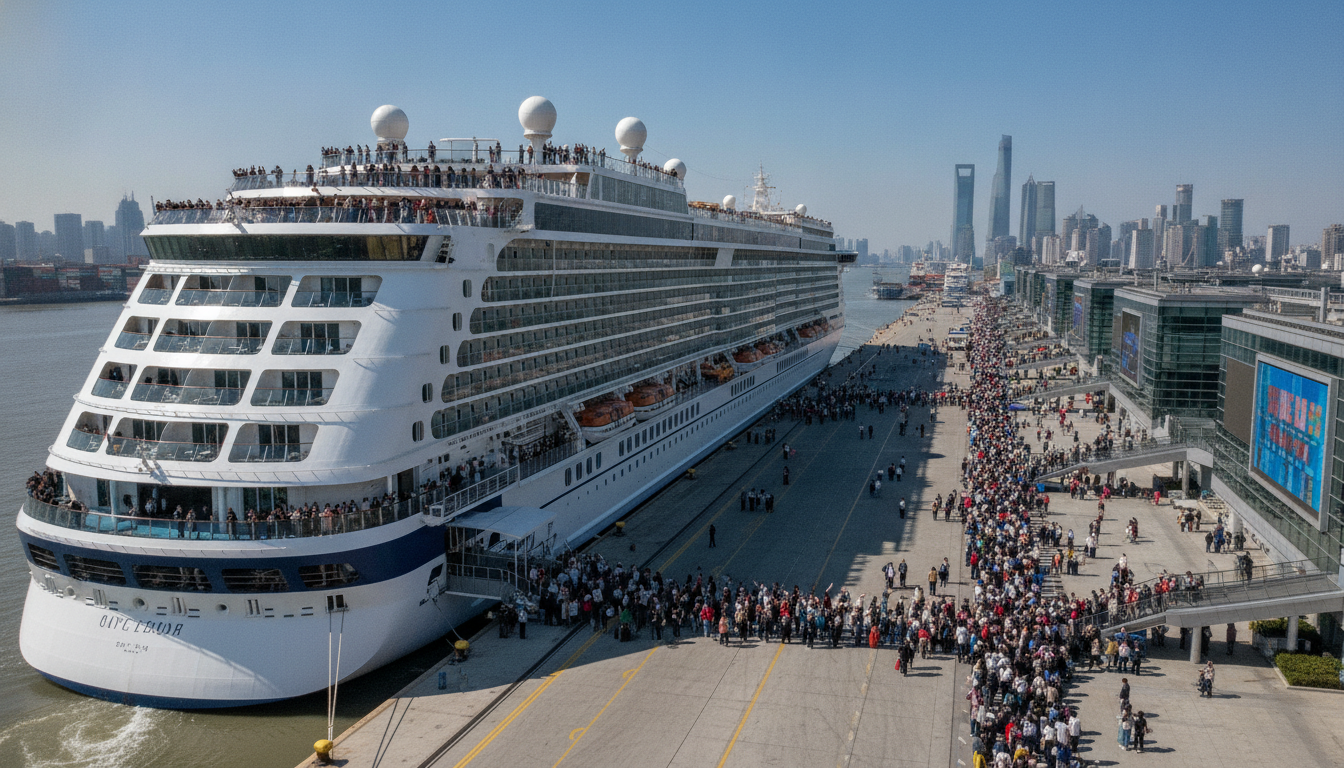
China pushes large cruise ships to ease holiday crowding and spur consumption
Beijing is promoting large cruise ships as a tool to boost domestic consumption and relieve overcrowded land destinations, while supporting domestic shipbuilding and port upgrades.
China is intensifying efforts to promote large cruise ships as part of a broader push to revive domestic consumption, officials and industry sources say. The policy aims to channel tourists toward sea itineraries to reduce congestion at popular inland sites and to stimulate spending in coastal cities. Authorities are also highlighting the shipbuilding sector and port infrastructure upgrades as complementary economic benefits.
Policy Push to Boost Consumption Through Cruise Travel
Chinese policymakers have framed large cruise ships as a demand-side lever to lift weak household spending. Government guidance and local initiatives have encouraged travel operators to develop longer, more relaxed sea itineraries aimed at mainstream holidaymakers.
Officials argue that shifting some holiday traffic from land to sea can spread visitor flows across regions and over time, a measure they expect will sustain spending on transport, dining and leisure. The strategy also dovetails with fiscal and credit support for tourism businesses hit by subdued consumer sentiment.
Adora Magic City Illustrates Domestic Shipbuilding Ambitions
The deployment of vessels such as Adora Magic City — described by industry sources as China’s first domestically built large cruise ship with capacity for roughly 5,200 passengers — is being cited as proof of concept. The ship’s presence in ports like Dalian signals both demand for homegrown vessels and a growing industrial capability.
Shipyards and related manufacturers stand to gain from new orders and retrofitting contracts as cruise travel expands, supporting local employment and supply chains. Industry analysts note that a sustained pivot to large cruise ships would require continued investment in construction, maintenance and crew training.
Ports and Local Authorities Reconfigure for Sea Tourism
Ports along China’s northeastern and southern coasts are racing to adapt terminals, customs procedures and shore services to accommodate larger passenger volumes. Upgrades include expanded berths, streamlined immigration processing and enhanced passenger facilities intended to shorten turnaround times.
Local governments are pairing infrastructure investment with promotional campaigns to attract domestic cruise operators and foreign lines seeking regional itineraries. Municipalities expect increased spending not only on-board but in nearby cities, where excursions, restaurants and retail outlets benefit from disembarking passengers.
Industry Players Expand Itineraries and Onboard Services
Travel agencies and cruise companies are crafting itineraries that prioritize relaxation and lower-density shore excursions to address overcrowding at inland attractions. Operators are marketing multi-day cruises with diversified ports of call, cultural programming and family-focused amenities to broaden appeal.
Onboard, cruise lines are emphasizing retail, dining and entertainment offerings that keep passenger spending within the ship ecosystem while offering optional excursions tailored to smaller groups. These commercial strategies are aimed at both enhancing the passenger experience and maximizing per-trip revenue.
Economic Rationale and Risks Highlighted by Analysts
Proponents say large cruise ships can generate multiple economic multipliers: spending on tickets, onboard purchases, local tours, and increased demand for food, fuel and maintenance services. They also point to job creation in maritime construction, hospitality and logistics as concrete benefits.
However, analysts warn of practical constraints, including the environmental footprint of larger fleets, capacity limits at some ports, and the need to cultivate qualified maritime staff. There is also uncertainty over whether shifting travel patterns will be sufficient to materially change overall consumer sentiment in the near term.
Crowding Relief and Regional Redistribution of Tourists
A central justification for the policy is easing crowding at often-overrun tourist sites during peak travel periods. By offering sea-based alternatives, authorities aim to redistribute tourist flows away from inland hotspots and toward lesser-visited coastal cities.
Tourism economists note that achieving meaningful redistribution will require coordination across regions, clear promotion of alternative itineraries, and incentives for travelers to choose longer, slower-paced trips. Success will be measured by both reduced concentration at specific sites and sustained spending growth in coastal economies.
China’s renewed emphasis on large cruise ships represents a coordinated attempt to marry consumer stimulus with industrial policy and regional development. The plan builds on recent vessel launches and port investments to create new leisure options while supporting domestic shipbuilding capacity.
If the initiative succeeds, it could reshape patterns of domestic travel and regional tourism economies, but it will also test authorities’ ability to manage environmental, operational and human-resource challenges inherent in scaling up cruise operations.

