
Lavender fields in Japan 2026 season guide: where to go, when to go, and how to travel
A practical guide to the best lavender fields in Japan for summer 2026, with timing, access, fees and travel tips for Furano, Kawaguchiko, Chiba, Gunma and other top spots.
Strong opening: Lavender fields in Japan enter peak season across regions
Lavender fields in Japan draw a rising number of visitors each summer, and the 2026 season is no exception. From Hokkaidō’s vast swathes of purple to compact community farms near Tokyo, the crop’s scent and color are now a major seasonal attraction. This guide summarizes where the flowers are blooming in 2026, practical access information, admission fees, and what to expect on site.
Lavender viewing is concentrated in late June and July in most regions, although specific windows vary by site. Where useful, this article lists the official 2026 festival dates and operating notes supplied by event organisers and local tourism offices. Plan ahead for shuttle reservations, carriage or taxi options, and car parking when public transport is limited.
Furano remains Japan’s most famous lavender destination
Furano in Hokkaidō continues to be the single most visited area for lavender viewing in Japan. Farm Tomita is the headline attraction with tiered fields, multiple viewing areas and an on-site distillery producing lavender oil and local products. Visitors should expect both large crowds and a broad selection of lavender-flavoured treats such as soft serve, cakes and beverages.
Farm Tomita is straightforward to reach by train; the JR Furano Line stops at Lavender Farm Station and the farm is a short walk from the platform. Other notable Furano-area sites include Highland Furano, Shikisai no Oka in nearby Biei and several family-run farms in Nakafurano and Kamifurano. Farm Tomita’s surrounding shops and cafés make it possible to spend an entire afternoon sampling scents and artisanal goods.
For the 2026 season there are staggered bloom times across Furano’s varieties, with the main Okamurasaki strain peaking in mid-July. Farm Tomita operates multiple field zones, and Farm Tomita Lavender East is scheduled to be open June 28 to July 21, 2026, offering a quieter alternative during the busiest weeks. Many visitors combine Furano with stays in Sapporo or day trips by rental car, private transfer, or organised tours.
Kawaguchiko presents lavender framed by Mount Fuji
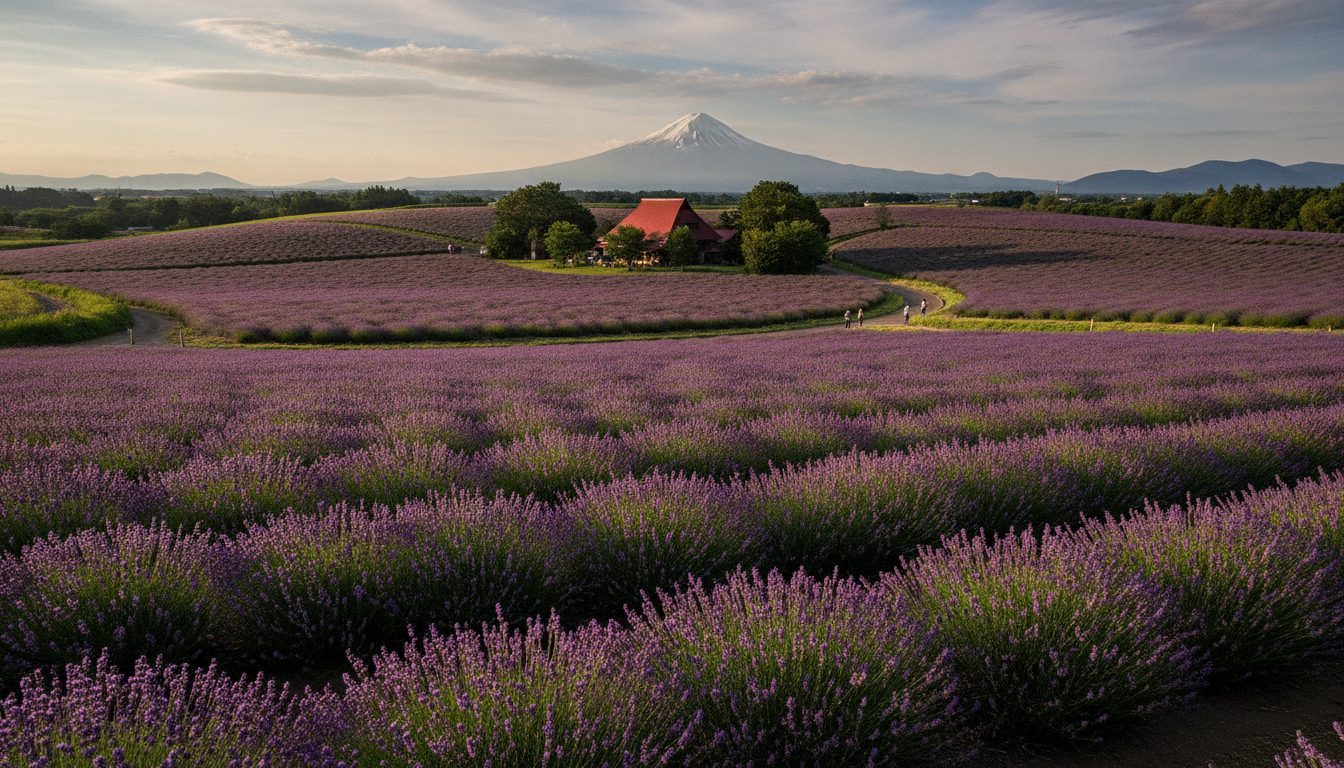
Kawaguchiko’s Oishi Park and Yagizaki Park offer one of the most dramatic lavender backdrops in Japan, pairing purple flowerbeds with views of Mount Fuji. The district typically displays lavender from late June into mid-July, and the town stages a Lavender Herb Festival that traditionally includes local vendors and seasonal food. For 2026 organisers cancelled the main festival due to traffic congestion, though the fields themselves remain open for self-guided viewing.
Oishi Park is accessible from Kawaguchiko Station via the local sightseeing bus to Kawaguchiko Shizenseikatsukan, a short ride that is convenient for day-trippers from Tokyo. Visiting early in the morning or later in the afternoon reduces crowding and increases the chance of unobstructed Fuji views. The lakeside promenades are well suited to photographers and families who prefer paved paths and nearby amenities.
If you want to pair lavender viewing with fireworks or lake cruises, check festival schedules carefully before travelling. Some seasonal events coincide with peak bloom periods and provide extra evening programmes, while other events may be canceled or rescheduled to manage traffic and local safety.
Lavender spots within easy reach of Tokyo include Chiba and Saitama
Several accessible lavender sites lie within an hour or two of central Tokyo, making them ideal for weekend visits without long-distance travel. Sakura Lavender Land in Chiba opens from mid-May into mid-July and features roughly 6,300 shrubs across 13,600 square metres, plus a complementary rose display. The farm is reachable by train and a short community bus ride, and it offers a compact, family-friendly experience with parking for drivers.
Sennen no Sono Lavender Field in Saitama provides a close-to-Tokyo alternative for early-season viewing, with the Ranzan Lavender Festival traditionally held in June. In 2026 the Sennen no Sono display is scheduled from June 13 to June 28, and the site highlights a mix of early-blooming varieties designed to attract local residents. Access requires a Tōbu-Tōjō Line train to Musashi-Ranzan Station followed by a short bus or walk, and festival days include craft workshops and local food booths.
Both Chiba and Saitama options are suited to public-transport day trips but will feel different from Hokkaidō’s wide open panoramas; expect smaller fields, community events, and easy connections to urban transport. For visitors with limited mobility, look for farms with paved routes and on-site facilities before you go.
Gunma, Hyogo and Mie showcase large parks and resort gardens
Several mid-distance destinations combine large lavender plantings with family facilities, lifts, pet-friendly areas and festival programming. Tambara Lavender Park in Gunma is marketed as one of the largest lavender parks within reach of the Tokyo region, featuring roughly 50,000 plants and an extended season because multiple cultivars bloom at different times. For 2026 the park’s season runs early July through late August with a peak from mid-July to mid-August, and the park charges admission (about ¥1,200 for adults in 2026).
Tambara offers activities that appeal to families and pet owners alike, including a lavender-picking experience for a modest fee, playgrounds for children, dog runs and a panoramic lift. The park is accessible by Jōmō-Kōgen Station with reservation-only shuttle services, or by car from the Kanetsu Expressway; shuttle reservations and advance planning are recommended in peak weeks.
Lavender Park Taka in Hyogo provides a hillside experience with approximately 20,000 plants and an annual Lavender Festa that blends live performances with picking events. The park’s admission for 2026 is modest, and the site is best reached by a combination of local rail and bus or by driving via regional expressways. Menard Aoyama Resort in Mie offers a different model: a herb garden incorporated into a resort setting spanning 8 hectares with hundreds of herb varieties and a public-facing café and gift shop.
Menard Aoyama’s herb garden operates over many months and typically includes lavender from late May through July, creating options for visitors traveling from Osaka, Nara or southern Kyoto. The resort runs a reservation-only shuttle from Iga-Kambe Station and is popular with those seeking a more landscaped, amenity-rich visit compared with open-field viewing.
Northern and southern alternatives provide regional variety and unique cultivars
Beyond Hokkaidō and central Honshū, multiple prefectures present distinctive lavender experiences that are worth planning for. Misato Lavender Garden in Akita, for example, hosts around 20,000 lavender shrubs and has an arrangement with Nakafurano in Hokkaidō to trade seedlings. That collaboration means visitors to Misato may recognize many of the same varieties found in Furano; the 2026 display is scheduled June 6 to June 28.
Nagano prefecture offers two separate facilities that combine herb culture with mountain scenery. Yume Harvest Farm near Komoro cultivates some 10,000 lavender plants within extensive herb and rose collections and runs a distillery on site. The lavender portion of its program is scheduled for mid-June into early July 2026 and is reached by local train plus a short taxi ride from Komoro Station.
Further south, Kuju Flower Park in Oita occupies highland terrain on Kyūshū and arranges dedicated lavender plots within a massive, year-round floral programme. The park’s lavender window generally runs from mid-June to late July, and Kuju is primarily accessible by car; visitors use the park as a base for nearby onsen and hiking attractions. These regional alternatives demonstrate that lavender viewing in Japan is not limited to a single island or climate band.
Practical advice for visiting lavender fields in Japan in 2026
Travel logistics are an essential part of planning, because many top lavender sites are easier to reach by private vehicle than by public transport. Car rental remains the most flexible option for visiting multiple farms in a single day, especially around Furano where fields are spread across different towns. Where public transport is available you will often need last-mile options such as shuttle buses, taxis, or reserved transfers.
Reserve shuttle seats and check festival pages in advance during peak weeks; several parks operate reservation-only shuttles or limit vehicle traffic to manage crowds. If avoiding crowds is a priority, visit weekdays or aim for the first two hours after opening and the final two hours before closing. Early morning light and wind conditions also improve scent and photographic clarity.
Expect a mixture of fees and free-entry sites across the country: some community fields offer free viewing with optional paid experiences, while larger parks commonly charge modest admission and fees for picking experiences. If you hold a JR Pass or other rail pass, verify whether shinkansen routes or express services used to reach a destination are covered; local bus fares and private shuttles are generally separate.
Bring mosquito repellent and sun protection, and wear sturdy shoes for slopes and uneven ground. Many parks sell food and lavender goods on site, but small farms may lack extensive café facilities; packing water and a light snack is sensible when visiting more remote fields.
When to see lavender across Japan and what to expect for timing in 2026
Timing varies by region and cultivar, so expect a staggered national window rather than a single nationwide peak. In Hokkaidō, July is widely regarded as the best month for lavender, with main varieties such as Okamurasaki typically reaching full bloom in mid- to late July. In contrast, warmer prefectures such as Chiba and Hyogo often begin showing blooms in late May or June, and some sites maintain displays into July.
Mountain and highland parks such as Kuju in Oita and alpine areas in Nagano can show blooms from mid-June into late July, and parks that plant multiple varieties—like Tambara—extend the season through August by coordinating early and late cultivars. For 2026 many official schedules list precise windows, for example Farm Tomita Lavender East’s June 28–July 21 listing and Sennen no Sono’s June 13–June 28 dates, but these are estimates and may shift with weather.
Weather is the single largest variable affecting bloom timing and quality, so always confirm current conditions and official announcements before travelling. Websites and local tourism offices publish last-minute updates when heat, rain, or harvest activity alter expected viewing dates; checking within 48–72 hours of departure will reduce the risk of disappointment.
Plan itineraries that factor in both travel time and the on-site experience you want, whether that is photography, picking, distillery tours or family-friendly attractions. Booking nearby accommodations early for July weekends is recommended for Hokkaidō and other high-demand zones.
Lavender-themed experiences often include more than flowers: distilleries producing essential oil, confectionery shops serving lavender soft serve, craft workshops, and local vendors selling goods made from harvested stems. These experiences can fill an entire day and supply meaningful souvenirs beyond photographs.
Local rules vary on picking and interaction with flowerbeds, so follow posted signage and staff instructions. Many organised parks offer supervised picking sessions for a small fee; community fields may have stricter protections in place to preserve plants for future seasons.
Check transportation options and costs in advance, particularly if relying on rural buses or seasonal shuttles. While rail travel between major nodes is efficient, last-mile travel often requires booked transfers, taxis or on-site parking arrangements that can add time and expense.
As you prepare to travel, consider combining lavender viewing with other seasonal attractions such as nearby hot springs, artisanal markets, or scenic drives. Doing so spreads costs and creates a more varied itinerary, especially when a single destination’s flowering window is brief.
Plan for accessibility needs by reviewing site maps and contacting organisers ahead of arrival. Some parks provide paved routes, lifts and accessible restrooms; smaller farms may have limited barrier-free infrastructure but can often accommodate requests with advance notice.
Finally, verify 2026 festival changes and service adjustments before finalising travel. Some events change format or cancel due to traffic or safety concerns; if a festival is cancelled, the plants may still be viewable but associated programming might not occur.
Visitors who treat lavender viewing as both a floral and local-culture experience will get the most out of their trip. Whether you prioritise wide Hokkaidō panoramas, lakeside Fuji views, or compact community farms within Tokyo’s orbit, Japan’s lavender season in 2026 offers multiple options for all kinds of travellers.
Information in this guide reflects published schedules and program notes for the 2026 season and was compiled with the seasonality of each site in mind as of June 13, 2026. For the most reliable timing, consult the official website or local tourism office of your chosen destination before departure.
Plan conservatively, book required shuttles or parking in advance when possible, and enjoy the sensory pleasures of lavender fields in Japan this season.

