
Chinese brokers in coconut supply chain squeeze Thai farmers as regulators step in
Thai authorities crack down on shell firms as Chinese brokers in coconut supply chain pressure prices and reshape regional trade ties.
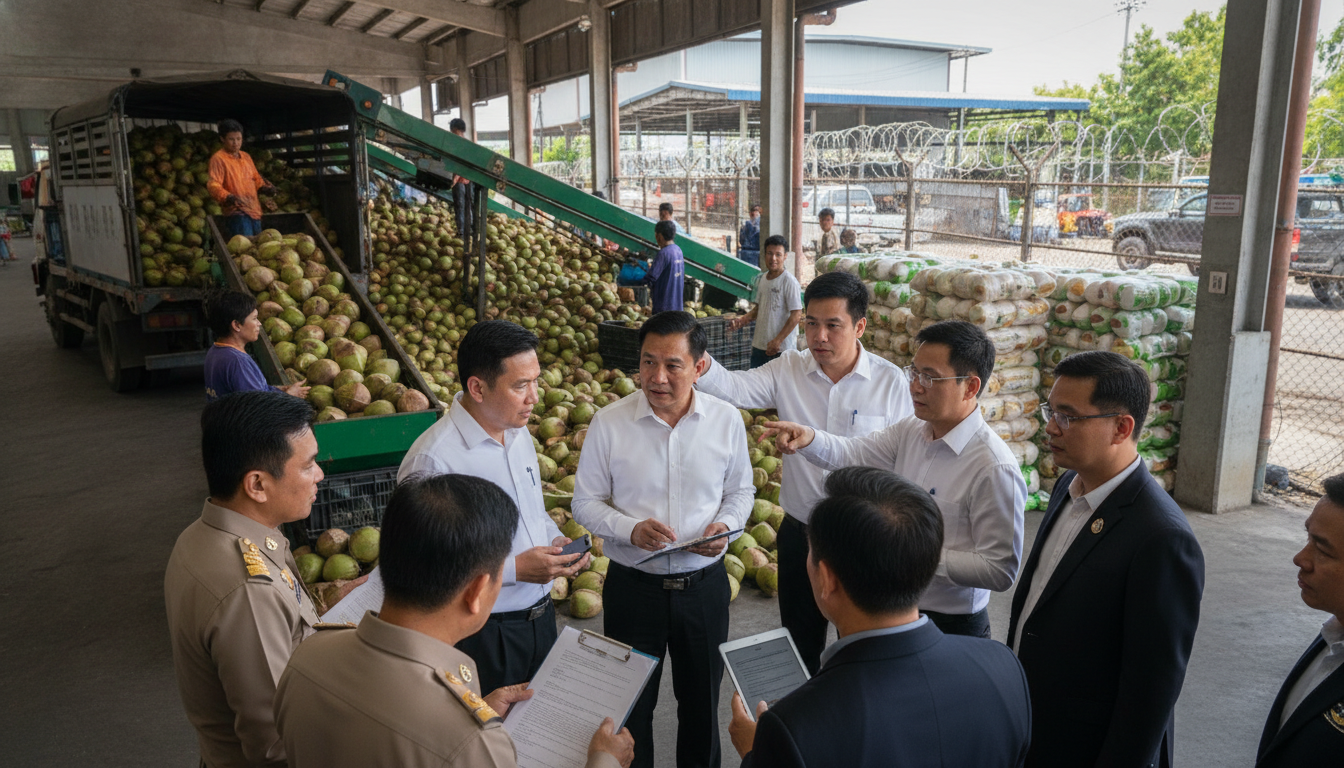
Thailand has launched investigations into companies that appear domestically owned but are allegedly controlled by foreign interests, amid mounting complaints that Chinese brokers in the coconut supply chain are undermining local farmgate prices. Farmers in central and southern provinces say middlemen tied to foreign buyers are bypassing traditional cooperatives and offering lower rates, squeezing livelihoods. Officials say the moves are part of a broader effort to preserve domestic control over strategic agricultural sectors while managing growing economic links with China.
Thai enforcement targets foreign-controlled shell companies
Thai regulators have begun reviewing ownership structures of trading firms and processors linked to the coconut market, citing concerns about concealed foreign control. Authorities allege some businesses register as Thai-owned while key decision-making and capital flows stem from overseas connections. The enforcement actions are intended to increase transparency in procurement and to ensure compliance with rules governing land use and foreign investment.
Farmers report falling prices and broker dominance
Coconut growers described a rapid change in how produce is bought and sold, with more transactions routed through small brokers who promise quick cash but pay lower rates. Several farmers said they now receive smaller payments per nut or per tonne compared with previous seasons, a trend they attribute to intensified competition among buyers connected to larger foreign procurement networks. Local cooperatives and mill operators report difficulty negotiating aggregate contracts when independent brokers are able to offer direct access to export channels.
How brokers reshape the coconut supply chain
Analysts say brokers act as aggregators and price setters when processors and exporters prefer decentralized sourcing that reduces inventory and overhead. These intermediaries can consolidate supply quickly across provinces and match smallholder output to foreign demand, giving them leverage over price discovery. The resulting concentration of influence can erode traditional market signals and weaken smallholders’ bargaining power, particularly when brokers have ties to overseas processors or trading houses.
Regional trade links and investment growth
China’s expanding demand for coconut products and increased bilateral trade and investment in Southeast Asia have altered commercial dynamics across the region. New processing facilities, larger import contracts, and logistics networks have created incentives for brokers to acquire supply control rather than merely facilitate transactions. For countries like Thailand and neighbouring Vietnam, the growth in cross-border commerce has brought export opportunities but also new risks for supply-chain resilience and price transparency.
Policy options and regulatory challenges
Regulators face a delicate balancing act between attracting foreign investment and protecting smallholder farmers from opaque market practices. Proposals being discussed include tighter disclosure requirements for beneficial ownership, strengthened enforcement of foreign ownership limits, and improved support for farmer cooperatives to enable collective bargaining. Implementing rules that increase transparency without deterring legitimate trade flows will be politically and technically challenging, officials acknowledge.
Impact on processing and export sectors
Processors and exporters could face short-term disruptions as authorities scrutinize their trading partners and as sourcing channels adjust to new compliance demands. Some firms may shift toward formal contracts with cooperatives or larger suppliers to mitigate regulatory risk, while others might reroute trade through alternate markets. For international buyers, heightened oversight could raise transaction costs and slow procurement, at least until new market practices stabilize.
Beyond immediate enforcement, industry specialists caution that longer-term remedies require improving price information systems, expanding farmers’ access to finance, and investing in local processing capacity. Those measures could help redistribute value along the chain and reduce dependence on a small number of influential intermediaries.
The clampdown marks a significant moment for Thailand’s coconut sector as it navigates rapid commercial change driven by regional demand and new trading relationships. Farmers, regulators and industry participants now face a period of adjustment as authorities press for clearer ownership structures and more transparent market practices.

