
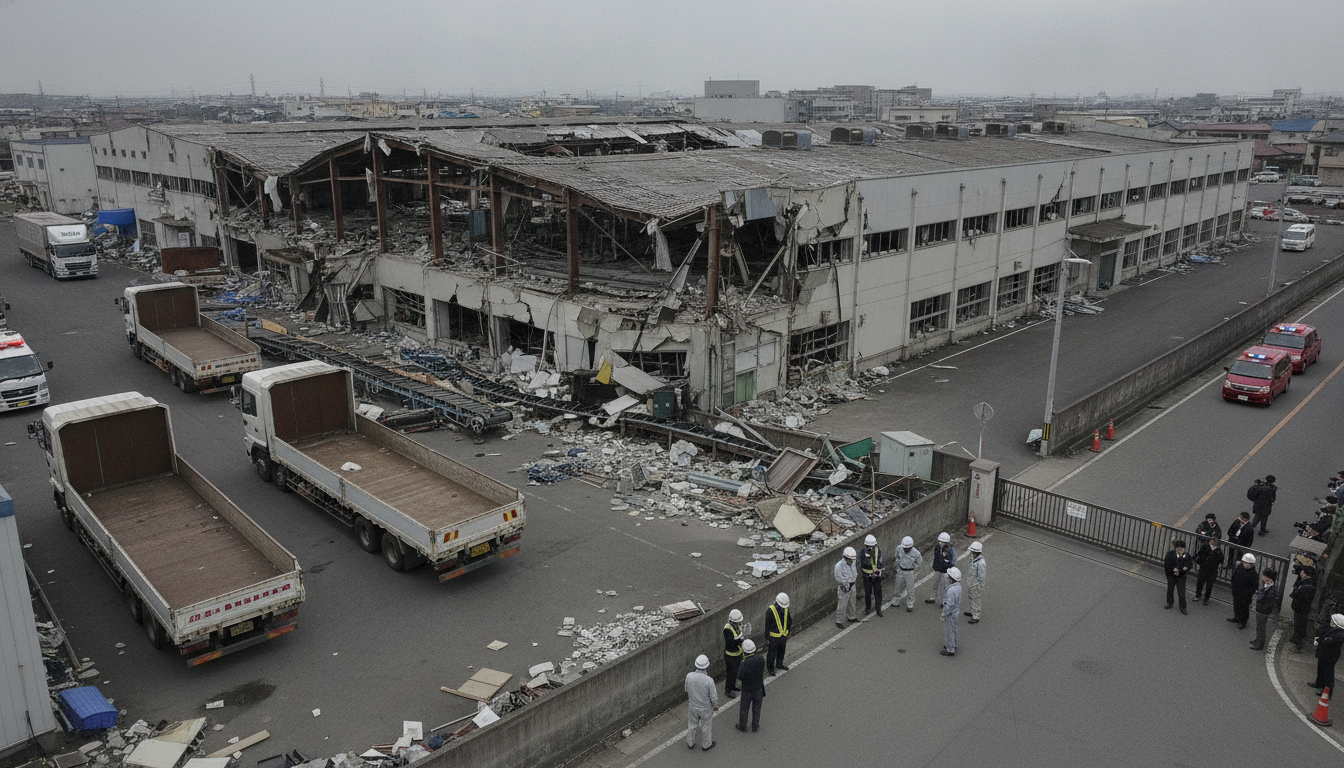
Aisin Kumamoto Plant Damaged in Earthquake, Disrupting Auto Production
Earthquake-damaged Aisin Kumamoto plant halts production, prompting Toyota to extend suspensions at Fukuoka plants as companies race to restore supply and safety urgently.
The Aisin Kumamoto plant in southern Kumamoto was struck by strong seismic shaking on July 28, 2026, forcing an immediate halt to operations and triggering wider production disruptions across Japan’s auto sector. The Aisin Kyushu facility, a key supplier of components such as door checks to Toyota, Nissan and Mitsubishi, stopped after the quake registered an intensity equivalent to upper 6 on Japan’s seismic scale. Aisin told investors and customers it is working to restore output while prioritizing safety and product quality.
Aisin Kyushu Plant Halted by Strong Seismic Shaking
The plant in southern Kumamoto experienced structural and equipment impacts when the earthquake hit, leading management to suspend production lines to conduct safety checks. Company engineers began assessing power, water and other infrastructure and physically inspected assembly lines for damage. Aisin’s vice president said the firm will resume production only after confirming that safety and quality standards are fully met.
Partial Line Inspections Underway as Utilities Are Restored
Inspection work began on July 30 on selected lines after initial confirmation of power and essential services to parts of the site. Technicians have started trial runs and nondestructive checks to detect hidden damage to machinery and tooling. Aisin has indicated that lines cleared by safety teams will be restarted sequentially, but stressed that a full resumption timetable remains undetermined.
Toyota Extends Suspensions at Three Fukuoka Plants
Toyota Motor Corp. announced on July 31 that it would extend the suspension of operations at three Fukuoka plants that had already stopped, citing the risk of parts shortages stemming from the Aisin disruption. The automaker had earlier halted those factories as a precaution and said the additional suspension is necessary while supply-chain assessments continue. Toyota’s move underscores the immediate dependence of final assembly on timely parts deliveries from single-source suppliers.
2016 Kumamoto Quake Response Informs Current Measures
Aisin and other suppliers drew on lessons from the 2016 Kumamoto earthquakes when parts shipments were interrupted and Toyota temporarily curtailed production, costing roughly 80,000 vehicles in delayed output at that time. Since 2016, Aisin implemented disaster-response planning and structural upgrades at some facilities, measures the company says are informing current emergency procedures. Industry officials note, however, that even with improved contingency planning, concentrated regional damage can quickly expose supply-chain vulnerabilities.
Supply-Chain Impact Extends to Multiple Automakers
Aisin Kyushu supplies a range of components used by several major automakers, amplifying the impact of a single plant shutdown. Beyond Toyota, the company provides parts to Nissan and Mitsubishi, among others, raising the prospect of line stoppages at multiple final-assembly plants if deliveries cannot be restored. Logistics firms and parts warehouses are coordinating with suppliers to reroute available inventory and prioritize critical components, but industry analysts warn that production ripple effects could persist until normal output resumes.
Company Coordination with Local Authorities and Utilities
Aisin is coordinating closely with local authorities, utility companies and emergency services to expedite repairs to power and essential infrastructure at the Kumamoto site. The company has mobilized specialist teams to undertake structural and equipment inspections and is working to secure temporary power and parts where feasible. Local government officials are assisting with on-site safety inspections and logistical support to facilitate a controlled restart of operations.
The economic stakes are substantial for the region and for Japan’s broader manufacturing sector. The Kumamoto plant’s role in the tightly sequenced just-in-time production systems used by many automakers means that even short interruptions can force assembly lines to slow or stop. Suppliers and automakers are weighing options such as temporary inventory transfers, overtime at unaffected plants and alternative sourcing, but each approach carries costs and may not immediately fill critical gaps.
Aisin has pledged to minimize disruption to customers and said it will provide regular updates as recovery work progresses. Industry watchers say the incident will reignite discussions on supply-chain resilience, including supplier diversification, inventory buffers and regional risk mapping. For now, the priority remains restoring safe operations at the Aisin Kumamoto plant and stabilizing deliveries so automakers can resume normal production schedules.

