
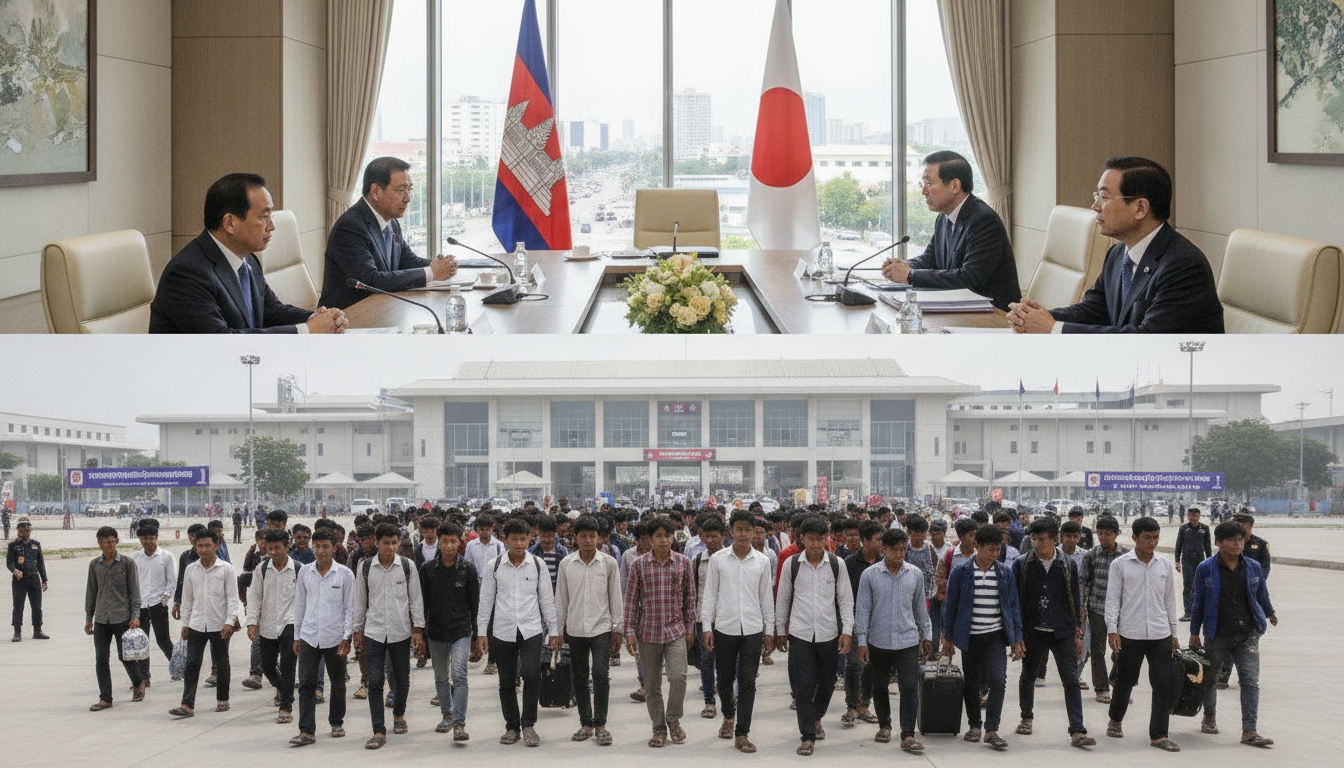
Cambodia Seeks Expanded Japan Labor Exchanges Amid Influx of Returnees from Thailand
Cambodia aims to expand Japan labor exchanges to absorb a recent surge of returning workers and attract fresh investment, Deputy Prime Minister Sun Chanthol said during a Tokyo visit on June 11, 2026.
Strong summary of Tokyo meeting
Deputy Prime Minister Sun Chanthol told reporters in Tokyo that Cambodia is accelerating efforts to broaden labor exchanges with Japan as tens of thousands of Cambodians have returned from Thailand following recent cross‑border clashes.
He framed the move as both a short‑term response to a returnee surge and a longer‑term strategy to diversify overseas labor pathways and strengthen ties with Japanese firms.
Sun underlined that the government would pursue both expanded placement opportunities and enhanced worker training to meet Japanese demand for skilled personnel.
Returnee surge and immediate challenges
Cambodia has seen a sudden rise in workers coming back from Thailand after a conflict between Thailand and a neighboring country disrupted employment there.
The influx has strained local job markets in provinces that previously exported labor, and it has reduced remittance flows that many households relied on.
Officials in Phnom Penh are racing to register returnees, assess skills, and provide temporary support while longer‑term employment solutions are sought.
How expanded Japan labor exchanges would help
Cambodia expects expanded Japan labor exchanges to create higher‑quality overseas job slots and to shorten the period that returnees spend unemployed.
Officials say Japanese placements typically emphasize technical training and industry standards, which could help returnees upskill and earn more abroad than in some regional markets.
The government plans to pair placement initiatives with language and certification programs so workers meet Japan’s entry requirements and workplace expectations.
Investment push to create domestic alternatives
Alongside labor mobility talks, Sun Chanthol urged Japanese companies to increase investment in Cambodia to generate local jobs that can absorb returnees.
He highlighted opportunities in manufacturing, logistics and training facilities, and pledged incentives to ease foreign direct investment and joint ventures.
Cambodian officials argue that new factories and service projects would provide immediate employment and reduce the country’s overreliance on a single overseas labor market.
Constraints on low‑skill worker placements
Sun acknowledged limits on sending low‑skill workers abroad and said Cambodia must align its workforce development with receiving countries’ regulations.
Japan’s existing frameworks and employer requirements place practical ceilings on placements that lack formal certification or language proficiency.
As a result, Cambodia is prioritizing vocational training, certification pathways and partnerships with Japanese employers to increase the share of workers who meet these standards.
Bilateral dialogue and safeguard measures
Cambodia plans to pursue formal negotiations with Japanese authorities and private sector partners to expand legal, regulated channels for labor mobility.
The discussions will include worker protection measures, clearer recruitment standards, and mechanisms to prevent unscrupulous brokers from exploiting jobseekers.
Authorities also aim to improve predeparture orientation and postarrival support to reduce cases of workplace disputes and ensure compliance with host country laws.
Economic and social implications at home
The returnee wave has exposed vulnerabilities in Cambodia’s dependence on regional labor markets and remittance income.
Local governments face pressure to provide social assistance while national agencies scramble to convert the influx into a development opportunity.
Experts warn that without rapid job creation or viable overseas alternatives, the country could see heightened household debt and social strain in affected provinces.
Cambodia’s outreach to Japan reflects a two‑pronged approach: expanding regulated overseas placements where feasible, and courting investment that generates sustainable employment at home.
Sun Chanthol’s Tokyo remarks on June 11 underline Phnom Penh’s urgency to manage the immediate humanitarian and economic fallout from the Thailand disruption while building more resilient labor pathways for the future.

