
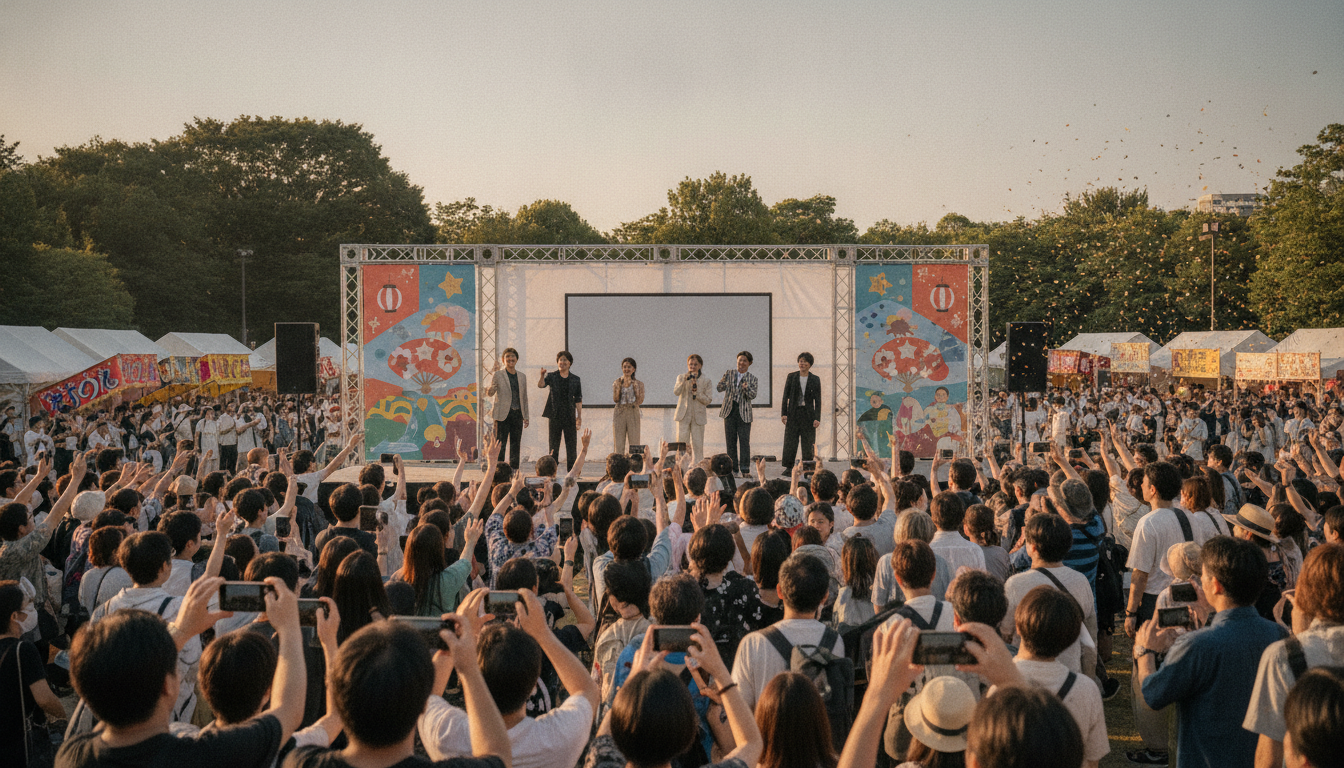
Yoyogi Park events guide: five summer festivals to see in July and August 2026
Yoyogi Park events this summer bring music, markets, beaches-in-the-city, and international culture to the heart of Tokyo between July 1 and August 30, 2026. This guide highlights five headline festivals at Yoyogi Park Event Square, with exact dates and practical tips for visitors. Plan for a busy first weekend of July when several events overlap and streets around Harajuku will be especially crowded.
Star and Sun Night Market returns July 1–5, 2026
The Star and Sun Night Market runs from July 1 to July 5, 2026, and occupies Yoyogi Park Event Square with late-night programming and a sprawling market. The event blends main stage concerts featuring pop and idol acts, hip-hop and indie bands, plus roving performers that keep the atmosphere lively after dusk. Entry to the market area is free, and visitors can expect a mix of food stalls, artisan booths, and outdoor seating where small groups gather to eat and watch performances.
Production this year emphasizes a diverse lineup across four nights, with genres ranging from jazz and soul to contemporary rock. Programming is scheduled to run into the evening, so those relying on public transport should check last-train times and local transit notices for July 1–5. Families should note that ambient noise levels rise after sunset and that the site offers limited quiet zones; plan meeting points in advance to avoid getting separated in crowds.
Earth Garden Summer Festival scheduled July 3–5, 2026
Earth Garden Summer Festival will take place from July 3 to July 5, 2026, and focuses on eco-friendly goods, sustainable living, and community workshops. The summer edition is known for its combination of a leafy outdoor market and cultural programming, and this year it will overlap with the Star and Sun Night Market for several days. Organizers expect a broad turnout of local artisans, secondhand clothing vendors, and small-scale food producers offering organic and plant-based options.
The festival’s schedule includes stage performances and a flamenco showcase, bringing an unexpected Spanish flair to the summer market. Admission to Earth Garden is free, but many workshops and special demonstrations require advance sign-up or a small fee, so visitors should arrive early to secure spots. The tented market areas provide shade during the day, but attendees are advised to bring sun protection and refillable water bottles to reduce plastic waste.
Ocean Peoples brings seaside atmosphere July 4–5, 2026
Ocean Peoples will be staged on July 4 and July 5, 2026, transforming part of Yoyogi Park into a seaside-themed festival with ocean-inspired stalls and beach-style entertainment. The two-day event brings together vendors selling summer accessories, surf gear, and fresh seafood, alongside live music that channels coastal vibes. It is an option for city residents who want a beach mood without leaving Tokyo, although the event footprint is compact compared with seaside festivals.
Ticketing for certain Ocean Peoples attractions includes a paid adult option, with advance tickets listed at ¥9,800, while general admission to the festival grounds is free in many areas. Families and groups should budget for individual attraction fees such as specialty food booths, hands-on workshops, and reserved seating for headline performances. Because Ocean Peoples concentrates activity over a weekend, expect long queues at popular stalls during midday and early evening on July 4–5.
Festival Brasil and Latino set for July 18–19, 2026
Festival Brasil and Latino is scheduled for July 18 and July 19, 2026, and marks one of the largest international community gatherings in Yoyogi Park this summer. The festival celebrates Brazilian and Latin American culture through food, dance, and costumed performances, and typically attracts a six-figure attendance over its two-day run. Visitors will find regional cuisines, samba and capoeira demonstrations, and family-friendly activities that showcase the cultural diversity of Tokyo’s immigrant communities.
Performance stages are programmed throughout both days and the event is free to enter, though specialty dining and private workshops are priced separately. Given the festival’s popularity, attendees should plan for heavy foot traffic on nearby streets and recommend using Harajuku or Yoyogi stations as the primary rail access points. The large crowds and frequent street parades create an energetic environment suitable for those seeking lively cultural exchange.
Harajuku Omotesando Super Yosakoi returns August 29–30, 2026
Harajuku Omotesando Super Yosakoi will take place on August 29 and August 30, 2026, and is a major dance parade that runs beyond Yoyogi Park into surrounding neighborhoods. The event features more than 6,000 participants performing both traditional yosakoi dances and contemporary choreography as they march through Harajuku and Omotesando. Spectators lining the route can expect colorfully costumed teams, live bands, and competitive judging that keeps energy high across two long days.
Parade routes will impact pedestrian flows on Omotesando Avenue and in Harajuku’s side streets, so visitors planning to combine a festival visit with shopping should anticipate detours and temporary closures. Entry to the performances is free, but secured viewing areas may require prior registration or early arrival. For international visitors, the festival provides a concentrated opportunity to see how traditional Japanese festival dance is adapted into modern pageantry.
Planning advice for the first weekend of July and overlaps
The first weekend of July, spanning July 1–5 and especially July 3–5, is the busiest cluster of Yoyogi Park events this season, with Star and Sun Night Market, Earth Garden, and Ocean Peoples overlapping. Those intending to attend multiple events should prioritize time-sensitive performances and book advance tickets or workshop slots where available. Expect extended queues for food and restrooms during peak hours and plan meeting points because cell service can be strained in dense crowds.
To manage travel time, use Harajuku Station on the JR Yamanote Line or Meiji-Jingumae on the Tokyo Metro for direct access to Yoyogi Park Event Square. Exit planning is important: clear north and south exits on event days can reduce cross-traffic, and walking a few blocks from less congested stations often saves time. Attendees with mobility concerns should check each festival’s accessibility provisions; many have designated rest areas and wheelchair-accessible routes, but temporary flooring or staged areas can change standard park access.
Safety, weather, and facilities to consider when attending
Summer weather in Tokyo can be hot and humid in July and August, so hydration and sun protection are essential for outdoor festivals at Yoyogi Park. Organizers typically position water refill stations and first-aid posts across event zones, but visitors should carry their own bottles and sunscreen for comfort. Rain is possible during this season, and sudden showers can cause stage delays or shelter congestion, so plan lightweight rain gear and flexible schedules.
Security at large events includes bag checks at major entrances and a visible presence of event staff and police in busy zones, particularly during the Brazil festival and the yosakoi parade. Food safety is managed by vendor permits and onsite inspections, but those with dietary restrictions should verify ingredients directly at stalls. For overnight visitors, nearby hotels in Shibuya and Shinjuku provide convenient bases; early booking is advisable during major festival weekends.
Tips for families, solo visitors, and international guests
Families with children should arrive early for activities aimed at younger audiences and scout quieter areas of the park for rest breaks. Bring portable seating or picnic mats for extended viewing of performances, as seating is often limited and open lawn space fills quickly. For solo visitors, set a local rendezvous point and keep digital and physical copies of emergency contact information handy.
International visitors will find signage in multiple languages around larger festival zones, but bringing a pocket Wi‑Fi or local eSIM helps with navigation and translation apps. Cash is still commonly used at small vendors, so carry some yen for street food and market purchases, while also checking which stalls accept cards. Cultural etiquette matters: avoid blocking parade routes and be mindful of performers when taking photographs during dance and stage shows.
How to combine Yoyogi Park events with nearby neighborhoods
Yoyogi Park sits alongside Harajuku and Omotesando, offering easy combinations of festival visits with shopping and cafés. After daytime market browsing, visitors can explore Takeshita Street for youth fashion, or head to Omotesando for architect-designed storefronts and quieter dining. Scheduling a festival visit in the late afternoon and moving to a nearby neighborhood for dinner reduces time spent in crowded event areas and broadens the day’s experience.
Rail connections make it possible to pair a Yoyogi Park afternoon with nearby attractions such as Meiji Shrine or the galleries in Aoyama. For those attending Harajuku Omotesando Super Yosakoi, watching the parade and then walking the Omotesando avenue provides a seamless move from high-energy performance to chilled evening dining. Nighttime programming at Star and Sun Night Market offers an alternative to indoor concerts and can be combined with late-night bars in Harajuku for those staying in the area.
This summer’s lineup positions Yoyogi Park Event Square as a focal point for cultural exchange, live music, and market culture in central Tokyo between July 1 and August 30, 2026. Visitors should mark specific dates in their calendars, verify ticket details for paid attractions, and allow extra time for transit on peak festival days. With planning, attendees can make the most of Yoyogi Park events and sample five distinct festival experiences across July and August.

