
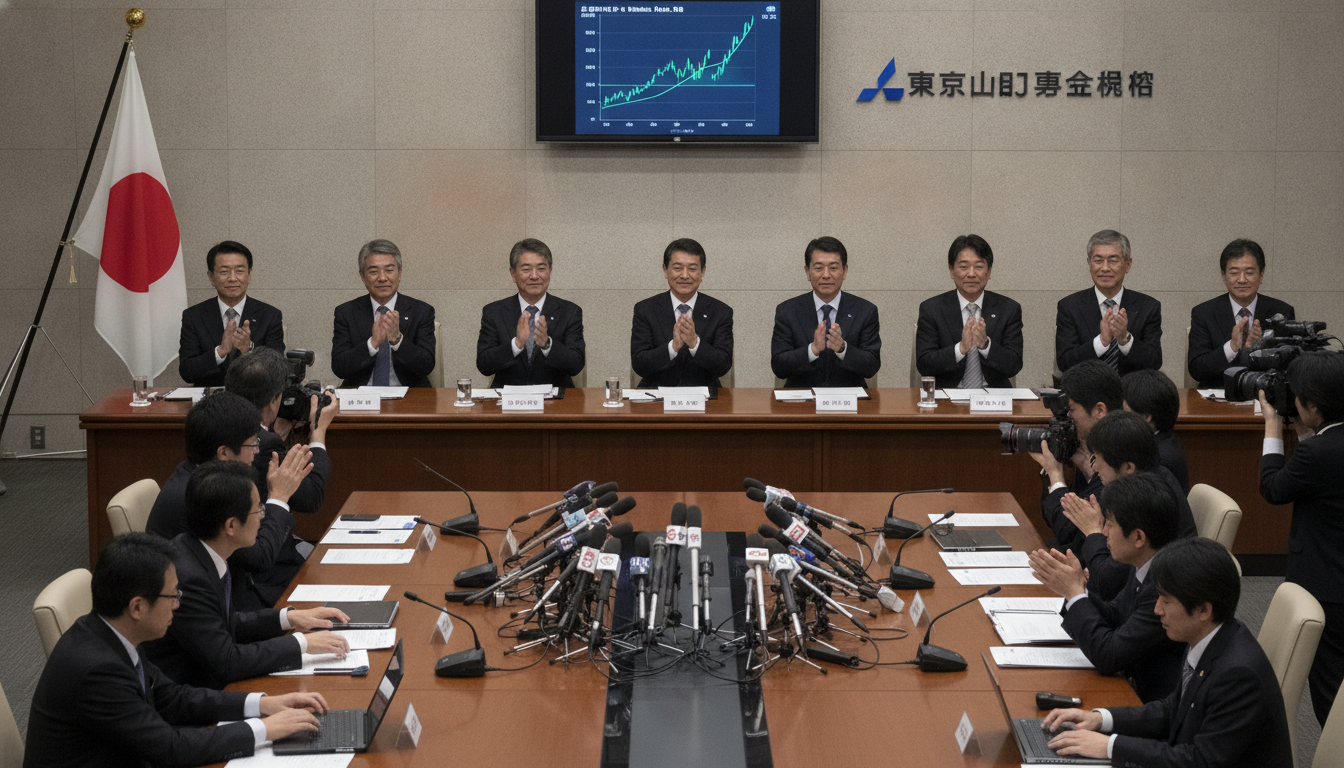
Japan megabanks dividends to reach record ¥2 trillion as lending rates rise
Japan’s three megabanks are set to pay a combined ¥2 trillion in dividends this fiscal year, a record payout driven by higher lending rates after the Bank of Japan exited negative policy. The surge in shareholder returns marks a significant shift in the banking sector and highlights the stronger profitability of large lenders. Analysts and investors are watching how the megabanks will balance payouts, capital buffers and lending growth amid an evolving rate environment.
Record payout announced amid rising loan yields
Japan’s megabanks dividends are expected to top ¥2 trillion for the first time, reflecting a reversal of the low-rate era that compressed bank margins. The rise in lending rates has boosted net interest income, allowing banks to return more capital to shareholders while still maintaining core operations. Officials at the banks have signaled that the payouts are sustainable for the current fiscal year, citing improved margins and cost controls.
The payout milestone arrives three years after the central bank abandoned negative interest rates, a move credited with restoring bank profitability. The uptick in dividend payments underscores the scale of earnings recovery at the country’s largest lenders. Market commentators note that the record distribution will be closely examined for signals about future capital allocation priorities.
Interest-rate shift translated into higher net interest income
Banks reported that lending spreads widened as reference rates climbed, translating into higher net interest income on both new and variable-rate loans. The widening gap between deposit costs and loan yields has been the principal driver behind the improved profitability behind the Japan megabanks dividends. Corporate and consumer loan books have gradually repriced, lifting interest margins across the sector.
Analysts caution that the full benefit of higher rates can vary by loan portfolio composition and regional exposure. Longer-term fixed-rate assets remain sensitive to market movements and could moderate future income if funding costs continue to rise. Nonetheless, near-term earnings have been materially strengthened by the policy shift, enabling larger shareholder distributions.
How banks are allocating the record funds
The combined ¥2 trillion expected payout represents a mix of higher dividend per-share proposals and more generous payout ratios compared with recent years. Banks are balancing the need to reward shareholders with the imperative to preserve capital for lending and potential market volatility. The move toward larger dividends also reflects an effort to align returns with cost of equity and investor expectations at home and abroad.
Some banks are supplementing dividends with increased buyback programs and targeted capital investments to support digitalization and branch optimization. The allocation decisions are being framed as part of broader capital management strategies that weigh regulatory buffers, credit risk provisioning and strategic growth initiatives. Market participants will use the announced distributions as a gauge of each lender’s confidence in future cash flow stability.
Investor response and market impact
Equity markets reacted to the dividend news with increased interest in bank stocks, as higher payouts and clearer earnings trajectories make the sector more attractive to income-seeking investors. Analysts note that the dividend lift can re-rate valuations by improving dividend yields and supporting return-on-equity metrics. However, the reaction has been selective, with investors differentiating among banks on capital adequacy and exposure to rate-sensitive assets.
Credit markets have also taken note, monitoring whether elevated payouts affect balance-sheet strength or regulatory capital ratios. Rating agencies typically assess payout policies against projected earnings and stress scenarios, and higher distributions can prompt closer scrutiny. For now, most observers view the record dividends as a logical outcome of sustained margin recovery rather than a signal of imprudent capital deployment.
Policy context and implications for lending and growth
The Bank of Japan’s exit from negative interest rates three years ago reset the operating environment for financial institutions, enabling banks to rebuild net interest margins. That policy change remains central to understanding why Japan megabanks dividends have expanded so rapidly in the current cycle. Policymakers and industry leaders are now focused on how banks will channel profits between returns to shareholders and support for credit to businesses and households.
Higher dividend payouts carry broader economic implications, as they can shift capital toward investors rather than direct reinvestment in lending or infrastructure. Still, bank leaders argue that healthier profitability strengthens the capacity to lend over the medium term. Observers will watch upcoming earnings reports and regulatory statements for indications of how the megabanks plan to sustain lending while delivering shareholder value.
The record dividend announcement marks a turning point for Japan’s largest banks and underscores the tangible impact of monetary policy normalization on the financial sector. As the megabanks navigate capital allocation choices, markets and regulators will closely monitor dividend sustainability, lending activity and the banks’ ability to absorb future shocks while supporting Japan’s economic recovery.

