
U.S.-Iran talks begin in Switzerland amid deep divisions over Hormuz and Lebanon
U.S.-Iran talks opened June 21 in Buergenstock, Switzerland, seeking a final end to hostilities under a 60-day window while sharp differences emerged over the Strait of Hormuz and Lebanon.
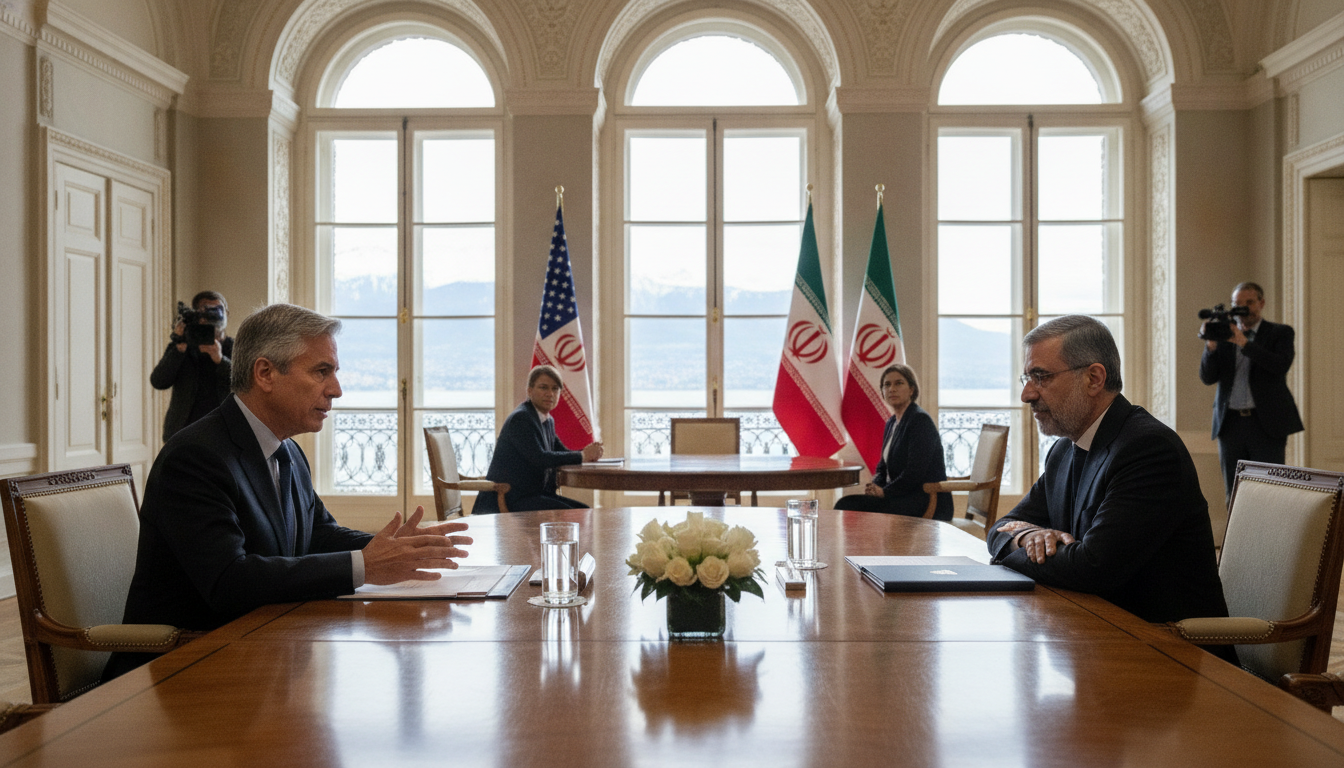
The first session of the U.S.-Iran talks opened on June 21 in Buergenstock, central Switzerland, convened by Pakistan and Qatar and aimed at producing a final settlement to end the current fighting. Delegations exchanged positions for more than eight hours as mediators pressed both sides to narrow gaps, but disagreements over the Strait of Hormuz and the situation in Lebanon quickly surfaced. The negotiations are proceeding under a memorandum agreed on June 17 and are bound by a 60-day timeframe to reach a comprehensive accord.
Venue and mandate of the Switzerland talks
The meeting took place at a lakeside hotel in Buergenstock, chosen by Pakistan and Qatar to host shuttle diplomacy between Washington and Tehran. Organizers said the conference seeks a final cessation of combat and the mechanisms to prevent a return to large-scale confrontation. Both sides were given a mandate to negotiate within the limits of the June 17 memorandum and to report progress to their respective capitals.
Officials described the first day as intense and wide-ranging, covering security arrangements, maritime traffic, and economic components tied to any possible de-escalation. Delegates also signaled that discussions would address links between battlefield dynamics and broader regional security, including nuclear-related concerns.
Major points of contention: Strait of Hormuz
One of the earliest and most consequential disputes centered on Iran’s recent warnings to “close” or effectively restrict shipping through the Strait of Hormuz if hostilities continue. Washington sought clarification of Tehran’s intentions and insisted on guarantees to keep the vital waterway open for international commerce. Tehran in turn tied maritime assurances to concrete steps on sanctions relief and regional security guarantees.
Diplomats said the gap over maritime guarantees was substantial, with U.S. representatives pushing for verifiable measures and Iran seeking reciprocal commitments. The disagreement over the Hormuz underscores how strategic chokepoints can quickly become bargaining chips in diplomacy and complicate any agreement that aims to stabilize the region.
Lebanon ceasefire and battlefield realities
The second major area of friction involved Lebanon, where fighting continues to complicate diplomatic efforts. U.S. negotiators called for concrete mechanisms to secure and monitor a ceasefire, including international or regional arrangements to prevent a resumption of hostilities. Iran insisted that any ceasefire plan respect the balance of forces on the ground and address what it described as legitimate security concerns of allied groups.
Participants at the talks acknowledged that battlefield developments in Lebanon directly affect the feasibility of a broader settlement, making sequencing and verification central issues. Observers warned that without enforceable ceasefire mechanisms, any political agreement risks being undermined by rapid changes on the ground.
Composition of delegations and tone of exchanges
Washington’s delegation included senior officials and special envoys tasked with translating political directives into technical terms, while Tehran sent parliamentary and foreign ministry figures alongside economic and central bank representatives. The inclusion of both political and economic actors reflected the interconnected nature of the talks, which need to resolve security issues alongside sanctions and financial channels.
Despite the long hours, the exchanges were described as professional but at times strained, reflecting the depth of mistrust between the two capitals. A U.S. diplomat told reporters after the initial session that talks were continuing into the night and that negotiators expected to work through complex issues over multiple rounds.
Diplomatic flare-ups over public comments
Tensions outside the negotiation room flared after public remarks by external political figures that Tehran said undermined the talks. Iranian officials lodged a formal protest over comments perceived as inflammatory, complicating an already fragile diplomatic atmosphere. Mediators urged restraint and stressed the need for disciplined public messaging while negotiations are underway.
Analysts noted that statements by third-party politicians can quickly erode trust and make it harder for negotiators to secure domestic buy-in for concessions. Both mediators and participating delegations emphasized the importance of insulating the technical talks from political rhetoric.
Timeline, verification and the road ahead
Under the June 17 memorandum, negotiators have a 60-day window to transform initial agreements into a final, verifiable pact that would end active hostilities and establish monitoring and enforcement measures. That timeline places pressure on both sides to move from broad principles to detailed, implementable steps before the deadline. Key unresolved items include maritime guarantees, ceasefire verification in Lebanon, sanctions-unwinding mechanisms, and the status of nuclear-related provisions.
Diplomats said follow-up meetings are likely and that mediators will shuttle frequently between capitals to build momentum. Success will depend not only on technical fixes but on political will in Washington and Tehran to accept trade-offs that may be difficult domestically.
The talks in Buergenstock mark the most concerted direct effort to clinch an end to the fighting to date, but early sessions highlighted entrenched differences that could prolong the process. Observers caution that while a 60-day window sets a deadline, the durability of any settlement will hinge on credible verification, clear mechanisms to manage crises such as threats against the Strait of Hormuz, and the ability of mediators to sustain pressure for a durable compromise.

