
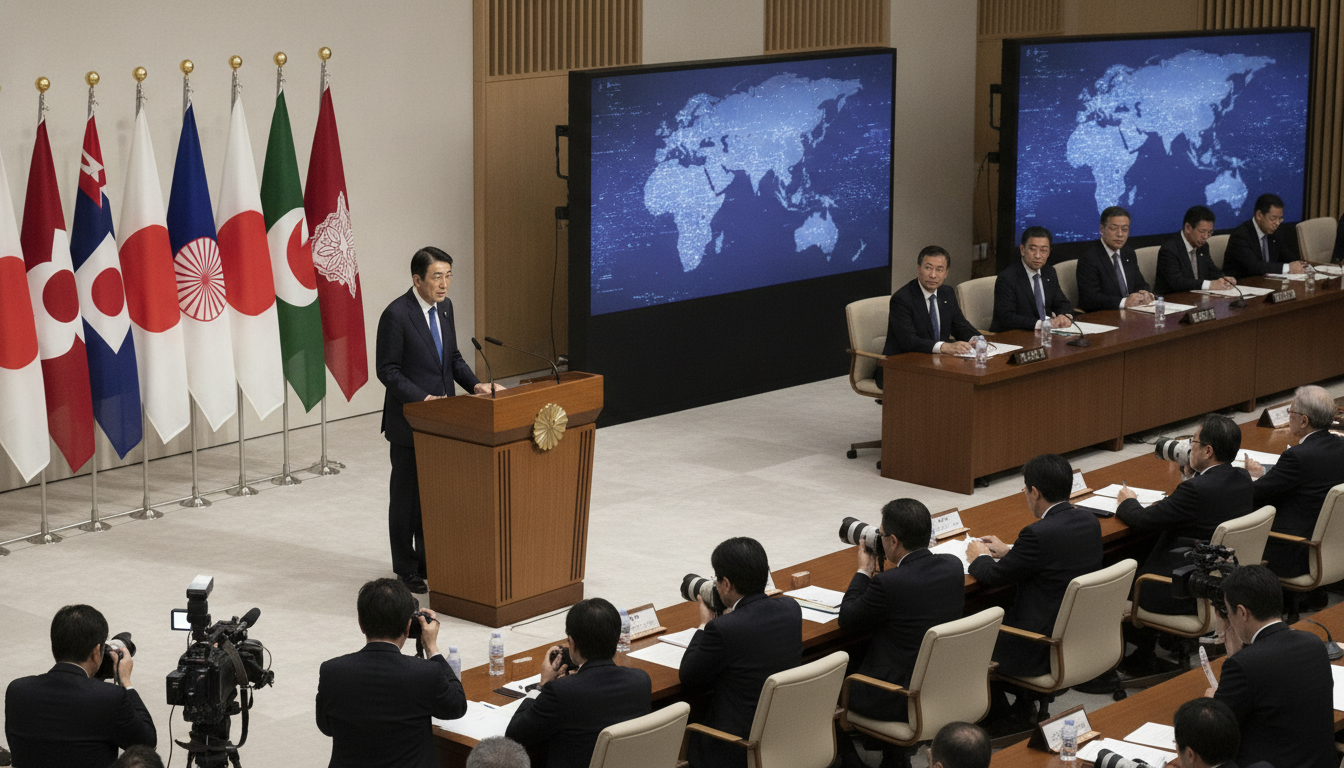
Japan launches eight Indo‑Pacific communications infrastructure projects to boost undersea cables and satellites
Japan to launch eight Indo‑Pacific infrastructure projects bolstering undersea cables, satellite links and data centers to strengthen economic security.
Japan announces eight Indo-Pacific communications infrastructure projects
Japan’s Ministry of Internal Affairs and Communications said it will roll out eight communications infrastructure projects focused on the Indo‑Pacific region. The move aims to fortify Indo‑Pacific communications infrastructure by expanding undersea cable routes, satellite capacity and related digital facilities.
Minister Takaichi framed the initiative as part of an upgraded “free and open Indo‑Pacific” concept intended to deepen economic security ties with regional partners. The ministry said the measures reflect growing strategic concern over resilient connectivity and the need to protect critical communications links.
Projects to expand undersea cables and satellite networks
A central pillar of the programme is new undersea cable projects intended to increase redundancy and shorten routing between Japan and key partners in Southeast Asia and the wider Indo‑Pacific. Officials highlighted that additional cable branches and alternate landing points will reduce single‑point failure risks and speed up cross‑border data flows.
The initiative also includes satellite communications upgrades to strengthen low‑latency links for remote areas and to provide backup when undersea capacity is compromised. Combined undersea and satellite work is designed to create a more layered communications architecture across the region.
Focus on data centers and AI-driven traffic growth
The ministry said investments will support data center capacity and interconnection hubs that handle growing volumes of traffic driven by artificial intelligence applications. As AI adoption accelerates, the demand for localized processing and low‑latency access has become a policy priority, officials said.
Reuters has noted the increasing strategic value of digital infrastructure as AI spreads, and Japan’s plan reflects that global shift toward treating data routes and compute facilities as economic security assets. Strengthening data center links is intended to keep supply chains for cloud and AI services resilient and trustworthy.
Economic security rationale behind the plan
Japanese officials framed the package as a response to fragility in global information networks and the need to protect critical infrastructure from disruption. The ministry emphasized that resilient communications links are now integral to national and regional economic security, not solely commercial assets.
The projects are aimed at ensuring continuity of trade, finance and public services that depend on reliable international connectivity. By positioning infrastructure investments within an economic security framework, Tokyo is signalling a long‑term commitment to hardening the region’s digital backbone.
Funding, partnerships and regional cooperation
The ministry has said the programmes will involve public funds and cooperation with private carriers, infrastructure firms and partner governments across the Indo‑Pacific. Officials expect to coordinate financing and project planning with telecommunications companies and multilateral development partners where possible.
Tokyo is also expected to seek technical and operational partnerships with regional authorities to align landing sites, regulatory regimes and shared resilience standards. These collaborative arrangements are intended to streamline deployment and improve interoperability across national systems.
Technical focus and strategic locations for deployment
Technical priorities for the projects include diversifying cable routes, modernizing landing stations, expanding satellite ground segments and tightening cybersecurity protections for critical nodes. The ministry plans to map vulnerable segments and prioritize projects that yield the largest resilience gains.
Strategic locations under consideration include key archipelagic and coastal economies in Southeast Asia as well as Pacific island states where connectivity remains limited. Enhancing links to these nodes is designed to reduce isolation and provide alternative paths for regional traffic during outages.
Timeline, oversight and next steps
The ministry has outlined phased implementation and oversight mechanisms to monitor progress and ensure alignment with national security objectives. Initial project work is expected to move from planning and partner selection into construction and deployment over the coming months.
Officials said detailed timelines and budgetary allocations will be announced as project agreements are finalized, and the ministry will coordinate with defence and foreign policy bodies to ensure the infrastructure complements broader strategic goals.
Japan’s plan to bolster Indo‑Pacific communications infrastructure signals a shift toward treating digital networks as core elements of regional stability and economic security. As undersea cables, satellites and data centers gain strategic importance, Tokyo’s eight‑project package aims to provide redundancy, faster connectivity and cooperative pathways that can support the region’s growing data needs.

