
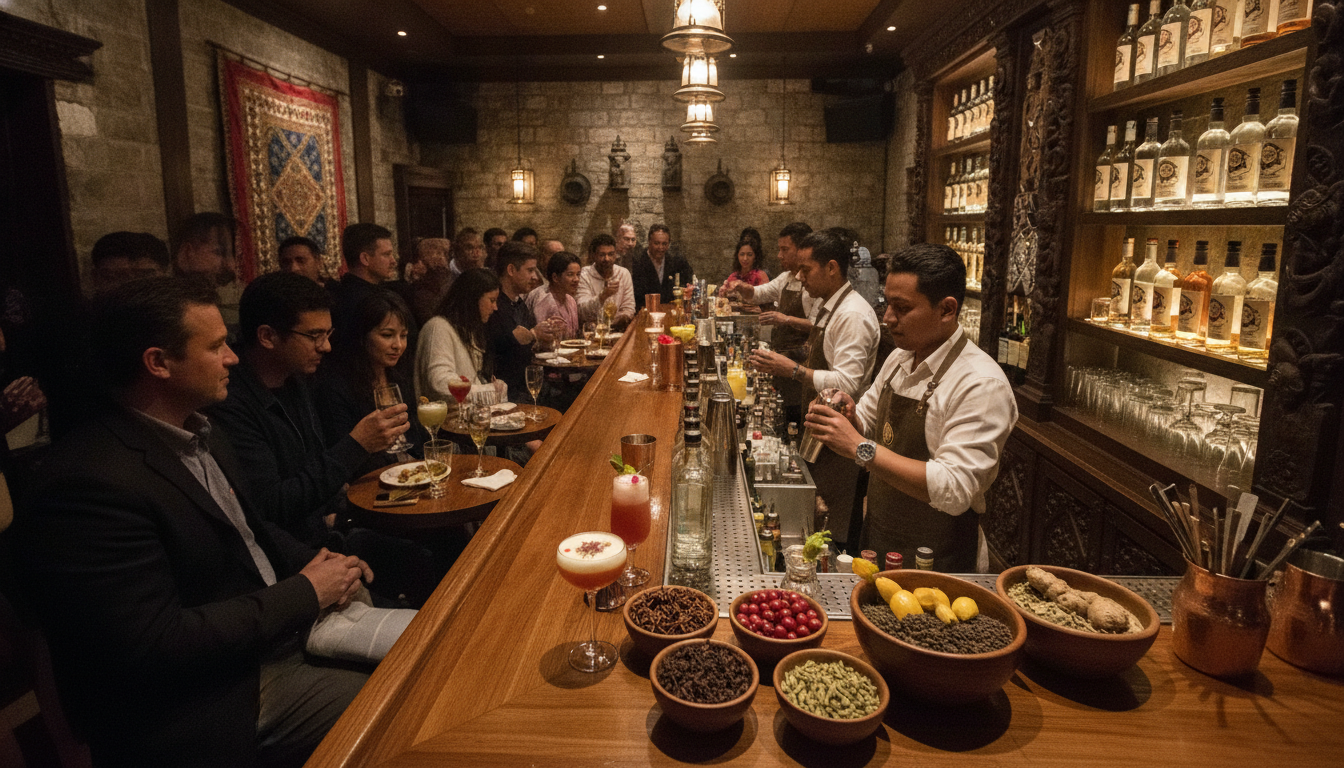
Kathmandu cocktail culture sparks a revival as bartenders and distillers embrace traditional spirits and local ingredients
Kathmandu cocktail culture is undergoing a renaissance as bartenders and small distillers revive traditional spirits and heritage ingredients, reshaping the city’s nightlife.
Local Spirits Drive Bar Revival
A new wave of bars across Kathmandu is centering menus on locally made spirits rather than imported liquors. Mixologists are featuring distilled rice spirits, millet-based brews and small-batch fruit brandies that draw directly from Nepalese production traditions.
Owners say the shift is both aesthetic and practical, reducing import dependence while offering drinks that reflect regional flavors. The result is a distinct local identity that is attracting attention from residents and visitors alike.
Bartenders Rework Heritage Ingredients
Bartenders are mining Nepal’s pantry for bitters, syrups and aromatics to complement local spirits. Indigenous elements such as Himalayan citrus, timur pepper and mountain herbs are being repurposed into infusions, tinctures and house-made mixers.
This experimentation has produced cocktails that are recognizably Nepali rather than imitations of Western classics. Creative technique and rigorous sourcing are now as important as presentation in the city’s leading bars.
Distillers and Supply Chains Respond
Small distilleries and cooperatives have responded by scaling production and formalizing supply relationships with farmers. Producers report growing demand for grains, fruit and foraged botanicals used in craft distillation and flavoring.
That expansion has prompted investment in equipment and training, and it is encouraging some producers to pursue laboratory testing and labeling to meet bar requirements. Economies of scale remain limited, but collaboration is strengthening the local value chain.
Consumer Tastes and Tourism Impact
Consumers, including younger locals and international guests, are receptive to cocktails that tell a regional story. For many patrons, drinking a local spirit prepared with native herbs has become a cultural experience as much as a night out.
Tourism operators and hospitality groups say the trend helps differentiate Kathmandu’s nightlife from other regional capitals. Bars that showcase Nepalese flavors are increasingly featured in travel itineraries and food-and-drink guides.
Challenges and Regulatory Hurdles
Despite momentum, the movement faces hurdles from inconsistent regulation and limited distribution infrastructure. Licensing rules, taxation and variable enforcement create uncertainty for small bars and distillers trying to scale operations.
Quality assurance is another issue: producers often lack formal testing facilities and face logistical costs when shipping ingredients from remote districts. Industry stakeholders say clearer standards and targeted support would help stabilize the sector.
Training and Cultural Preservation Efforts
Educational initiatives are emerging to professionalize the craft of cocktail-making with local ingredients. Workshops, exchange programs and in-house training sessions are teaching bartenders how to balance native flavors while maintaining responsible service standards.
These programs often pair culinary historians, senior distillers and experienced mixologists to document methods and preserve heritage recipes. Advocates argue that such efforts safeguard tradition while enabling commercial innovation.
Kathmandu’s cocktail renaissance is redefining how the city presents itself after dark, merging heritage and hospitality into a new urban narrative. The movement remains nascent but shows signs of institutionalizing through producer networks, trained personnel and growing consumer demand. If coordinated support and clearer regulations follow, the revival of Kathmandu cocktail culture could become a lasting pillar of the city’s cultural and economic life.

