
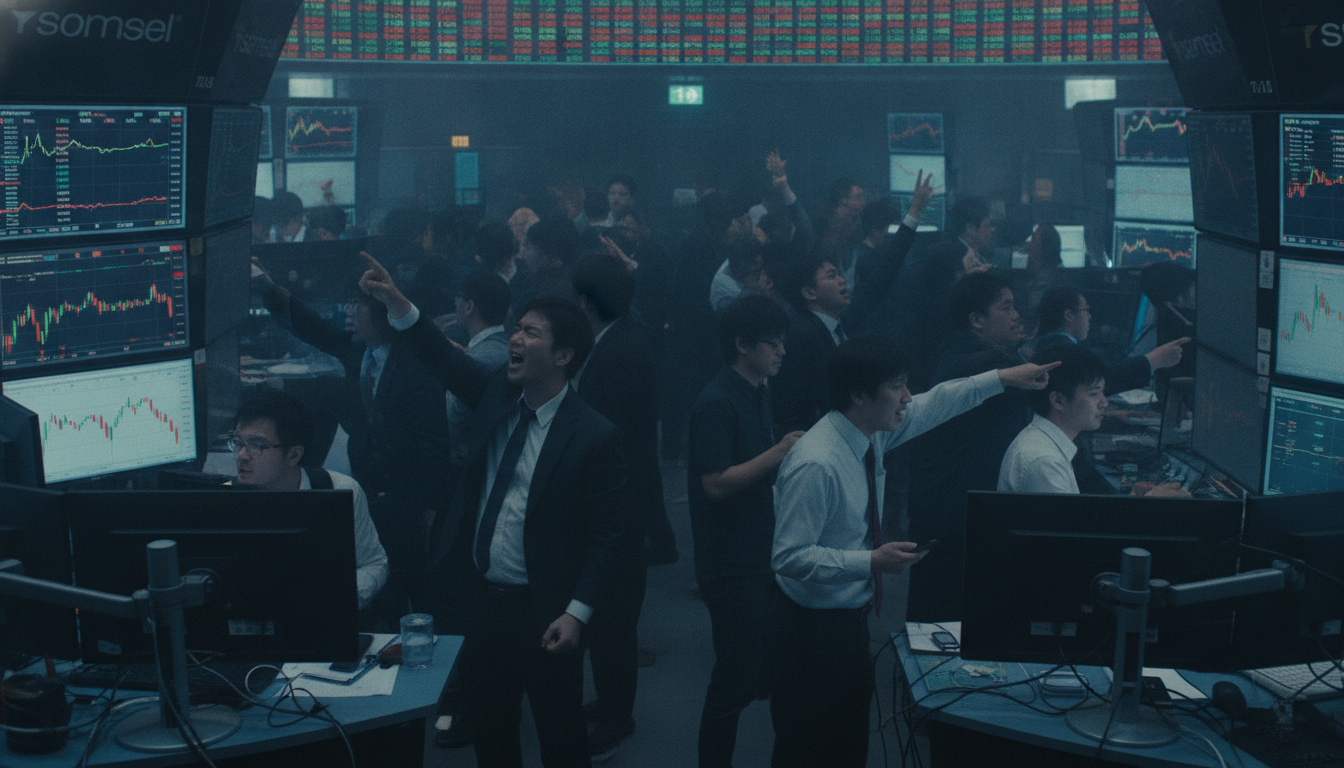
Retail Investors Drive Volatility in Japan, South Korea and Taiwan Markets
Retail investors in Japan, South Korea and Taiwan are using more leverage, driving sharp equity volatility and prompting warnings from regulators and brokers.
Markets React to Rising Retail Leverage
Equity markets across Tokyo, Seoul and Taipei have seen heightened intraday swings as retail investors increase position sizes through margin loans and derivatives. Market participants say that a wave of enthusiastic buying during rallies, and rapid selling during reversals, has amplified price moves in key indices.
Trading desks report heavier retail order flow in technology and semiconductor names, while volume patterns show shorter holding periods than in previous cycles. Exchanges and market analysts describe the current environment as one in which individual traders have a larger influence on market microstructure than usual.
Surge in Margin Borrowing and Derivative Activity
Brokers in the region have noted a rise in margin account openings and a broader use of leveraged products such as futures and options by retail clients. This shift has expanded the channels through which retail investors can amplify gains — and losses — compared with cash-only strategies.
Industry sources say the availability of low-cost trading apps and promotional incentives has made leverage more accessible to a wider pool of investors. That accessibility has increased systemic sensitivity to rapid sentiment changes, as leveraged positions can force accelerated liquidations when prices move against traders.
Stocks and Sectors Showing the Sharpest Moves
Semiconductor and artificial-intelligence–related stocks have exhibited some of the largest swings, reflecting concentrated retail interest and high short-term liquidity in those names. In Japan, certain large-cap technology and electric-vehicle suppliers have experienced pronounced intraday volatility tied to retail flows.
South Korea’s chipmakers and Taiwan’s foundry-linked companies have similarly been focal points for leveraged trades. Market-makers and institutional traders warn that concentration in a few sectors raises the risk of cascading price adjustments when momentum fades.
Regulators and Brokers Raise Concerns
Regulatory authorities and major brokerage firms in the three markets have begun issuing guidance aimed at tempering excessive leverage and protecting less experienced investors. Recommendations include higher margin requirements for particularly volatile stocks and increased investor education about the risks of leverage.
Some brokers have introduced restrictions or alerts on highly volatile instruments and adjusted internal risk controls to reduce their own exposure to abrupt retail-driven swings. Regulators emphasize that maintaining orderly markets requires balancing investor access with safeguards against runaway leverage.
Sentiment, Herding and the Role of Social Media
Analysts point to social media channels and community trading forums as vectors for rapid information spread and coordinated buying, which can accelerate herd behavior among retail investors. Short-lived narratives around specific stocks or themes have the capacity to attract sizable retail capital in a compressed time frame.
Behavioral indicators show that when positive momentum builds, new retail participants often enter late in the move, increasing the propensity for sharp reversals. Conversely, negative headlines can trigger outsized selloffs as leveraged accounts are forced to close positions.
Implications for Institutional Traders and Long-Term Investors
Institutional participants are adjusting execution strategies to contend with higher retail-driven noise and intraday volatility. Liquidity providers are widening spreads in some names, and portfolio managers are taking greater account of retail order imbalances when timing trades.
Long-term investors may face short-term valuation distortions in affected sectors, creating both risks and selective opportunities. Financial advisers and asset managers stress the importance of portfolio diversification and risk management amid the intensified retail presence.
Market commentators caution that while retail engagement can democratize access to markets and improve liquidity in normal conditions, a sudden contraction of that engagement — particularly when many positions are leveraged — poses risks to market stability.
Retail investors’ growing use of leverage across Japan, South Korea and Taiwan is reshaping trading dynamics and raising fresh questions about market resilience. Regulators, brokers and institutional participants are responding with tighter controls and guidance, but analysts say sustained vigilance will be necessary as retail participation remains elevated.

