
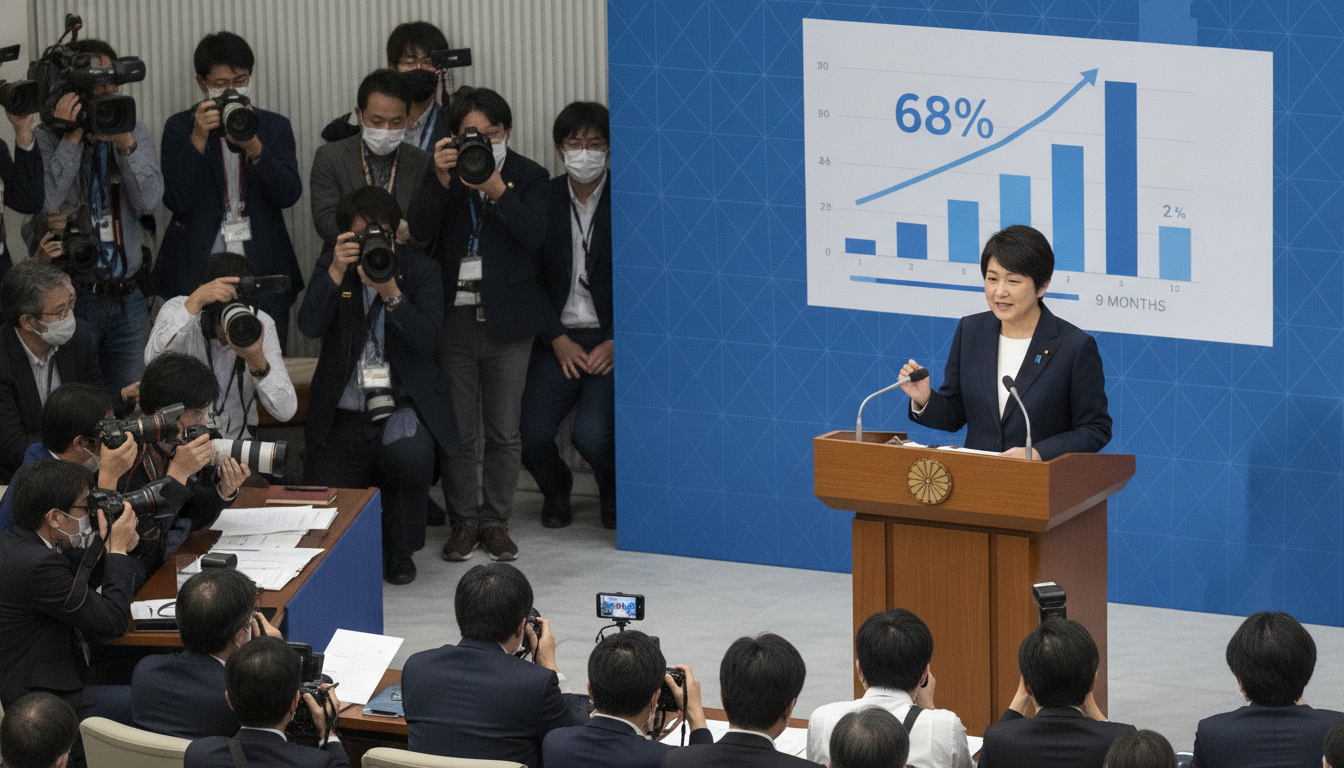
Sanae Takaichi approval rating rebounds to 68% in Nikkei–TV Tokyo poll
Sanae Takaichi approval rating rebounds to 68% in Nikkei–TV Tokyo survey, staying above 65% for nine months as public splits on temporary food tax cuts.
Prime Minister Sanae Takaichi’s approval rating climbed to 68% in a Nikkei–TV Tokyo survey, a two percentage point increase from May. The poll showed the cabinet has maintained support above 65% since taking office nine months ago, a notable run of sustained popularity. The survey also recorded divided public opinion on a temporary cut to the food sales tax and other inflation relief measures proposed by the government.
Nikkei–TV Tokyo poll finds 68% approval
The Nikkei–TV Tokyo survey released the figures showing a rebound in Takaichi’s approval rating to 68%. That represents a modest rise from May and continues a pattern of levels in the upper 60s observed since the new cabinet formed. Pollsters noted the result as a rare instance of extended high ratings for a Japanese cabinet in its first nine months.
Public response to the cabinet’s performance was mixed, with strong marks for handling of certain economic issues balanced by skepticism over some specific policy proposals. Respondents cited cost-of-living concerns as a central factor influencing their views. The survey highlighted how short-term relief measures and communications on inflation are shaping voter sentiment.
Cabinet approval holds above 65% for nine months
Takaichi’s cabinet has stayed above the 65% approval mark throughout its first nine months, according to the poll. Observers described the sustained ratings as historically notable compared with recent administrations. The continuity of support suggests a stable baseline of public confidence despite economic headwinds.
Analysts say prolonged approval at this level can provide political space to pursue both policy initiatives and legislative priorities. However, they also caution that approval ratings can pivot quickly if economic conditions worsen or if policy proposals fail to meet public expectations. The government’s ability to convert approval into durable policy wins remains a central test.
Public split on temporary food sales tax cut
The survey found public opinion divided over a temporary reduction in the food sales tax, one of several relief measures under consideration. Supporters argue a temporary cut would provide immediate relief to households facing rising prices. Opponents question the measure’s long-term effectiveness and raise concerns about fiscal trade-offs.
Officials have framed the tax cut as part of a broader toolkit to address inflation and ease daily expenses. Yet the split in public sentiment underscores the political challenge of designing measures that are both popular and fiscally sustainable. The debate is likely to influence how the government sequences and packages its relief proposals.
Economic pressures and policy responses
Inflation and the cost of living remain central issues for voters, according to the poll’s framing. The Takaichi administration has emphasized targeted relief measures aimed at shielding households from price shocks. Policymakers must balance short-term support with longer-term fiscal stewardship as they respond to public concerns.
The government also faces the task of communicating the expected effects and limits of each policy to maintain credibility. Clear messaging on who benefits from measures such as tax cuts and subsidies will be important to sustain public backing. The survey results suggest that while overall approval is high, confidence in specific proposals is contingent on perceived fairness and effectiveness.
Potential political consequences for ruling parties
Sustained high approval rates for the prime minister and her cabinet could reshape intra-party dynamics and legislative calculations. Lawmakers within the ruling coalition may feel emboldened to advance priority bills or push for decisive action on economic relief. Conversely, intra-coalition debates over the scale and financing of measures could intensify if public opinion remains split.
Opposition parties will likely scrutinize any proposed tax changes and relief packages, seeking to capitalize on public doubts. The polling snapshot does not guarantee future electoral outcomes, but it does provide a window into public priorities that will inform political strategy. Parties on all sides will monitor subsequent polls for signs of shifting voter sentiment.
Looking ahead, watchers say the government’s handling of inflation relief and the clarity of its policy mix will be central to whether approval ratings remain elevated. Any shifts in price trends, subsidy details, or fiscal projections could quickly alter the public’s judgment. The next round of surveys will be closely watched for early signs of that movement.
The Nikkei–TV Tokyo survey offers a timely measure of public attitudes toward the Takaichi cabinet and its economic agenda, showing broad approval alongside clear divisions over specific relief measures. As policymakers weigh options to address inflation and household costs, the durability of public support will depend on both policy outcomes and the government’s ability to explain them.

