
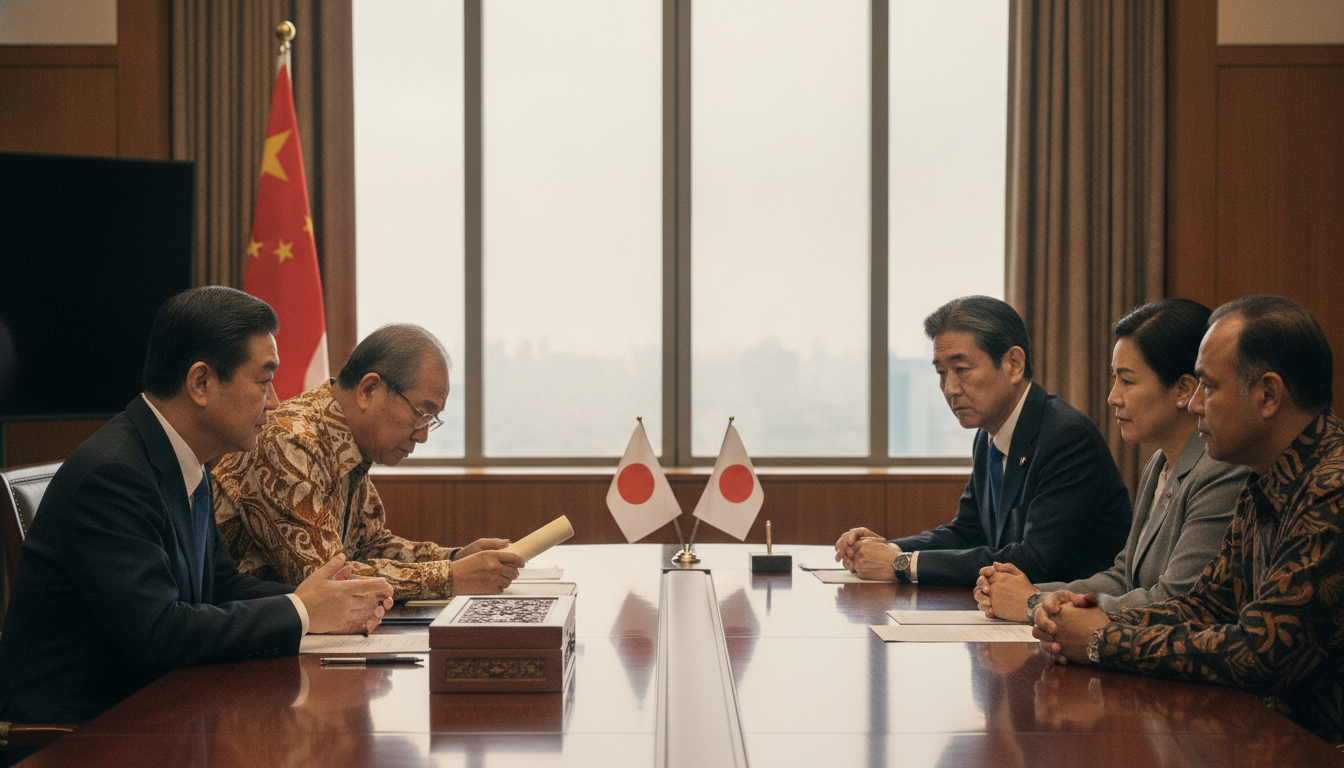
Japan-China tensions deepen as Beijing accuses Tokyo of ‘new militarism’ amid regional diplomatic ripples
Japan-China tensions escalate as Beijing calls Tokyo a ‘new militarism’; Pakistan, Bangladesh, Myanmar issued veiled warnings after Takaichi’s Nov 2025 remarks.
Japan-China tensions have intensified after Beijing renewed public criticism of Tokyo and allied partners echoed the accusation in recent joint statements. Chinese officials have framed Prime Minister Sanae Takaichi’s November 2025 comments about a hypothetical Taiwan emergency as evidence of a shift in Japan’s security posture. Diplomatic language in communiqués with Pakistan, Bangladesh and Myanmar has taken on a sharper tone, signaling Beijing’s concern about regional perceptions.
Beijing’s characterization of Tokyo
Beijing has repeatedly described what it calls a revival of Japanese militarism in recent public statements and diplomatic briefings. Chinese spokespeople point to Tokyo’s security planning and political rhetoric as indicators of an assertive turn. Officials in Beijing argue that such developments complicate regional stability and warrant broader diplomatic responses.
Veiled warnings in joint communiqués
Over the past weeks, joint communiqués with Pakistan, Bangladesh and Myanmar included language critics describe as indirect warnings about Japan’s actions. The phrasing stopped short of explicit sanctions or formal condemnations, but diplomats say the tone marked a shift from routine bilateral affirmations. Observers note the choice of partners and timing suggest an effort by Beijing to widen the narrative beyond its closest allies.
Domestic trigger: Takaichi’s November 2025 remarks
Prime Minister Sanae Takaichi’s comments in November 2025 about Japan’s possible response in a Taiwan contingency have been singled out by Chinese authorities. Beijing presented the remarks as evidence of a strategic recalibration in Tokyo, arguing they reflect a departure from the postwar pacifist consensus. Tokyo officials counter that the comments were hypothetical and meant to underscore contingency planning rather than signal a policy change.
Responses from Tokyo and Washington
Japanese government spokespeople have rejected Beijing’s characterization and emphasized Tokyo’s commitment to defensive policies under the constitution. Tokyo has reiterated that its security planning aims to protect national territory and support regional peace. The United States, a security partner of Japan, has urged restraint on both sides and underscored the importance of diplomatic channels to reduce misunderstandings.
Regional diplomatic implications
The diffusion of Beijing’s messaging to states such as Pakistan, Bangladesh and Myanmar could widen the diplomatic cost for Tokyo if the pattern persists. Analysts say the move may be aimed at shaping global discourse and complicating coalition-building around security initiatives in East Asia. For countries balancing relations with both Beijing and Tokyo, calibrated wording in communiqués reflects a cautious approach to avoid overt alignment.
Security and economic stakes for Japan
Tokyo faces a complex trade-off between strengthening deterrence and managing diplomatic fallout with regional partners. Increasing defense capabilities or closer security cooperation with allies could deter potential threats but may also invite sustained criticism from Beijing and its diplomatic partners. Economic ties between Japan and many Asian countries remain significant, and Tokyo is seeking ways to sustain those relationships while pursuing legitimate security objectives.
Diplomats and regional analysts say both sides have an interest in avoiding escalation that could spill into military or economic confrontation. They recommend stepped-up communication, crisis-management mechanisms and clearer delineation between rhetoric and policy to prevent misinterpretation. International observers will be watching upcoming diplomatic meetings and communiqués for signs of either détente or further entrenchment.
Recent exchanges underline the fragile balance in East Asian diplomacy as states respond to shifts in rhetoric and posture. Japan-China tensions now include not only bilateral friction but also an expansion of narrative influence that Beijing appears to be testing with selected partners. How Tokyo navigates security planning while rebuilding confidence with neighboring states will shape the region’s trajectory in the months ahead.

