
Vocational Training Program from Stuttgart Tour Seen as Key to Easing Japan’s Mechanic Shortage
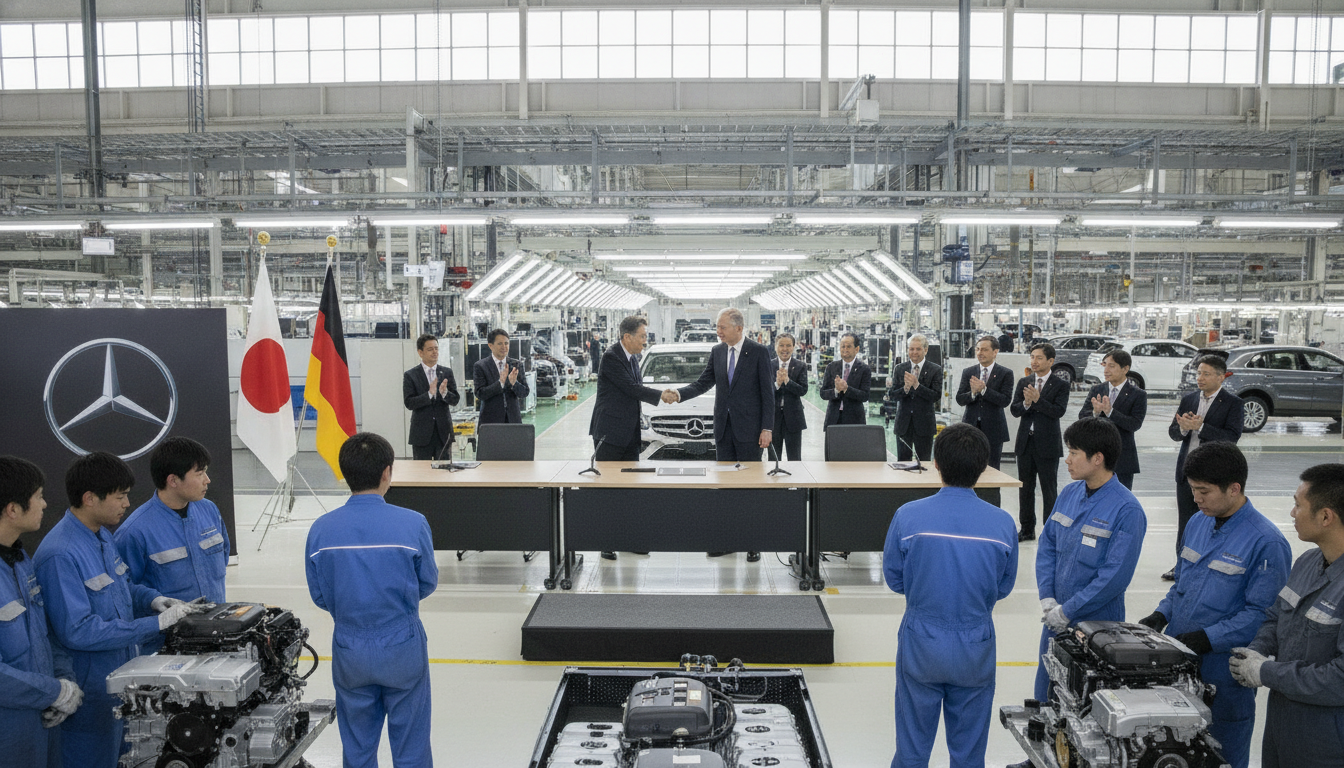
Japanese delegates examined a Mercedes-Benz vocational training program in Stuttgart in late June 2026 as officials seek solutions to the country’s growing mechanic shortage, focusing on apprenticeships and advanced diagnostic skills.
The delegation’s visit highlighted how structured in-plant training and partnerships with vocational schools could supply a steady pipeline of technicians to Japan’s automotive and commercial vehicle sectors. Delegation members said the program’s mix of hands-on apprenticeship, classroom theory and manufacturer certification was central to its effectiveness.
Japanese Delegation Visits Stuttgart Training Hubs
The visiting group toured Mercedes-Benz’s truck and sports car workshops near Stuttgart, observing daily training schedules and instruction methods used on production floors. Delegates noted the extensive use of simulated diagnostics and live-vehicle instruction integrated into regular factory operations.
During the first stop of the tour, Japanese representatives were shown how workshops balance service demand with trainee supervision to ensure productivity and learning occur side by side. Observers emphasized that the visible coordination between technicians and trainers reduced downtime while accelerating competency development.
Mercedes-Benz Model of In-Plant Apprenticeship
Mercedes-Benz’s in-house apprenticeship model pairs trainees with experienced technicians for multi-year rotations through chassis, powertrain and electronics stations. This model embeds vocational training program elements directly into production and aftersales environments, producing technicians familiar with brand-specific systems and workflows.
Facility managers described a tiered certification path that recognizes incremental skills and allows trainees to take on more complex diagnostic tasks as they progress. Delegates from Japan saw how clear milestones and employer-backed credentials helped retain trainees and signal competence to customers and dealers.
Curriculum Focus: Trucks, EVs and Diagnostics
A major component of the observed curriculum was advanced diagnostics for electric vehicles (EVs) and heavy commercial trucks, reflecting global vehicle electrification trends. Training modules combined software fault-finding, high-voltage safety and mechanical repair to give technicians a comprehensive skill set.
Workshop instructors stressed that modern diagnostics require both technical theory and repeated hands-on troubleshooting under mentorship. Japanese participants indicated interest in adapting these modules for domestic vocational schools to prepare students for hybrid fleets and EV maintenance.
Partnerships with Vocational Schools and Industry
Delegates studied how the Stuttgart program partners with regional vocational institutions to standardize core competencies and produce entry-level technicians ready for on-the-job training. Local schools supply theoretical instruction while manufacturers provide practical apprenticeships and access to proprietary diagnostic tools.
Officials discussed frameworks for formal collaboration that include shared curricula, co-funded training facilities, and internship placements at dealer networks. Such partnerships were seen as a way to scale a vocational training program nationally without overburdening individual companies.
Policy Support and Certification Pathways
Delegation members examined how regional authorities supported training through subsidies, tax incentives and recognition of manufacturer-backed certifications within broader qualification frameworks. This alignment helped trainees transition from school to employment with clear certification that employers trusted.
Japanese policymakers on the tour indicated they were evaluating similar incentive packages to encourage private-sector investment in technician training. Observers noted that credible, portable certifications are crucial for workforce mobility and for meeting regulatory safety standards in vehicle repair.
Recruitment Challenges and Retention Strategies
Participants acknowledged that recruitment into technical trades remains a challenge in Japan, where demographic shifts and changing employment preferences have reduced the pool of young entrants. Delegates discussed targeted outreach, career awareness campaigns in high schools, and guaranteed employment pathways as ways to attract candidates.
Retention strategies highlighted by industry leaders included progressive wages tied to certification, mentorship programs, and clearer career ladders into supervisory and specialist roles. The Stuttgart examples suggested that giving trainees visible progress markers and employer-backed credentials reduced early dropouts.
Industry representatives said that combining practical apprenticeship with certification and post-training placement could help reverse a long-term decline in available mechanics. The vocational training program observed in Germany was repeatedly cited as a scalable template that balances employer needs, trainee learning and certification credibility.
The delegation returned to Japan with a package of recommendations centered on expanding apprenticeship slots, updating curricula to include EV and heavy-truck diagnostics, and creating national recognition for manufacturer-linked certifications. Officials and industry groups are expected to begin pilot programs this year to adapt elements of the Stuttgart model to Japan’s regulatory and educational environment.

