
Toyota and Joby Launch Joint Venture to Commercialize Flying Cars
Toyota and Joby form a joint venture to commercialize flying cars, with Toyota sharing production technology to raise quality and scale air taxi output.
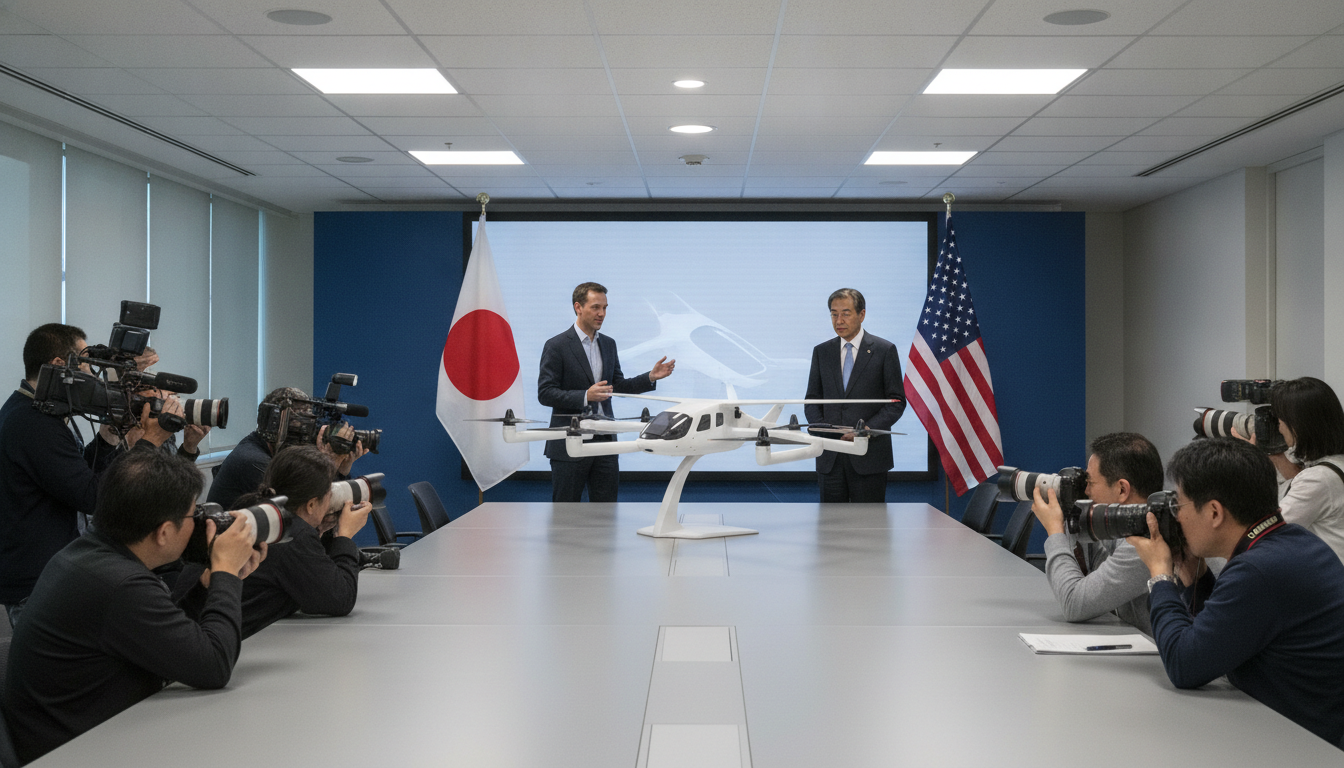
Toyota Motor said on Tuesday it will form a joint venture with Joby Aviation, the U.S. startup developing electric vertical takeoff and landing aircraft commonly described as flying cars. The partnership will see Toyota contribute production technology and manufacturing expertise to improve quality and boost output as the companies pursue commercialization of air taxis. Executives framed the move as a way to marry Joby’s aircraft design with Toyota’s mass-production systems to accelerate entry into urban air mobility markets.
Joint venture announced in Nagoya
Toyota confirmed the agreement from its Nagoya operations, saying the two firms will establish a new company to coordinate production and development efforts. The joint venture is described as a planned startup focused on turning Joby’s eVTOL prototypes into units suitable for high-volume service.
Both parties emphasized that the arrangement is intended to advance commercialization rather than remain in a prolonged development phase. Toyota characterized its role as providing manufacturing know-how to ensure consistent quality and reliable supply as demand for air taxis grows.
Toyota to transfer production technology
Toyota will share manufacturing processes, quality-control systems and parts-supply practices with Joby to help scale aircraft assembly, the companies said. The transfer is aimed at reducing variability in production and shortening lead times for aircraft components.
Officials noted that adapting automotive mass-production techniques to aircraft manufacture requires careful calibration for aerospace standards. Toyota’s experience with lean manufacturing and supplier networks is expected to underpin a production model tailored to eVTOL technology.
Joby’s role in aircraft development and certification
Joby will retain responsibility for aircraft design, flight systems and regulatory certification as part of the joint effort. The startup’s eVTOL platform—designed for short urban hops—remains central to commercialization plans and operational concepts for air taxi services.
The partnership is intended to help Joby move from prototype testing to certified production-ready models by leveraging Toyota’s engineering resources. Joby’s expertise in electric propulsion and flight controls will complement Toyota’s manufacturing capabilities as the companies work toward regulatory approval.
Regulatory and safety challenges ahead
Regulatory certification and safety oversight remain major hurdles to bringing flying cars into commercial service. Airworthiness approval, pilot training standards, and procedures for urban flight corridors will all require coordination with aviation authorities in multiple jurisdictions.
Infrastructure is another practical constraint, with vertiports, charging systems and air-traffic management needing to be built or adapted for daily operations. Company officials stressed that scaling production is only one part of a broader ecosystem that must be established for air taxi services to become routine.
Market outlook and competitive landscape
Industry analysts say the urban air mobility market could create new short-range transport options in dense cities, but the pace of adoption hinges on cost, regulation and public acceptance. Early use cases may include premium air taxis, emergency response and tourism services before more widespread commuter deployment.
The joint venture positions Toyota and Joby to compete with other manufacturers pursuing eVTOL certification and commercial operations. Observers noted that combining automotive-scale manufacturing with aviation design could offer a competitive edge if the partners can demonstrate consistent quality and safe, cost-effective operations.
Implications for Japan’s mobility sector
For Japan, the alliance underscores growing interest in diversified mobility solutions beyond traditional automaking. The partnership may stimulate domestic supply chains and spur investment in vertiport infrastructure if operations expand within Japanese cities.
Local suppliers and engineering firms could find new opportunities supplying components or services adapted from automotive to aerospace requirements. Policymakers and regional authorities will likely need to engage with the companies as pilots, zoning and airspace considerations are addressed.
The joint venture marks a significant step toward bridging prototype aircraft and mass-produced air taxis, combining Joby’s eVTOL designs with Toyota’s manufacturing expertise to pursue commercialization of flying cars.

