
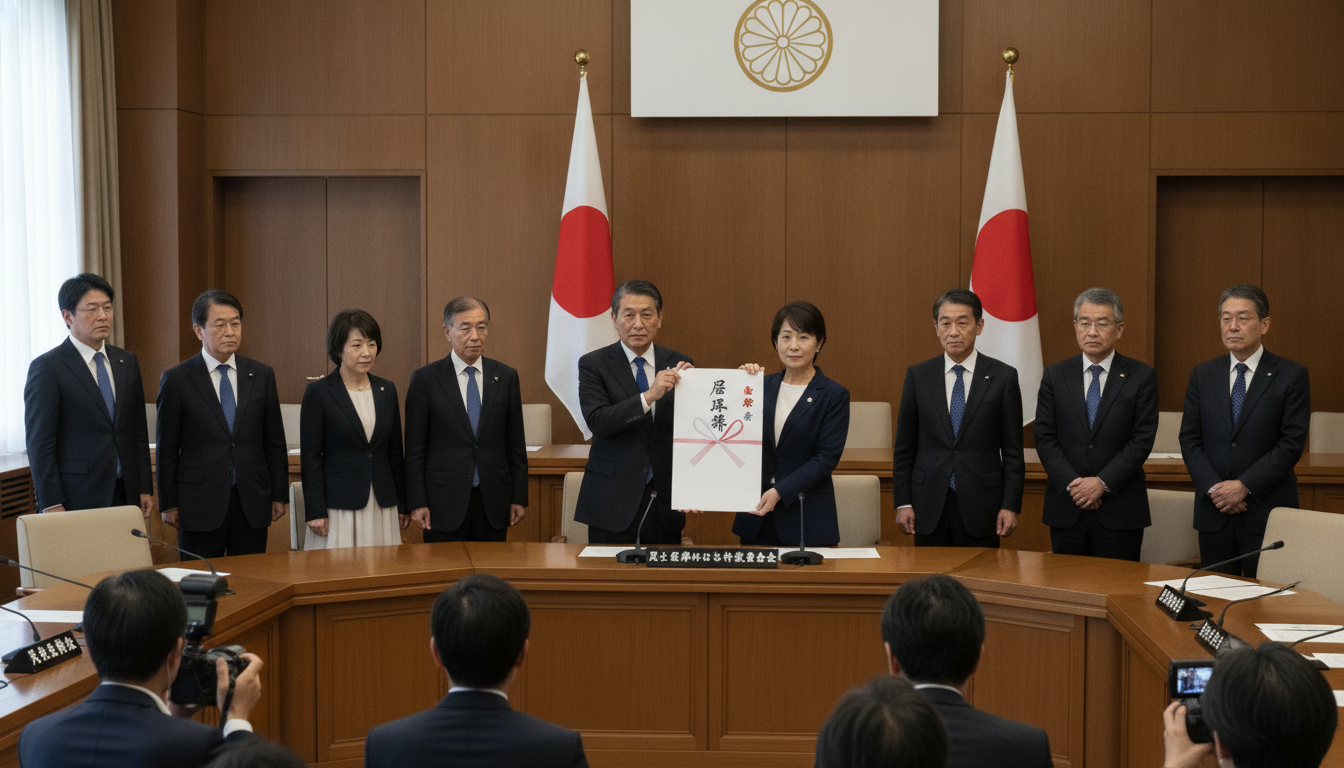
Imperial Household Law amendment: Parliamentary leaders table supplementary resolution emphasizing 30-year reviews
Lawmakers tabled a supplementary resolution for the Imperial Household Law amendment this week, requiring 30-year reviews to consider adopted royals’ situation. On July 1, 2026, the speakers and vice speakers of both chambers circulated the draft resolution to party leaders ahead of expected Diet deliberations. The move seeks to balance the government’s plan to expand the imperial family with concerns raised by opposition parties about adoption of male-line descendants.
Parliamentary leaders circulated the draft to party groups
The draft supplementary resolution was presented to political parties by the presiding officers of the House of Representatives and the House of Councillors on July 1. It accompanies a government bill that would allow adoption of male-line males from former imperial branches as a means of securing the number of imperial family members. The circulation is intended to build cross-party understanding before formal committee debate.
30-year review provision to account for royal and surrounding circumstances
A focal point of the draft is clarification of how the statutory 30-year review of the measures should be conducted. The resolution states that reviews should “take into account the environment surrounding adopted members and the circumstances of the imperial family,” signaling that social, institutional and familial factors must be weighed. Though non-binding, this language aims to reassure critics that any long-term adoption policy will be reassessed in light of practical realities.
Government package pairs adoption with retention of status for female royals
The government’s amendment package combines two major changes: the adoption of male-line males into the imperial family and a provision permitting female imperial members to retain their imperial status after marriage. Both measures are framed as complementary steps to stabilize succession and maintain the functions of the imperial household. Officials say the dual approach is designed to broaden options for ensuring a stable line of succession without immediately altering the male-only succession rule.
Opposition parties have raised legal and social concerns
Several opposition parties have publicly expressed reservations about the adoption proposal, citing legal, historical and social implications. Critics question whether reviving ties with former imperial households and granting adopted members full imperial status aligns with contemporary expectations for the monarchy. The supplementary resolution’s emphasis on periodic review appears intended to address these objections by embedding a mechanism for reassessment and adjustment.
Legal nature of the resolution and its practical effect
The draft is a supplementary resolution and therefore carries no direct legal force, but it functions as a political guide for future implementation and review. It reiterates that “when deemed necessary, appropriate measures shall be taken,” underscoring the expectation of follow-up action in subsequent reviews. Legal experts note that such resolutions are commonly used in Japan to shape administrative practice and parliamentary oversight even when they are not binding statutes.
Female imperial branches left out of the current draft
Notably, the draft does not include the creation of female imperial branches — a measure previously discussed following the 2017 Special Measures Act on Imperial Abdication. That earlier debate had designated the establishment of female branches as a subject for study, but the new supplementary text omits explicit endorsement of that option. The omission reflects the continued sensitivity and division over substantive reforms to imperial succession norms.
The draft resolution will be distributed for party comment and is likely to figure prominently in Diet committee hearings in the coming weeks. Lawmakers and palace advisers will be watching how public opinion and stakeholder views evolve before any final legislative vote is taken.

