
2025 rice surplus piles up in Niigata as private stocks hit decade high
Private stocks of 2025 rice reached 2.49 million tons by April, straining warehouses in Niigata and raising fears of falling prices and losses for wholesalers.
Surplus 2025 rice accumulates in Niigata warehouses
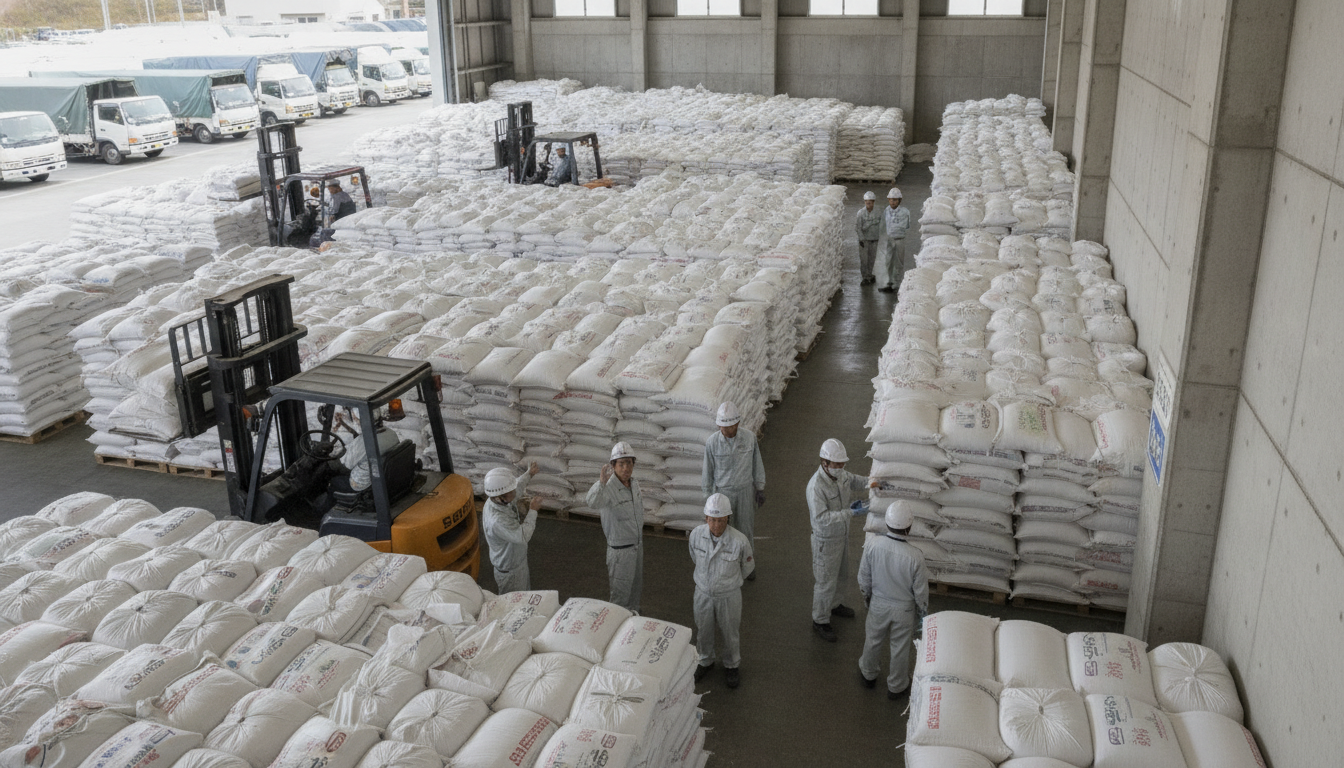
In mid-June at the JA Echigo Chuetsu Nagaoka agricultural center, staff found warehouse space far fuller than a year earlier as 2025 rice, including Koshihikari, was stacked in large quantities. Koji Endo, head of the center’s farm management and economics division, said end-May stocks were roughly 1.5 times last year and that some storage sites had been barely half full at this point in 2025. The surge follows a shift from the 2024 "rice unrest" and subsequent release of public reserves, paired with a generally abundant 2025 harvest.
The immediate issue is not only volume but market access; JA and local cooperatives have contracts for much of their intake, yet buyers such as wholesalers are themselves holding large inventories and are unable to take on more. This bottleneck has left rice piled in regional granaries and raised urgent questions about logistics and price stability.
Ministry data shows highest private stocks in a decade
The Ministry of Agriculture, Forestry and Fisheries reported that private inventories of table rice stood at 2.49 million tons at the end of April, about 810,000 tons higher than the same month a year earlier. That figure represents the largest private stockpile in roughly ten years, underscoring a nationwide imbalance between supply and current demand. Analysts say the data reflect both carryover from policy-driven releases in 2024 and a favorable growing season for 2025 that boosted output.
Industry observers note that national statistics translate directly into stress for major rice-producing prefectures like Niigata, where Koshihikari is a flagship brand and storage capacity and market channels are tightly linked to seasonal harvest cycles.
Wholesalers warn of widening losses
Wholesalers contacted in Niigata expressed mounting concern about the financial fallout, with some speaking on condition of anonymity about an expected wave of margin losses. One distributor described the market as heading toward a so-called "oya-fukou" situation, a term used by traders to indicate conditions unfavorable to producers and middlemen alike. With prices under pressure and holding costs rising, firms face the prospect of writing down inventories or selling at steep discounts.
Beyond immediate price impacts, wholesalers say full warehouses complicate logistics and increase carrying costs, from storage fees to quality-management expenses for moisture- and pest-sensitive table rice. Those added costs are likely to be passed back along the supply chain, squeezing margins for cooperatives and potentially depressing farmgate prices.
Cooperatives report contracted but undeliverable stock
JA Echigo Chuetsu and other regional cooperatives say the majority of the rice they hold is already tied to contracts with national aggregators and domestic buyers. Despite contracting, many of those buyers are also overstocked and have informed suppliers they cannot take additional shipments in the short term. Endo said roughly 80 percent of the cooperative’s stored rice is under contract, but confirmed that pickup delays are widespread.
The mismatch between contractual commitments and physical logistics is forcing cooperatives to extend storage periods and, in some cases, delay new collections from farmers. Prolonged storage increases the risk of quality degradation, complicates planning for the next harvest, and raises the chance that some rice will eventually be shifted out of premium channels into lower-priced outlets.
Farmers face price uncertainty after 2024 turmoil
For growers, the swing from last year’s market turbulence to a surplus this season has produced fresh uncertainty about returns. The 2024 episode that prompted public reserve releases initially supported prices, but the current oversupply threatens to undercut those gains as buyers seek to reduce inventories. Farmers who expanded planting in response to favorable prospects now confront the risk that higher output will not translate into higher income.
Local producers and cooperative leaders are weighing options that include diversified marketing, accelerated shipping to export or processing channels, and coordination with authorities on potential measures to stabilize flows. However, concrete alternatives are limited by the scale of the surplus and by the seasonal rhythm of rice handling.
Policy options and market adjustments under consideration
Officials at prefectural agricultural offices and industry groups say discussions are underway about short-term measures to relieve warehouse congestion and longer-term policies to smooth price volatility. Possible steps include targeted promotions to boost domestic consumption, increased use of rice in processed foods, and evaluations of export opportunities to absorb surplus. Any official intervention would need to balance market support with fiscal prudence and international trade obligations.
Industry stakeholders also point to structural adjustments: better demand forecasting, incentives to shift some acreage to alternative crops, and investments in flexible storage and logistics to handle cyclical swings. Such changes would take multiple seasons to implement and will require coordination among producers, cooperatives, and government bodies.
Large private inventories of 2025 rice, concentrated in key producing areas like Niigata, have turned this year’s harvest into an acute logistical and market challenge. The combination of contract obligations, full warehouses and price pressure has left cooperatives and wholesalers scrambling for solutions, while farmers confront renewed uncertainty about income after a turbulent 2024. Short-term relief and longer-term structural adjustments will be needed to rebalance supply and demand for table rice across Japan.

