
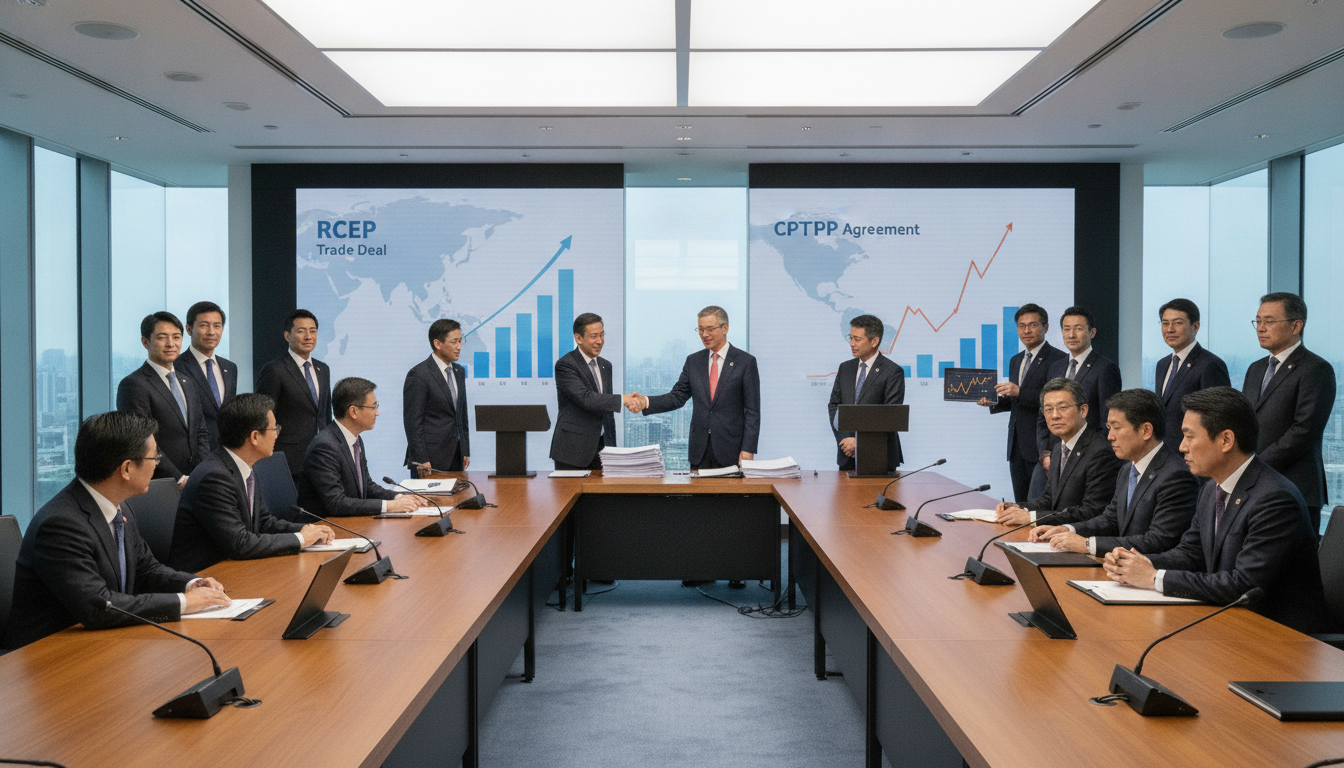
Japan Firms Face Uneven Gains as CPTPP and RCEP Tariff Cuts Phase In
Major Asian trade pacts CPTPP and RCEP are delivering benefits unevenly as many tariff reductions are phased in gradually, affecting industries and exporters differently across the region.
The regional economic landscape is shifting as tariff reduction schedules under the Comprehensive and Progressive Agreement for Trans‑Pacific Partnership (CPTPP) and the Regional Comprehensive Economic Partnership (RCEP) begin to take effect for a growing number of signatories. While both agreements promise lower trade barriers, the pace and scope of tariff liberalization mean advantages are accruing to some sectors and countries faster than others. Policy decisions, rules of origin and existing supply chains will shape winners and laggards in the coming years.
Phased tariff commitments slow immediate gains
Many tariff cuts under CPTPP and RCEP are not instantaneous, with schedules that stretch over several years to decades in some cases.
Countries negotiated long implementation timelines to protect sensitive domestic industries, which blunts the immediate impact of the agreements. As a result, exporters in sectors where tariffs fall quickly gain near‑term advantages, while those in protected areas see little change for years.
Different industries capture different benefits
Manufacturing exporters, agriculture producers and services firms are experiencing divergent outcomes as tariff reductions roll out.
Automotive and electronics manufacturers benefit where rules of origin and tariff elimination align with existing regional supply chains, particularly when inputs cross borders multiple times. By contrast, farmers and producers of products with long phase‑out periods face continued protectionism and limited access for now.
Japan’s exporters see mixed opportunities
Japanese firms are finding targeted openings but also new competitive pressures as CPTPP and RCEP reshape regional trade.
High‑value manufacturers with integrated supply chains, such as automotive parts and precision machinery, can leverage tariff relief to deepen exports to Southeast Asia and Oceania. At the same time, some Japanese agricultural producers remain shielded by long transition periods, slowing market access for products like rice and dairy that were sensitive during negotiations.
Rules of origin reshape supply‑chain strategies
The interaction between CPTPP and RCEP rules of origin is prompting firms to reassess regional sourcing and production footprints.
Firms seeking tariff preferences must meet origin criteria that can differ between the two pacts, influencing where components are purchased and where final assembly takes place. Companies that reconfigure supply chains to meet the most favorable rules stand to reduce costs and improve market access, while others may face higher compliance burdens.
Policy coordination and domestic measures matter
Government action will determine how fully countries and firms realize potential gains from CPTPP and RCEP.
Supporting measures such as customs modernization, export promotion, and assistance for small and medium‑sized enterprises are critical to translating tariff cuts into real trade growth. Regulatory convergence on standards and intellectual property could also determine the comparative advantage for services and technology sectors among signatories.
Competition and convergence between the two pacts
CPTPP and RCEP overlap in membership and coverage but differ in ambition, creating both competitive and complementary dynamics.
CPTPP generally contains deeper liberalization and stricter standards, while RCEP is broader geographically and often offers more gradual commitments. Firms and governments face choices about which preferential rules to use for particular trade flows, and some countries may pursue domestic reforms to match the higher standards found in CPTPP in order to capture premium opportunities.
The coming years will test how quickly theoretical tariff savings translate into expanded trade. Early gains are likely to concentrate in sectors ready to exploit tariff reductions and in countries that harmonize customs procedures and rules. Conversely, sectors subject to phased reductions or complex origin rules may see benefits lag behind expectations.
Investment flows, not just tariff changes, will shape the long‑term distribution of gains from CPTPP and RCEP. Foreign direct investment that relocates production to take advantage of preferential treatments could amplify benefits for host economies and alter regional value chains. However, without targeted industrial and trade policies, smaller firms risk being left out of these shifts.
For Japan and other signatories, the practical outcome of both trade agreements will depend on how governments and businesses align strategy with phased tariff schedules and origin requirements. Those that move swiftly to simplify border procedures, support exporters and adjust sourcing will be better placed to convert negotiated preferences into competitive advantage.
Looking ahead, the interplay between CPTPP and RCEP will continue to influence the shape of Asian trade integration, with incremental tariff liberalization and regulatory alignment determining which industries and countries capture the most value from the region’s evolving trade architecture.

