
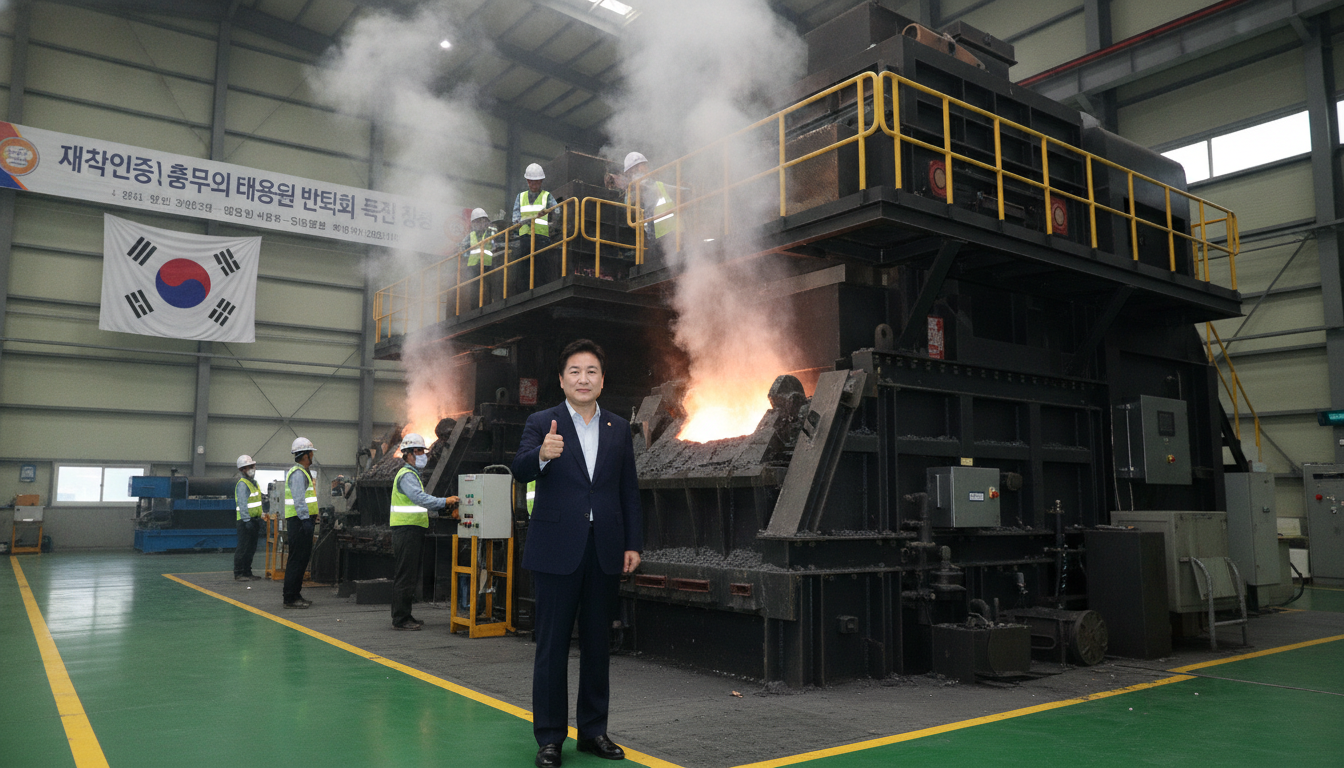
South Korea Restarts Tungsten Mine at Sangdong After 32 Years, Targeting US and Japanese Buyers
South Korea’s Sangdong tungsten mine in Yeongwol County has resumed production after a 32-year hiatus, marking a strategic return to domestic tungsten output and plans to export concentrate to the United States and potentially to Japan. The restart, led by U.S.-listed Almonty Industries, signals an effort to build alternative supply chains for the critical industrial metal tungsten. (almonty.com)
Production Restarts at Sangdong Tungsten Mine
The Sangdong operation — historically one of the world’s largest tungsten deposits — moved from commissioning into commercial production in March 2026, with the first ore deliveries and processing activities now under way. Company statements describe the Phase 1 completion as the formal transition to saleable tungsten concentrate and the end of more than three decades without Korean tungsten output. (nasdaq.com)
Mining and processing at Sangdong focus on scheelite ore, which the operator says yields a comparatively high-grade tungsten concentrate. Almonty has detailed a staged ramp-up plan, initially producing concentrate to be sold abroad while an on-site tungsten oxide facility is developed. Company material reports emphasise Sangdong’s potential to supply a meaningful share of non-China tungsten output as capacity increases. (nasdaq.com)
Exports Planned to the United States and Japan
Until the planned tungsten oxide plant in Yeongwol is complete, Almonty intends to export concentrate for downstream processing overseas, with contracts already aimed at U.S. defence and industrial customers. Regulatory filings and offtake agreements disclosed by the company include arrangements to supply tungsten oxide and concentrate to U.S. defence applications, and corporate disclosures note customers and partners across the U.S., EU and Japan. (sec.gov)
South Korean industry sources and local officials have signalled interest in eventually repatriating higher-value processing to Yeongwol once the oxide plant is operational, a move that would allow domestic manufacturers to access locally produced precursors for semiconductors, displays and battery components. For the near term, however, international processors will handle much of the refinement. (almonty.com)
Strategic Shift from China in Tungsten Supply
The Sangdong reopening comes amid heightened attention to the global concentration of tungsten production and processing in China, which accounts for a substantial majority of mined tungsten and much of the downstream refining capacity. U.S. government and industry reports have highlighted the vulnerability created by this concentration and have encouraged development of alternative, allied supplies. Market watchers see Sangdong as one of a small number of projects able to broaden options outside China. (pubs.usgs.gov)
Recent policy moves and export controls in major producing countries have pushed manufacturers and governments to seek more secure supply chains for critical metals, including tungsten, which is essential for tooling, electronics, aerospace alloys and certain defence components. Analysts say newly operational mines in allied countries can temper short-term supply shocks and support longer-term supply diversification. (tradingview.com)
Almonty’s Commercial and Contract Position
Almonty has positioned Sangdong as its flagship asset and disclosed multiple commercial agreements intended to underpin long-term sales, including a multi-year floor-priced offtake with a U.S. defence contractor and other binding supply commitments. The firm is also pursuing vertical integration with plans for a tungsten oxide facility near the mine to produce higher-purity intermediates for semiconductor and defence manufacture. These commercial ties are a central element of the company’s strategy to become a reliable non-China supplier. (sec.gov)
The company’s public filings and investor materials describe projected production rates for Phase 1 and a pathway to increase throughput with additional capital and downstream capacity. Observers note that the economics of tungsten projects depend on ore grades, processing yields and global pricing, and that Sangdong’s historical resource base and upgraded processing plant are key to its near-term viability. (almonty.com)
Local Economic and Community Effects in Yeongwol
Local officials in Yeongwol County have welcomed the mine’s restart as a driver of jobs and regional investment after years of decline in mining activity. Authorities and company representatives have described plans for an industrial complex that would host processing, services and downstream activity, which they say could revitalize the local economy and create skilled employment opportunities. (koreatimes.co.kr)
Community leaders have also emphasised environmental oversight and benefit-sharing as central to the project’s social licence, seeking guarantees on water management, dust control and job training. Almonty and its Korean subsidiary have publicly pledged compliance with local regulations and commitments to work with municipal authorities on mitigation measures. (almonty.com)
The Sangdong project therefore intersects regional development aims and national strategic priorities, reflecting broader efforts in South Korea to secure domestic access to critical manufacturing inputs.
Sangdong’s return to production brings a new supply source into a concentrated global tungsten market, and while full benefits will depend on ramp-up, downstream processing capacity and sustained commercial contracts, the operation adds a notable alternative for buyers seeking non-China tungsten. (almonty.com)

