
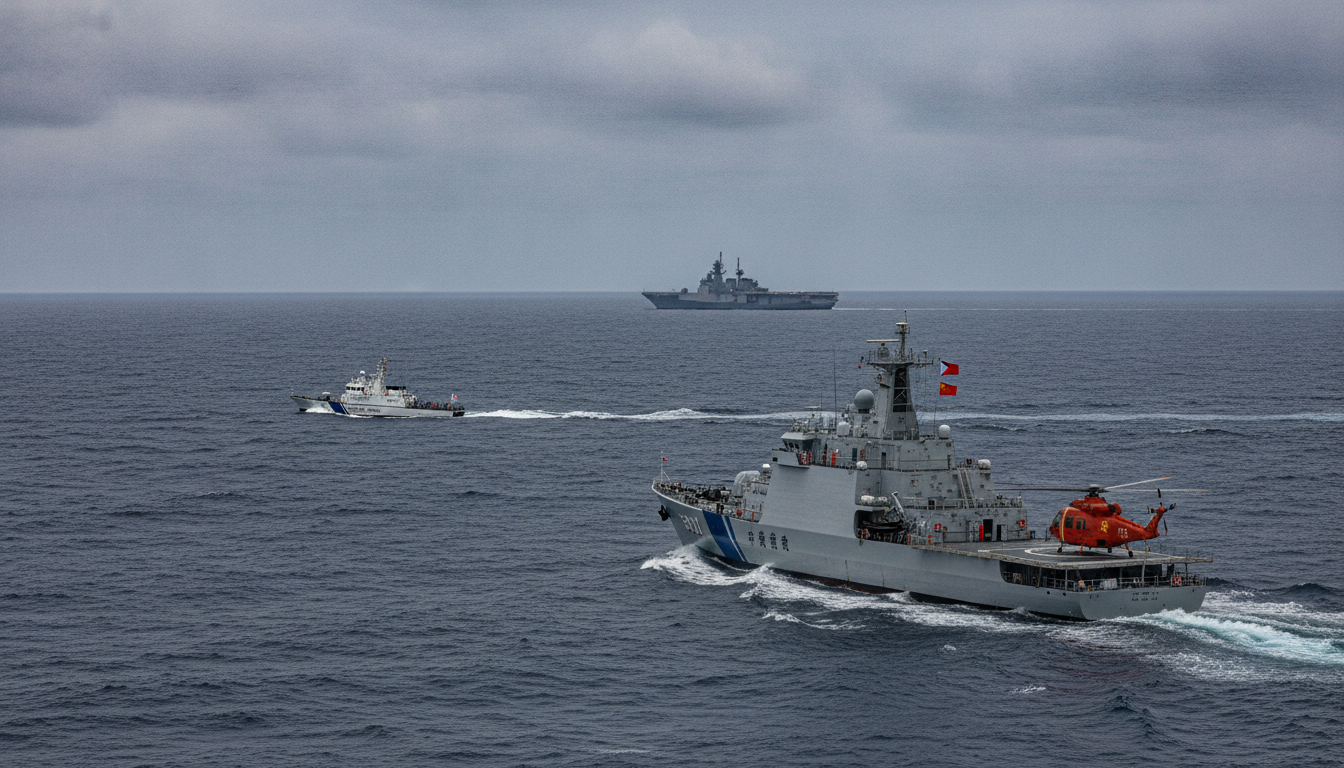
China’s maritime pressure raises Taiwan tensions as Tokyo and Manila deepen defense ties
China steps up South China Sea patrols near the Philippines and Japan, intensifying Taiwan tensions as Tokyo and Manila accelerate defense cooperation.
Beijing’s recent pattern of increased patrols and maritime confrontations near Philippine outposts and Japanese-operated waters has sharpened regional concerns about stability around Taiwan. Tokyo and Manila have responded by expanding joint training, logistics agreements and defense conversations aimed at deterring coercive moves in the seas that flank Taiwan. (mod.go.jp)
Chinese patrols and confrontations near Philippine outposts
A sequence of stand-offs and close passes involving China Coast Guard vessels and Philippine forces has been reported around Manila-held features in the South China Sea. Photographs taken in early May show Chinese vessels operating within sight of Philippine marines on Thitu Island, illustrating how routine patrols have become sources of regular tension. (gettyimages.no)
Philippine officials say such encounters endanger navigation and risk escalation if miscalculated, prompting Manila to increase surveillance and coast guard operations. The Philippine government has also sought faster delivery of maritime assets and training from partners to sustain a persistent presence in disputed waters.
Japan’s expanded role in Balikatan and maritime drills
This year’s Balikatan exercises in the Philippines featured a significantly larger Japan Self-Defense Forces contribution, including personnel, warships and missile systems that demonstrated interoperability with Philippine and U.S. units. The expanded Japanese role, which included live-fire demonstrations and integrated maritime strike drills, signaled Tokyo’s willingness to play a more visible deterrent role in combined operations. (japantimes.co.jp)
Tokyo frames the participation as part of routine alliance activity and capacity-building with Southeast Asian partners. Still, the deployment of missile systems and the scale of SDF forces at Balikatan have attracted attention in Beijing and among regional capitals interpreting the move as a response to greater Chinese assertiveness.
Elevation of Tokyo–Manila ties to a comprehensive strategic partnership
Leaders in Tokyo and Manila formalized deeper cooperation during high-level meetings this spring, elevating bilateral relations to a Comprehensive Strategic Partnership and committing to closer defense, intelligence and logistical arrangements. The two governments announced plans to negotiate protections for classified military information and to accelerate equipment transfers and training programs. (pco.gov.ph)
Officials in both capitals described the elevation as a response to a deteriorating regional security environment and as a step to strengthen deterrence without seeking confrontation. The agreements expand frameworks that facilitate joint exercises, supply arrangements and exchanges between defense establishments.
Beijing’s diplomatic pushback and warnings
China has publicly criticized Japan and the Philippines for bolstering defense cooperation and has warned against activities it views as undermining its interests around Taiwan. Beijing has lodged diplomatic protests over arms discussions and the use of Japanese systems in Philippine-led exercises, framing such moves as destabilizing and as aligning with outside powers that it considers hostile. (apnews.com)
Chinese statements have also reiterated a broader narrative that tighter security ties among U.S. allies and partners complicate cross-strait reunification goals and risk drawing Beijing into confrontations. Analysts note that Beijing’s messaging mixes legal arguments with military signaling to deny external support for Taiwan’s de facto autonomy.
Regional implications for Taiwan and maritime security
The sharpening interactions among China, Japan and the Philippines complicate the security environment around Taiwan by raising the baseline risk of accidental escalation at sea. Increased patrols, closer-range manoeuvres and larger multinational drills heighten the possibility that an isolated incident could reverberate across the region. Analysts warn that Taiwan’s proximity to key maritime routes and contested features makes it particularly vulnerable to disruptions that begin as localized pressure campaigns. (axios.com)
At the same time, deeper defense ties among Tokyo, Manila and other partners aim to bolster resilience, share situational awareness and demonstrate collective interest in preserving freedom of navigation and the existing maritime order. Policymakers in the region stress that these measures are defensive and intended to reduce the incentives for unilateral change by force.
Japan and the Philippines face a delicate balancing act: strengthening deterrence and interoperability while avoiding rhetoric or actions that could unnecessarily escalate tensions with Beijing. Both capitals emphasize diplomatic channels, regular consultations and risk-reduction mechanisms even as they proceed with capability enhancements and joint planning.
The international response has included calls for restraint and adherence to established maritime law, while Western partners have reiterated support for peaceful dispute resolution and the protection of maritime rights. Observers say sustained dialogue among claimants and increased transparency about military activities will be essential to prevent miscalculation.
The evolving security dynamics around Taiwan continue to test regional institutions and informal security architectures, prompting capitals to reassess force posture, cooperation frameworks and contingency planning. As Tokyo and Manila pursue deeper defense cooperation to manage growing maritime pressure, the immediate challenge remains reducing the likelihood that routine missions or training activities will spiral into a larger crisis.

