
Domestic travel decline threatens Japan’s summer vacation recovery
Japan’s domestic travel decline this summer is expected to blunt the tourism rebound as higher hotel costs outstrip modest bonus gains, reducing bookings and squeezing regional incomes.
Domestic travelers across Japan are forecast to decline this summer for the first time in six years, industry sources say, signaling a setback for the sector’s post-pandemic recovery. Rising accommodation prices and broader inflationary pressure have eroded the purchasing power of many households despite reports of slightly larger summer bonuses. The expected drop in demand comes at a peak season when hotels, transport operators and regional retailers usually rely on heightened visitor spending.
Bookings Fall for First Time in Six Years
Early reservation data and travel-industry feedback indicate a softening in bookings compared with the same period last year. Travel agencies and online platforms report cancellations and fewer new reservations for mid- to high-priced packages, especially in heavily trafficked holiday windows.
The downward trend marks the first contraction since 2020 and reflects a mix of rising travel costs, tighter household budgets and consumers’ caution amid broader economic uncertainty. Analysts warn that if the trend persists, operators that scaled capacity expecting continued growth may face pronounced financial pressure.
Wage Gains Lag Behind Soaring Accommodation Prices
Although summer bonuses have reportedly increased for many workers, the rise is modest relative to spikes in hotel rates and seasonal surcharges. Households say the extra income is often absorbed by higher everyday costs, leaving less discretionary spending for travel.
Hoteliers cite higher operating costs, labor shortages and a rebound in inbound tourism as drivers of elevated room rates. The result is a squeeze on domestic demand: consumers can afford to travel in theory, but the real cost of a typical domestic holiday has risen faster than incomes.
Okinawa and Urban Destinations Show Mixed Patterns
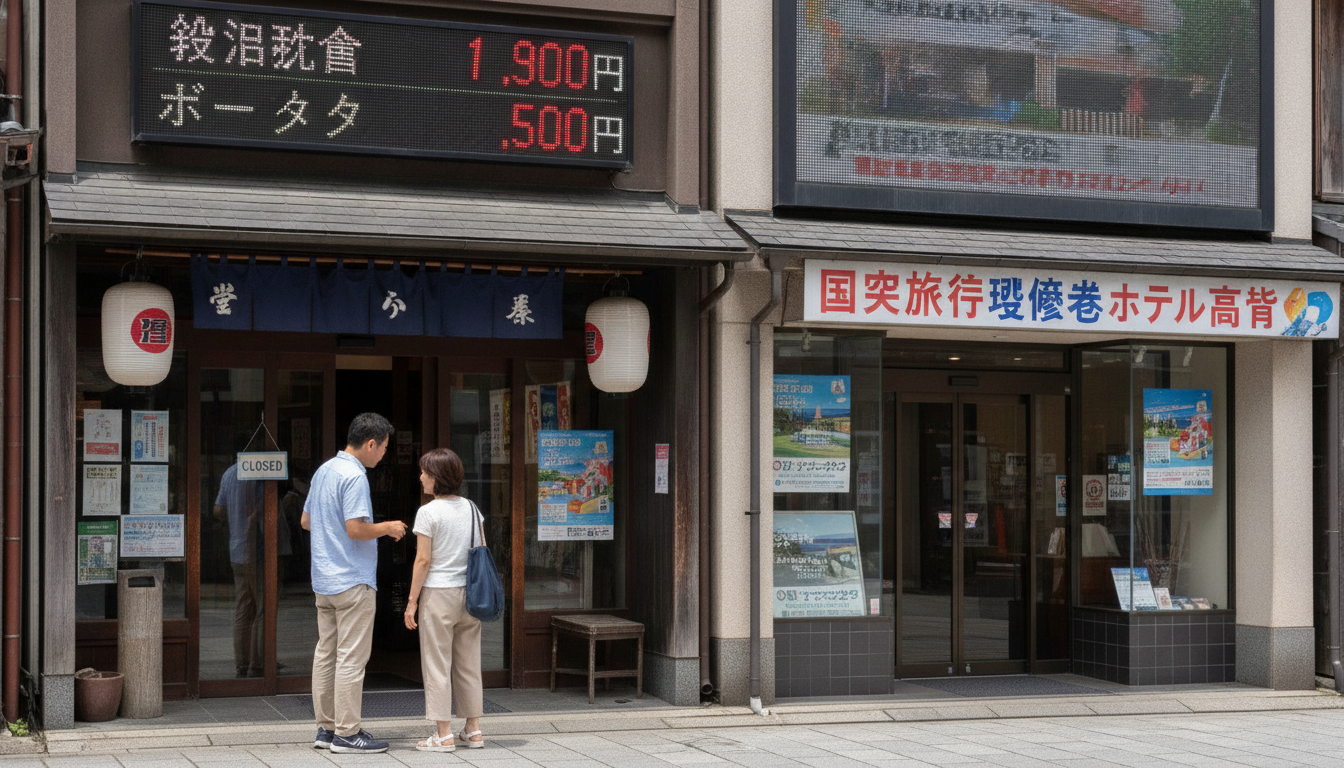
Regional hotspots such as Okinawa continue to draw crowded streets and busy shopping arcades even as national ticket and accommodation sales cool. Photographs of crowded shopping areas in Naha highlight the uneven nature of the recovery, with some locales still reporting strong footfall. (Photo by Akihiro Sano)
At the same time, other destinations relying on budget-conscious domestic travelers are seeing sharper falls. Smaller inns and mid-range hotels in inland and rural areas report more pronounced cancellations than luxury resorts that can command premium rates from both domestic and international visitors.
Travel Industry Counters with Discounts and Flexible Policies
In response to weakening demand, major travel platforms and regional tourism boards have rolled out targeted discounts, flexible cancellation terms and bundled offers to stimulate last-minute bookings. Promotional campaigns aim to shift some demand toward shoulder dates and underbooked properties.
Airlines and rail operators are experimenting with dynamic pricing and package deals that combine transport and lodging to preserve load factors. Industry representatives say such measures can mitigate near-term declines but caution that sustained demand will depend on household income trends and wider economic stability.
Retail and Hospitality Sectors Face Revenue Pressure
Retailers and restaurants in tourism-dependent municipalities are bracing for revenue shortfalls if visitor numbers fail to meet projections. Local governments that expected higher tax and tourism-related receipts this summer may need to revise forecasts and consider temporary support measures for small businesses.
Observers note that a concentrated dip in domestic travel can ripple through regional employment, affecting seasonal hires and part-time workers who depend on summer tourism. Reduced visitor spending also threatens planned investments in accommodation upgrades and local attractions that assumed continued growth.
Consumer sentiment and travel intentions over the remainder of the summer will be watched closely by both policymakers and private operators. Recovery strategies will likely balance promotional spending with cost controls as the sector adapts to a new pattern of demand.
Looking ahead, stakeholders say the industry needs coordinated efforts to manage price signals and protect affordability for domestic travelers while sustaining routes and services that underpin regional economies. The coming weeks of bookings and cancellations will determine whether this summer’s domestic travel decline proves temporary or marks a longer shift in consumer behavior.

