
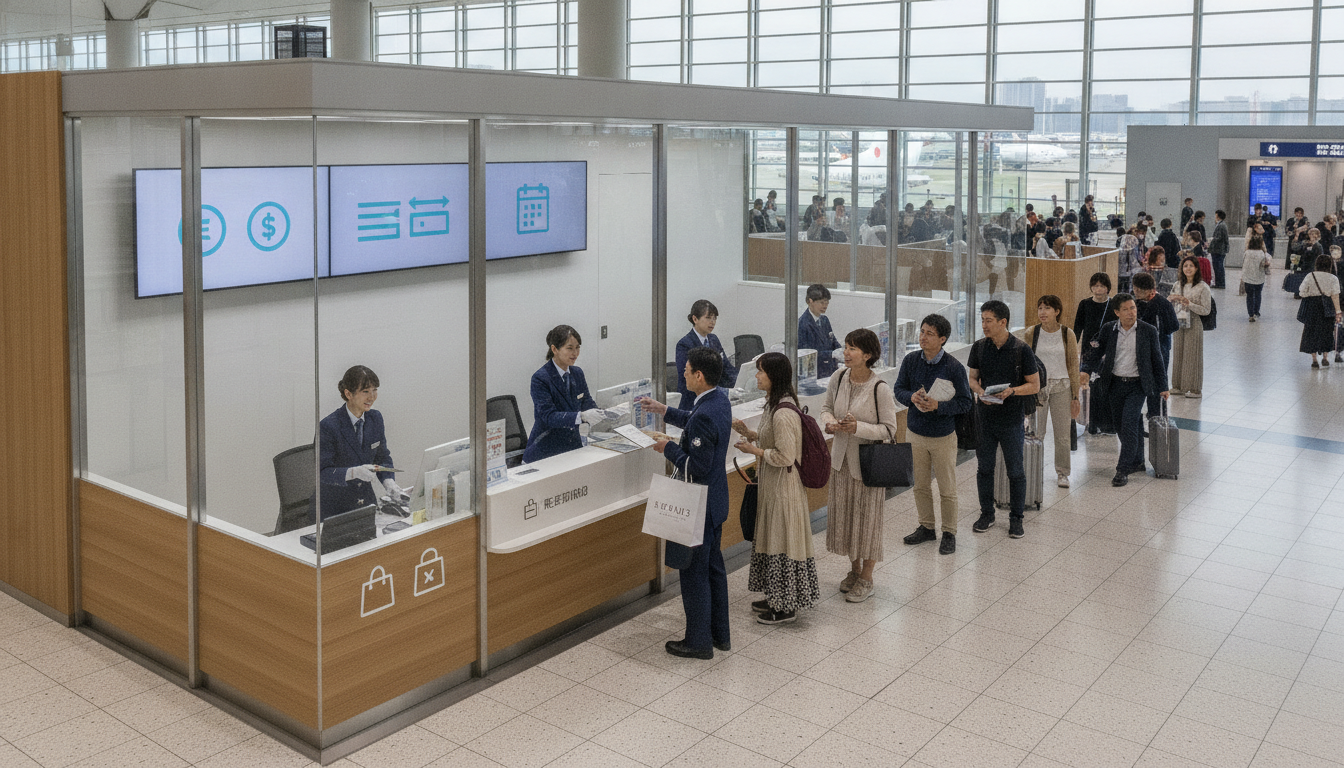
Japan ends instant tax-free shopping at stores; refunds shifted to airports from Nov 1, 2026
Japan ends instant tax-free shopping at stores from Nov 1, 2026; shoppers will pay tax at purchase and reclaim refunds at airport departure. What travellers need to know.
A major change to tax-free shopping in Japan takes effect on November 1, 2026, moving refunds from the store cash register to airport departure procedures. Under the new system, visitors will pay the full consumption tax at the point of sale and then claim a refund at departure, replacing the current instant-deduction model. The reform aims to curb resale fraud and tighten enforcement of the consumption tax system.
New rule: Tax refunds moved to departure from Nov 1, 2026
Japan will discontinue the immediate, at-register tax exemption for short-stay foreign visitors on November 1, 2026. Shoppers will still be eligible for tax refunds, but they must complete the refund procedure before leaving the country.
The consumption tax rates remain unchanged: 10 percent for most goods and services, and 8 percent for certain food and beverage items when applicable. Retailers will record purchases tied to the passport presented at the time of sale, but they will charge the tax up front.
Officials say the shift responds to widespread abuse of the instant-exemption system, where some purchasers resold tax-free goods domestically and evaded collection once they had left Japan. By centralizing refunds at departure, customs and tax authorities expect stronger controls and easier recovery efforts when rules are broken.
How the new airport refund process will work
The likely refund sequence begins with normal shopping: present your passport at a participating store, pay the tax-inclusive price, and receive a digital or physical record of the purchase. Stores will transmit purchase details to a central system linked to the passport you used, enabling a later refund claim.
Refunds must be claimed within 90 days of purchase, and the claimant must complete the refund procedure before departing Japan on the flight or vessel that takes them out of the country. The 90-day window requires travellers to track purchase dates and plan their departure steps accordingly.
At the airport, the process is expected to rely on kiosks or self-service terminals where travellers scan their passport and summon the linked purchases for inspection. Customs officers will have the authority to request to see items and receipts; if customs signs off, the refund is released by the retailer or its refund agent.
Refund payment methods will vary by retailer and agent: options may include immediate cash at the airport, a transfer to a credit card, bank transfer, or app-based payments after customs approval. Wait times and the available refund channel will depend on the store’s refund arrangement and may vary by airport, so travellers should check with retailers in advance.
What shoppers must do: receipts, passports and timing
All purchases intended for tax refund must be tied to the same passport shown at the point of sale, so use a single passport for all tax-free claims. Keep every receipt and any store-issued proof of purchase in an organized folder or digital photo archive to speed up the refund claim.
Be mindful of the 90-day refund window: purchases older than 90 days at the time of departure will not be eligible for a refund. If your travel plans include multiple departures from Japan, plan purchases and refund claims to ensure they fall within the allowable period.
Shoppers should also keep purchased goods accessible in carry-on luggage or easily retrievable from checked baggage, because customs may ask to inspect items. For perishable or consumable goods, be aware that anything used or consumed in Japan before departure is unlikely to qualify for a refund.
Exceptions, exclusions and the minimum spend
The minimum single-store spend required to qualify for tax-free treatment remains ¥5,000 (before tax) on the same day, but the new rules treat general goods and consumables under a single, unified set of conditions. That change simplifies eligibility but also means purchases that were formerly handled under separate regimes now follow the same refund pathway.
Gold and platinum bullion and coins are explicitly excluded from tax-free eligibility under the new rules, reflecting authorities’ concern about precious metals being used for resale to evade tax. The removal of this category aims to reduce a key channel for abuse.
Residency status for eligibility does not change: short-term foreign visitors remain eligible while residents do not. Also, posting goods overseas no longer qualifies for tax exemption; goods must leave Japan with the traveller to qualify, reinforcing the requirement that purchases accompany the departing passenger.
Airport timing and departure-tax context
Travellers should add extra time to their airport arrival schedule to accommodate the new refund procedure, especially in the early months when queues and procedural delays are most likely. Customs inspections and kiosk queues may lengthen processing times, and retail refund agents will need time to validate purchases.
Separately, Japan increased its international tourist tax — commonly called the departure tax — on July 1, 2026, raising the per-passenger levy from ¥1,000 to ¥3,000. That charge is collected automatically as part of air and sea ticketing systems for international departures, and certain exemptions apply, such as for infants under two and short transits.
If your ticket was issued before July 1, 2026, the older ¥1,000 rate may still apply, so check the fare documentation if you purchased travel earlier. The additional funds from the departure tax have been earmarked for measures to manage tourism flows and invest in regional development outside the major urban centers.
Practical shopping strategies under the new rules
For small-value souvenirs, shoppers should weigh the refund amount against the time cost of claiming it at the airport. The few hundred yen saved on inexpensive items may not justify waiting at a kiosk or allocating extra pre-flight time, so consider whether the refund is worth the effort.
Group or consolidate purchases where possible to meet the ¥5,000 threshold at a single store and reduce the number of refund claims to process at departure. When buying higher-value items, confirm with the retailer how and when refunds will be paid, and whether they offer immediate cash at the airport or delayed reimbursement by transfer.
Avoid shipping goods home from Japan if your aim is to claim tax exemption; postal shipments no longer qualify. If you plan to check bulky purchases, retain easy access to the items or their packing so customs can inspect them if required, and always store receipts with the items they document.
Ask retailers for clear documentation of purchases and inquire about their refund agent and procedures before you pay. Some stores will register purchases digitally and send confirmations by email or app, which can be faster to access at the airport than paper receipts.
Use one passport consistently at every store and double-check that the passport number on receipts matches your travel document. If you have multiple passports or name variations, resolve those issues before departure to avoid complications when claiming refunds.
Consider payment method implications: some retailers may only offer refund transfers to the original card or bank account, while others may provide cash refunds at the airport. Where possible, use a payment method that allows faster, more straightforward reimbursement should customs approve your claim.
What to watch for in the coming months
Implementation details remain subject to refinement by customs and the National Tax Agency, so travellers and retailers should expect procedural updates as the November 1, 2026, start date approaches. Airports and major stores will likely publish guidance and signage explaining kiosk locations, required documents, and estimated processing times.
Retailers may adopt different refund agents and systems, producing variation across airports and regions; travellers should ask about refund timelines and potential fees at the point of sale. The National Tax Agency is the authoritative source on tax rules and eligibility criteria, and travellers seeking certainty should consult official guidance where possible.
Customs enforcement at departure will determine how smoothly the new system operates in practice, and airlines and airport operators will play a role in passenger flow management. Expect initial friction as staff and passengers adapt, followed by gradual improvements as workflows are standardized.
The combination of the refund relocation and the July 1, 2026 departure tax increase represents an operational and financial shift for international visitors. Understanding both changes will help travellers budget time and money and avoid surprises at departure.
These reforms mark a significant change in how tax-free shopping in Japan is administered, moving responsibility for refund processing to departure checkpoints and aiming to close loopholes that facilitated resale and tax evasion. Plan purchases with the new deadlines and procedures in mind, keep receipts and passports together, and allow extra time at the airport to ensure a smooth refund experience.

