
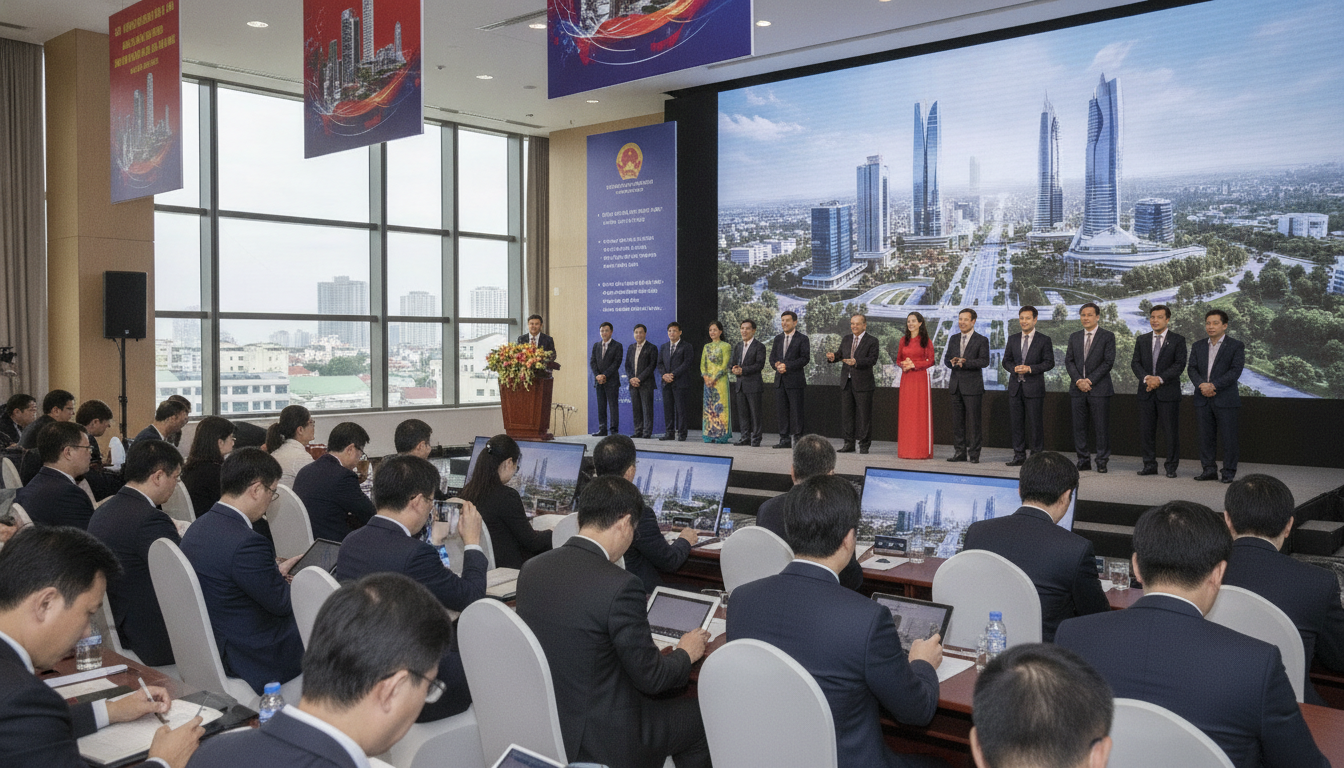
Vietnam International Financial Center to Court Global Investors for $1.5 Trillion Infrastructure Push
Vietnam’s International Financial Center will court global investors from 2027 to help finance $1.5 trillion in infrastructure as domestic banks fall short.
Vietnam has launched a drive to attract international capital through the Vietnam International Financial Center in Ho Chi Minh City to help fund an estimated $1.5 trillion of infrastructure investment over the next decade. Officials say the initiative aims to plug a funding gap that the domestic banking system cannot meet on its own and to accelerate the country’s goal of reaching high-income status by 2045. The plan centers on using the new financial hub to channel private and institutional investors into transport, energy and urban development projects.
Officials set a $1.5 trillion infrastructure target
Officials have publicly estimated roughly $1.5 trillion will be required for infrastructure development over the coming ten years. That figure covers a broad range of projects, from roads and ports to energy and municipal upgrades that Hanoi and Ho Chi Minh City have identified as priorities. Government planners argue that relying on banks and public budgets alone will be insufficient to meet the scale and speed of investment needed for economic modernization. The target underlines why Vietnam is shifting its approach to open the door to foreign institutional capital.
Ho Chi Minh City site anchored by Saigon Marina
The Vietnam International Financial Center will be anchored in Ho Chi Minh City, with the 55-story Saigon Marina tower set to serve as one of the principal buildings used by participating institutions. City planners and developers have highlighted the site as a symbolic and practical base for the new center, offering direct access to the commercial heart of Vietnam’s largest metropolis. Local officials say the location is intended to draw multinational banks, asset managers and fintech firms seeking a foothold in Southeast Asia. The Saigon Marina tower’s scale is meant to signal the government’s ambition to host major regional financial operations.
Investor outreach slated to begin in 2027
Authorities plan to begin formal outreach to international investors from 2027, positioning that year as the launchpad for active fundraising through the center. The timeline reflects a phased approach that includes legal, regulatory and infrastructure preparations ahead of full-scale investor solicitation. Officials have emphasized coordination with domestic regulators to ensure that cross-border capital flows can be accommodated while maintaining financial stability. The 2027 start date is being presented as the point when international institutions will be able to consider significant, long-term commitments via the Ho Chi Minh City hub.
Domestic banks unable to meet the funding gap
Vietnam’s banking system, while sizable, is widely seen by policymakers as unable to supply the full scope of long-term funding required for the planned projects. Domestic lenders traditionally favor shorter-term lending and are constrained by capital and risk-management frameworks that limit their exposure to large infrastructure programs. Officials contend that mobilizing foreign long-horizon capital—such as pension funds, insurance assets and sovereign wealth investments—will be essential to reduce pressure on public finances and bank balance sheets. The financing shift also reflects a global trend of infrastructure needing patient, international investors.
Regulatory and market preparations under way
Preparatory work ahead of the 2027 outreach includes regulatory reviews and efforts to upgrade market infrastructure, according to officials involved in planning. Authorities are examining frameworks for foreign participation, financial product development and project pipeline transparency to make investments more attractive and manageable for overseas investors. Market participants say clear rule-making, enforceable contracts and standardized project information will be critical to moving large pools of capital into Vietnamese infrastructure. Steps to improve secondary markets and liquidity could also help institutional investors manage long-term positions.
Risks and expectations among international investors
International investors typically weigh political and regulatory risk, project bankability and exit options when considering infrastructure allocations to emerging markets. Vietnam’s economic growth prospects and strategic location in Southeast Asia are positives that could attract interest, but investors will be seeking predictable returns and robust governance on projects. Planners acknowledge that building trust will take time and will depend on demonstrable project performance and sound legal protections. The success of early pilot projects and transparent procurement will be closely watched by prospective global partners.
Economic goals tied to financial center ambitions
The financial center initiative is embedded in a broader push by Vietnam to transform its economy and achieve high-income status by 2045. Officials see an international finance hub as a mechanism to not only source capital but also to import expertise in project structuring, risk management and capital markets development. By hosting multinational financial firms and institutional investors, Vietnam aims to deepen its domestic capital markets and create new channels for long-term investment. Achieving those goals will require coordination across ministries, local authorities and market bodies.
Vietnam’s timetable sets investor engagement to begin from 2027, with the Ho Chi Minh City center and the Saigon Marina tower positioned as central elements in that effort. Authorities will need to demonstrate that projects promoted through the center are bankable, transparent and supported by consistent regulation to secure the long-term capital flows the country seeks.
Success in attracting global investors could reshape Vietnam’s infrastructure financing profile and support its development ambitions, but much will depend on execution, market confidence and the ability to deliver credible, investable projects at scale.

