
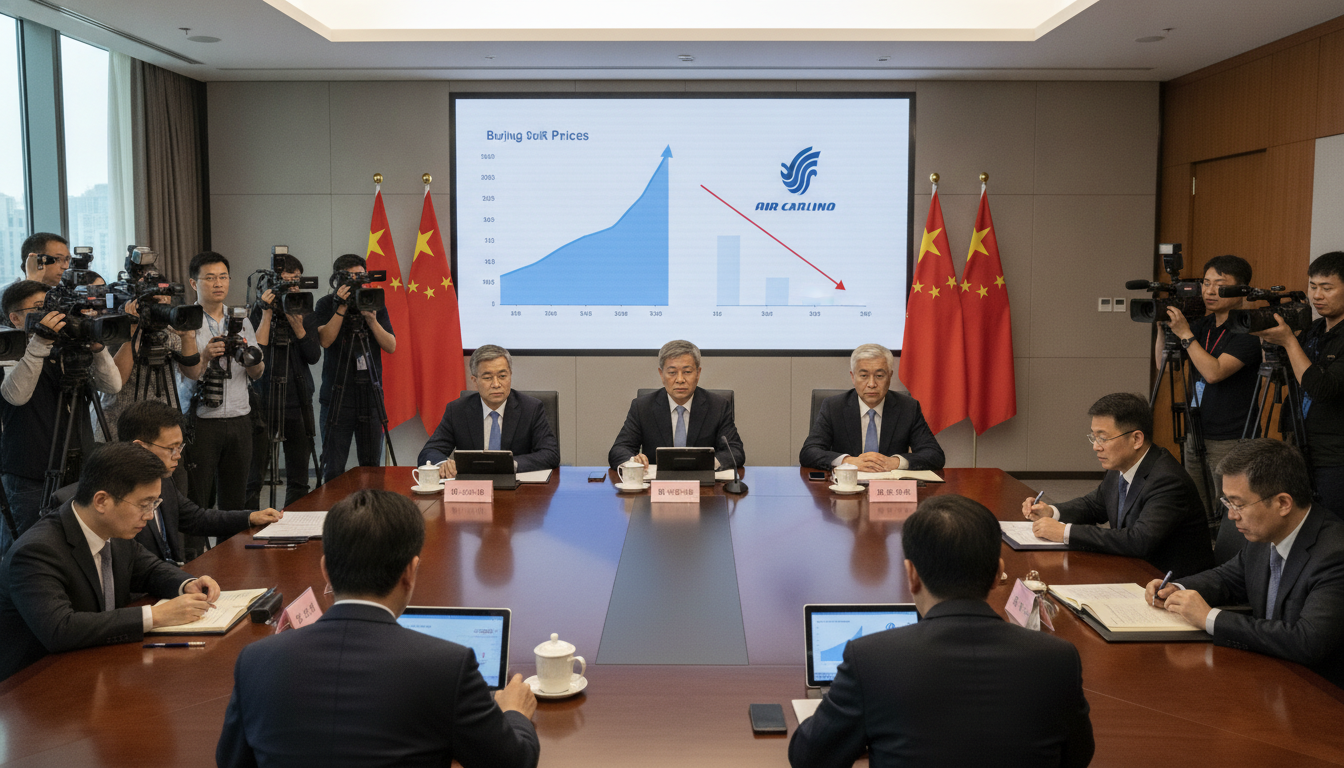
China’s big three airlines brace for deeper H1 losses as fuel costs soar
China’s big three airlines—China Southern, Air China and China Eastern—expect deeper H1 losses as soaring jet fuel and Middle East tensions drive costs higher.
China’s state-owned carriers have warned they will report wider first-half net losses than a year earlier, citing a sharp rise in jet fuel prices and sustained geopolitical risk in the Middle East. The trio—long under pressure from competition and heavy fixed costs—say fuel is the primary factor squeezing margins even as passenger demand recovers. Analysts and industry observers say the outlook will hinge on fuel trends, currency shifts and operational adjustments through the second half of the year.
State carriers cite fuel price surge
All three airlines have identified fuel as the principal reason for deteriorating results, pointing to sustained higher crude prices since the escalation of conflict in the Middle East. Jet fuel accounts for a large share of operating costs, and even small upward movements in per-tonne prices can wipe out profitability across vast route networks. Executives note that hedging programs and fuel surcharges offer only partial protection when market volatility persists.
China Southern expected to record the largest loss
China Southern, the country’s largest carrier by fleet size and international reach, is widely viewed as the most exposed of the three to rising fuel and operational challenges. The airline has struggled in recent years with heavy debt, slower-than-expected international recovery on some routes, and intense domestic competition. Observers say these structural weaknesses magnify the impact of rising input costs and make near-term recovery more difficult without quicker cost controls or fresh financial relief.
Air China and China Eastern point to demand-revenue mismatch
Air China and China Eastern have also flagged the mismatch between recovering passenger volumes and rising unit costs as a key problem. While air travel has rebounded on many domestic and regional routes, yields have not kept pace with input inflation, particularly on long-haul services where fuel burn is proportionally greater. Both carriers face pressure to balance route capacity with profitability, prompting network adjustments and a reassessment of frequency on marginal sectors.
Government ownership and potential support measures
As state-owned enterprises, the three carriers have access to policymaking circles and potential government assistance, but officials are cautious about large-scale bailouts. Policymakers have in the past allowed restructuring, selective capital injections and regulatory easing to protect connectivity and employment. Industry sources suggest any support is likely to be measured, aimed at stability and longer-term restructuring rather than outright compensation for cyclical losses.
Cost-control steps and hedging strategies under review
Airlines are pursuing a mix of measures to blunt the squeeze from fuel and other inputs, including tighter capacity management, targeted route suspensions, and increased focus on ancillary revenue. Many carriers are also re-evaluating fuel hedging strategies to better match hedge tenors with expected market dynamics. Other initiatives include renegotiating supplier contracts, deferring non-critical aircraft deliveries and accelerating fleet renewal to more fuel-efficient models where feasible.
Market reaction and investor concerns
The prospect of deeper losses has weighed on investor sentiment and raised questions about credit metrics for the sector’s largest players. Market analysts emphasize that creditworthiness will increasingly depend on liquidity buffers, access to capital markets, and the ability to convert traffic recovery into sustainable yields. For carriers with heavier debt loads and weaker balance sheets, higher fuel costs could accelerate consolidation pressures or force asset sales.
Outlook for the second half and recovery risks
The carriers’ path back to profit will depend on a mix of external variables and internal adjustments, including oil market developments, the course of geopolitical tensions, and broader economic demand in China and abroad. If jet fuel prices retreat and demand holds, the pressure on margins could ease toward year-end. Conversely, sustained high oil prices or renewed travel disruptions would extend the earnings strain and compel deeper structural measures from both companies and regulators.
China’s big three airlines now face a critical period in which operational discipline and financial management will determine whether market share gains achieved after the pandemic can be translated into durable profitability.

