
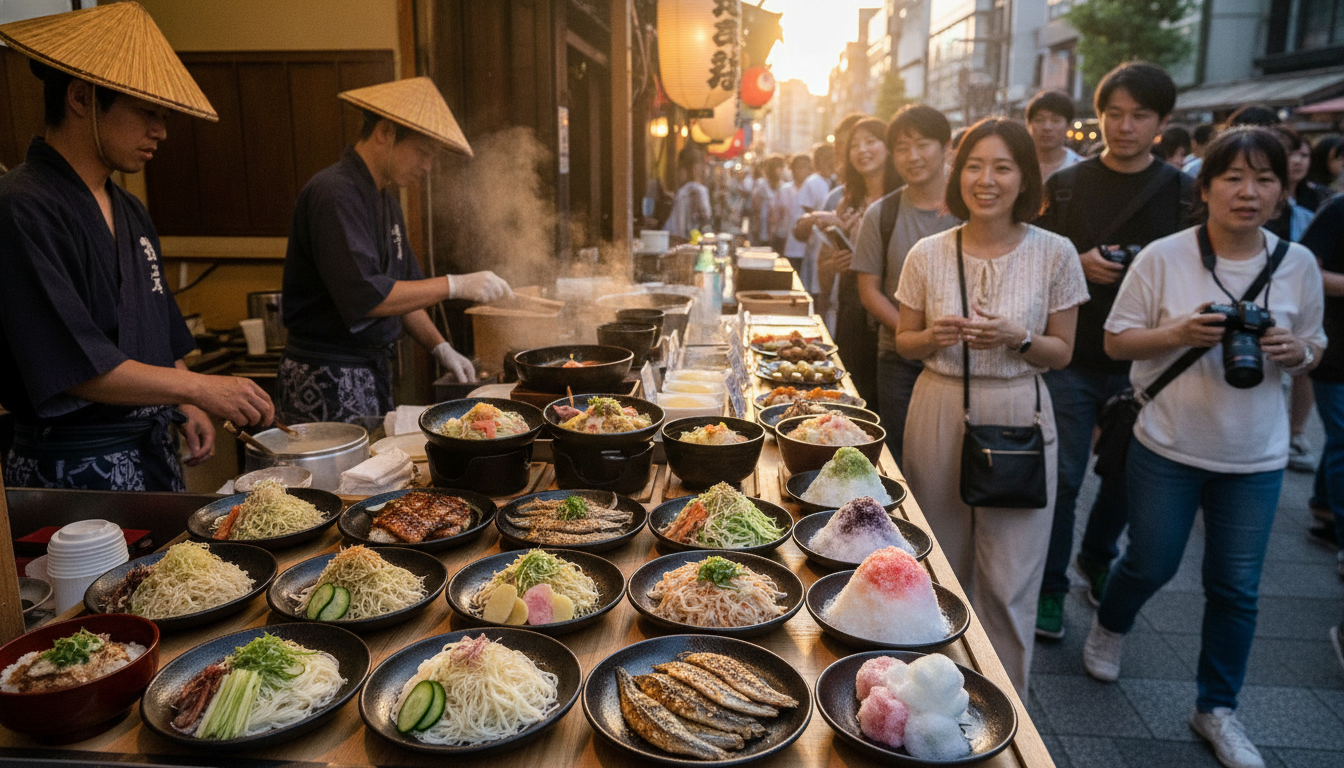
Japanese summer foods in Tokyo — where to taste seasonal favorites from kakigōri to yakitori
Tokyo guide to Japanese summer foods, where to find kakigōri, hiyashi chūka, yakitori, mizu yōkan and festival stalls across the city this season plus tips.
As Tokyo moves into the high season for warm-weather eating, Japanese summer foods are appearing across cafés, street stalls and izakaya around the city. This guide highlights the dishes that define the season and points readers to reliable places in Tokyo to try each specialty. From shaved ice at boutique shops to chilled noodle traditions and festival skewers, the report maps what to eat and where to go this summer.
Kakigōri and convenience store coolers set the seasonal tone
Shaved ice is the most visible symbol of summer eating in Tokyo, turning up at shrine festivals and in polished dessert parlors. Café-style kakigōri often arrives as an elaborate tower, layered with seasonal fruit, condensed milk and syrups that range from citrus to brown sugar. Festival versions are simpler, served in paper cups with bright syrups that hark back to childhood summers and make for excellent on-the-go cooling. For a quick sweet fix, the freezer aisle at corner stores offers seasonal novelties and branded ice bars that reflect the same flavors at lower cost.
Sweet shops and department store food halls update their offerings to match the season, and specialty kakigōri venues remain popular for weekend crowds. Expect waits at well-known cafes but also innovative flavor combinations including matcha, tropical fruits and local specialties brought in from regional producers. If you prefer an informal setting, look for the blue paper cups at neighborhood festivals where the experience is as much about atmosphere as it is about taste. For families, the bright colors and easy portions make kakigōri a perennial favorite across generations.
Cold noodle culture with hiyashi chūka, nagashi sōmen and Morioka reimen
Chilled noodles provide a counterpoint to Tokyo humidity and are served in a range of styles from supermarket ready-meals to restaurant showpieces. Hiyashi chūka presents firm, cold ramen with crisp vegetables and either sesame or soy-based dressing, and it is one of the most dependable summer plates across casual restaurants. Nagashi sōmen offers a playful communal experience where thin noodles slide along a bamboo flume and diners catch them with chopsticks before dipping into sauce. Morioka reimen brings a regional twist to cold noodle eating, combining chewy noodles with beef broth, kimchi and even fruit as a refreshing, unusual ramen alternative.
Many Tokyo restaurants include a summer noodle on the seasonal menu, and some specialty shops in central neighborhoods present dramatic plated versions. Jimbōchō and Ginza are among the districts where high-end and traditional venues will showcase cold noodles at lunch and dinner. For families and visitor groups seeking an experiential meal, establishments that serve nagashi sōmen or offer time-limited outdoor set-ups create a memorable afternoon. Convenience stores and supermarket delis also stock reliable chilled noodle options for a quick, cooling meal.
Skewers and grilled river fish on festival routes
Grilled items remain central to summer street food, and yakitori continues to dominate festival yatai and narrow alleys in central Tokyo. The small chicken skewers vary in cut and seasoning, and many vendors also sell pork, beef and assorted offal grilled over charcoal and finished with sauce or salt. Ayu, a small freshwater sweetfish, is a seasonal specialty that is most commonly found grilled whole on a stick, its salt-charred skin and melon-like flesh a staple at outdoor stalls. Both yakitori and ayu are best enjoyed with a cold beer or iced tea while standing at a festival stall or seated on a makeshift bench.
Yokocho alleys and shrine festival grounds provide the most authentic settings for these grilled favorites, and numerous izakaya keep a summer-focused menu featuring charred items. For a restaurant experience, dedicated yakitori bars across neighborhoods from Shinjuku to Koenji will highlight single-origin charcoal and carefully selected cuts. When attending festivals, bring cash for stalls and arrive early to avoid lines for popular grill stands.
Wagashi and chilled sweets in teahouses and depachika
Traditional Japanese confections adapt to heat through textures and cooling ingredients, and mizu yōkan is one of the season’s understated stars. This softer, higher-water version of yokan is made with red-bean paste and agar and is often served chilled alongside a cup of green tea at teahouses and temple gardens. Hiyayakko, chilled tofu dressed with scallion, katsuobushi and soy, appears on izakaya menus as a light, restorative dish that tempers heavier fried or grilled plates. Both sweets and savory chilled items reflect a seasonal preference for minimalism and freshness.
Department store food halls, known as depachika, supply a wide variety of summer wagashi and boxed mizu yōkan suitable for gifts or an elegant picnic. Specialist confectioners and long-established tea shops in central wards offer matcha-flavored variations and seasonal presentations that pair well with ceremonial teas. The relaxed setting of shrine teahouses or garden cafés is often the best place to sample these desserts while escaping the midday heat. For those on the move, convenience stores and local sweet shops also sell portable versions of these classics.
Regional specialties and Okinawan influences arriving in Tokyo
Tokyo’s restaurants consistently import regional summer flavors, bringing Okinawan, Tohoku and other prefectural specialties to city menus during the warmer months. Goya, a bitter melon central to Okinawan cuisine, is commonly prepared in goya chanpuru with tofu, pork and egg to balance its assertive bitterness. Restaurants that specialize in island food or run themed nights will often pair goya dishes with awamori, Okinawa’s distilled spirit, creating a distinct summer menu that contrasts with mainland tastes. Similarly, Morioka reimen from Iwate has found a following in Tokyo, with a handful of Korean-influenced restaurants serving the chilled beef-broth variant topped with kimchi and fruit.
These regional offerings allow Tokyo diners to sample seasonal produce and preparations without leaving the city, and neighborhood izakaya continue to be the most versatile venues for this exchange. Look for dedicated Okinawan eateries in neighborhoods with a long history of regional cuisine, and for northern specialties in restaurants that emphasize soba and noodle craft. Food halls and specialty markets occasionally host pop-up stalls from regional producers, giving city residents short windows to buy seasonal items direct from the source.
Where to eat in Tokyo this summer from festivals to rooftop BBQs
Summer eating in Tokyo is as much about place and context as it is about specific dishes, and several settings reliably deliver seasonal menus and atmosphere. Shrine festivals and neighborhood matsuri are prime locations to sample an array of seasonal foods in one walkable circuit, while yokocho alleys and small izakaya concentrate grilled and chilled dishes into concentrated dining experiences. Department store food halls remain a dependable source for both traditional confections and elevated kakigōri, and rooftop terraces and park BBQ sites offer curated meat-and-vegetable packages for group gatherings.
For outdoor entertaining and communal meals, parks and managed barbecue areas schedule reservations and gear rentals from early summer, making it easier for non-local residents to organize gatherings without bringing equipment. Specialty restaurants in Ginza, Jimbōchō and Higashi-Kitazawa are known for their careful summer menus, and neighborhood shops in Koenji and Shinjuku maintain long-running traditions of serving seasonal plates. Practical tips include carrying a small towel or cooling handkerchief, bringing cash for festival stalls, and checking opening hours as some venues adjust service times for seasonal demand.
As temperatures peak, Tokyo’s food landscape shifts toward bright flavors and chilled textures that make the heat more manageable. Sampling kakigōri at a boutique café, catching flowing sōmen, tasting grilled ayu at a festival, and trying regional summer dishes in the city demonstrates how Japanese summer foods combine taste and ritual. Whether you seek a high-end wagashi experience, a casual convenience-store frozen treat, or a communal barbecue with friends, Tokyo offers reliable places to find summer specialties across neighborhoods and price ranges.
Planning a summer food outing in Tokyo is straightforward when you match the dish to the setting and check menus before you go. Crowd levels vary by weekend and by festival calendar, so early arrival and reservations where possible will improve the experience. Most seasonal items rotate with produce and supplier availability, so repeat visits through the season will often reveal new flavors and limited-time specialties.
Enjoying Japanese summer foods is as much about participation as consumption, and many of the season’s most memorable moments happen outdoors among crowds and under lantern light. Bring curiosity, a sense of adventure, and an appetite for contrasts between sweet and savory, chilled and charred, familiar and regional.

