
Five years on, Afghanistan turmoil leaves security improved in parts but rights and economy severely constrained
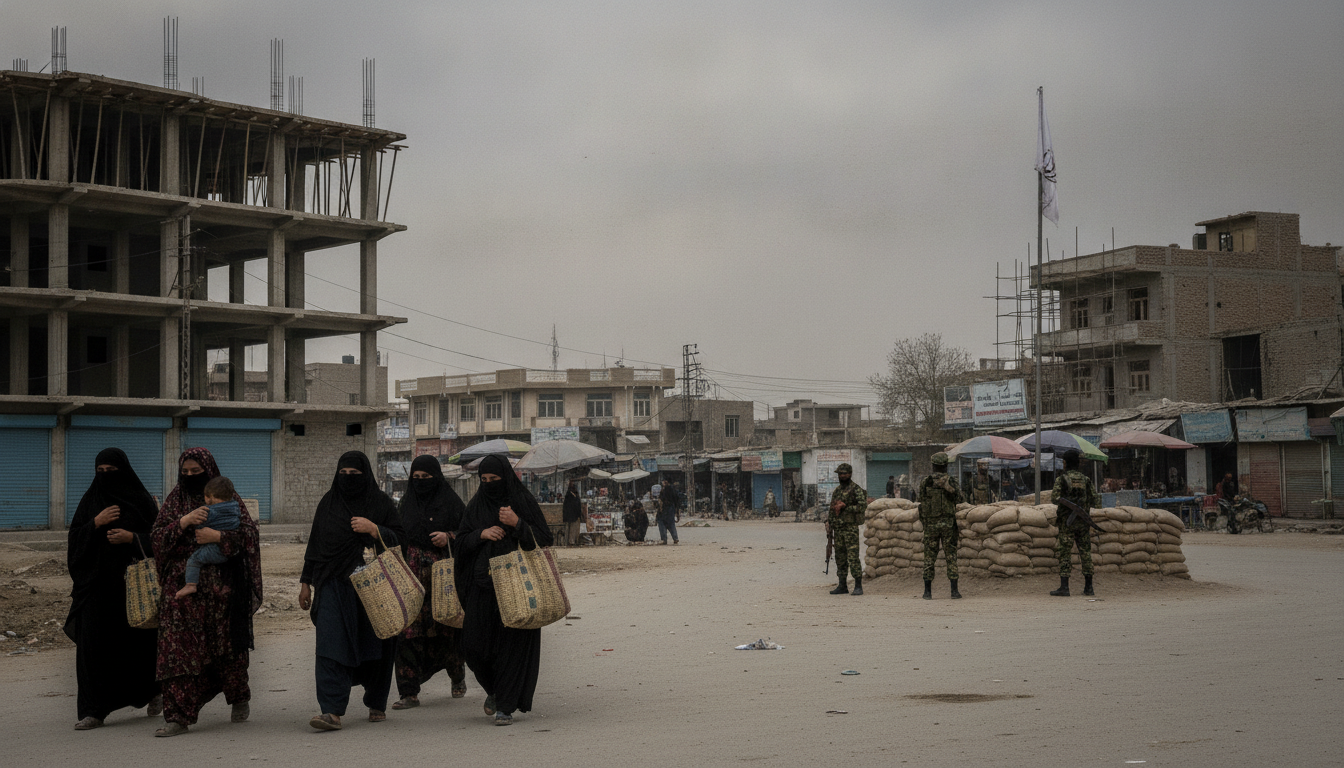
Five years after the Taliban takeover, Afghanistan turmoil continues to shape security, rights and economic life across the country. Security has improved in many urban centres, but women’s freedoms have been sharply curtailed and the economy remains fragile. International engagement has resumed in limited commercial and diplomatic channels even as formal recognition of the Taliban government is absent.
Security incidents decline in cities but threats persist
Large urban areas and main transport corridors have seen a reduction in high-profile attacks compared with the chaotic months immediately after August 15, 2021. Local officials and residents report fewer roadside bombs and less visible armed skirmishing, a development that has allowed markets and schools in some districts to reopen.
Despite these gains, analysts warn that pockets of insurgency and criminal violence continue to threaten stability outside provincial capitals. The security picture remains uneven, with rural districts experiencing sporadic clashes and militia activity that can quickly reverse local improvements.
Women’s access to education and work sharply restricted
Since the takeover, women and girls have faced progressive rollbacks of civil liberties that officials say are based on the ruling authorities’ interpretation of social rules. Policies restricting secondary education for girls, limits on women’s employment in government and requirements on female movement have curtailed participation in public life.
Humanitarian groups and rights monitors say these measures have long-term social costs, reducing household incomes and undermining human capital formation. Observers warn the exclusion of half the population from full economic and civic participation will hinder recovery and fuel resentment.
Economic activity hobbled by frozen assets and weak trade
The economy continues to struggle under the weight of frozen central bank reserves, restricted banking operations and limited foreign investment. Remittances, cross-border trade and informal commerce provide lifelines but cannot replace formal financial channels needed for sustained growth.
Agriculture and small traders remain vulnerable to price shocks and supply-chain disruptions, while unemployment and underemployment remain high. Aid-dependent public services have been scaled back in many areas, exacerbating poverty and food insecurity.
Diplomatic contacts increase though recognition remains elusive
Taliban officials have taken tentative steps to re-engage with regional capitals to reopen trade and diplomatic contacts, while most Western governments have maintained a policy of non-recognition. In one notable visit, Trade Minister Nooruddin Azizi met with a delegation in New Delhi in November 2025, underscoring an appetite among some neighbours to discuss commerce and border management. Reuters reported the exchange as part of a broader effort to stabilise bilateral ties without formal recognition.
Regional states say practical cooperation on customs, counter-narcotics and border security can proceed alongside sustained diplomatic caution. International actors balancing humanitarian needs against political principles continue to engage in a calibrated, issue-specific way.
Humanitarian aid fills gaps but funding shortfalls persist
International relief organisations remain the primary source of basic services for millions, supplying food, medical care and education support where the public sector has faltered. Aid deliveries have mitigated the most severe consequences of economic contraction but are insufficient to rebuild institutions or generate long-term development.
Donor fatigue and shifting global priorities have left significant financing gaps, forcing reductions in some programmes and increasing reliance on local NGOs. Aid agencies caution that without predictable funding and access, gains in health and nutrition could quickly erode.
Business opportunities limited by legal uncertainty and sanctions risk
Private-sector actors, both domestic and foreign, face a tangled environment of sanctions, unclear regulatory frameworks and reputational concerns. Traders and entrepreneurs say potential market openings are undermined by the absence of banking links and the risk of secondary sanctions for partners in some countries.
While neighbouring trade routes and informal cross-border commerce continue, formal investment projects have been slow to materialise. The uncertainty deters long-term contracts and infrastructure projects that could create jobs and stabilize revenues.
Looking ahead, Afghanistan turmoil will continue to present a complex mix of modest local stabilisation and deep structural challenges. The interplay between security improvements, the systematic restriction of women’s rights and persistent economic weakness creates a fragile equilibrium. International actors face a delicate policy choice: engage pragmatically to avert humanitarian collapse and regional spillovers, or maintain pressure in hopes of political change. Either path will shape the country’s prospects for years to come.

