
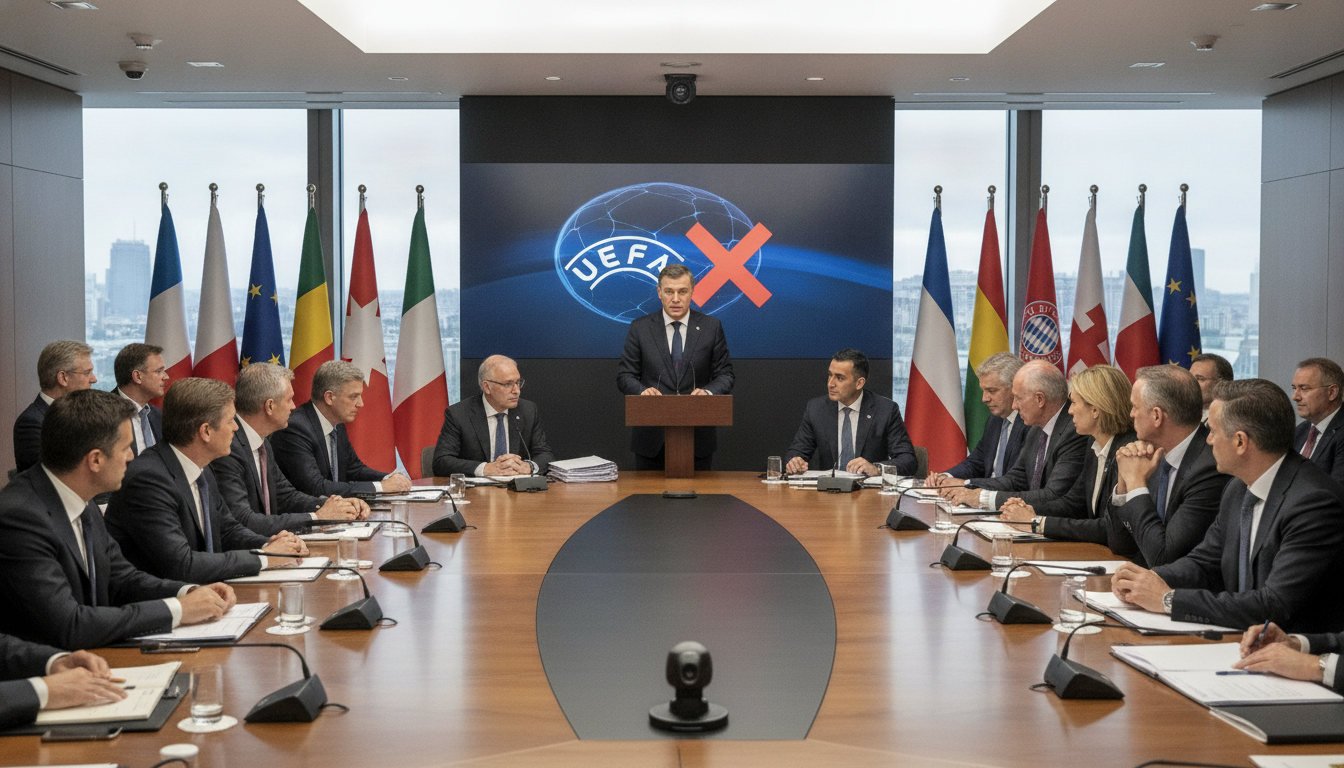
UEFA Unanimously Threatens World Cup Boycott Over FIFA Subsidiary Plan
UEFA has announced a unanimous boycott of FIFA tournaments after the FIFA subsidiary plan drew rejection from CONCACAF and AFC, raising governance, investor and fan concerns.
The European governing body UEFA on July 30 announced a unanimous decision by its 55 member associations to boycott FIFA-organized tournaments unless FIFA withdraws the recently unveiled FIFA subsidiary plan, a move that threatens participation in future World Cups and other flagship events. The FIFA subsidiary plan, disclosed by FIFA on July 28, proposes the creation of a commercial arm — dubbed FIFA Forward Enterprises — to manage tournament operations and sell equity to outside investors, and it included an initial valuation and the sale of up to 20% of shares. UEFA said the proposal was developed without proper consultation, insisted “the World Cup is not for sale,” and warned that investor ownership would fundamentally change how international football is governed.
UEFA Votes to Boycott FIFA Tournaments
UEFA described its decision as unanimous among all 55 European associations and framed the boycott as conditional: participation would resume only if FIFA reverses the subsidiary plan and restores a consultative decision-making process. UEFA argued the plan risked transferring control over competitions and commercial rights to external investors, which the organization said would place shareholder returns ahead of the interests of players, clubs and fans. The statement emphasized that a majority of member associations had not been consulted and characterized the process as undemocratic, warning that the planned structure would convert commercial gains into binding imperatives for the sport.
CONCACAF and AFC Reject Proposal
On the same day, the North, Central American and Caribbean confederation CONCACAF issued a clear statement rejecting FIFA’s proposal after an emergency meeting of its 41 members to examine the plan and its process. CONCACAF said member associations had raised serious questions about the need for outside investment and called on FIFA President to manage the organization within existing statutes. Reports also indicate that the Asian Football Confederation president sent a strong letter to his 47 member associations, describing the proposal as unacceptable and adding momentum to regional resistance.
Details of the FIFA Subsidiary Plan
FIFA’s July 28 announcement outlined the establishment of a commercial subsidiary, FIFA Forward Enterprises, to consolidate tournament management, broadcast and sponsorship rights with an aim to maximize commercial value. The proposal set an initial equity valuation in the tens of billions of dollars and envisaged selling up to 20 percent of shares to external investors to unlock capital and monetization opportunities. FIFA’s plan also specified internal approval thresholds such as a majority backing among member associations and ratification by the FIFA Council, but opponents say those provisions do not make up for the absence of prior consultation and the potential long-term implications for competition governance.
Investor Links Raise Political Concerns
Resistance to the plan has been amplified by reports linking prospective investor groups to prominent political circles, heightening worries about influence beyond commercial matters. Media accounts have identified a company led by Joshua Kushner, who is allied by family ties to U.S. political figures, as a leading member of an investor consortium reportedly engaged in discussions with FIFA. Critics say such connections risk introducing geopolitical dynamics and private agendas into decisions about tournament hosting, disciplinary processes and the allocation of commercial proceeds, and that those risks are compounded when consultation with federations and fans is absent.
European Officials Emphasize Football’s Social Role
European political leaders and governments have weighed in, framing football as a public good rather than a tradable asset, and calling for safeguards that preserve open access and community engagement. The British prime minister posted on social media that “football is not for investors” and insisted the sport should remain for fans and local clubs, while a German government deputy spokesman underscored the social significance of major sporting events and the need to keep them open and cohesive for communities. UEFA pointed to statistics showing its 55 associations represent roughly 26 percent of FIFA’s 211 members and that top-ranked teams in both the men’s and women’s international lists include a substantial European presence, underscoring the practical threat a European boycott would pose to tournament quality and commercial arrangements.
The standoff sets up a high-stakes negotiation over the ownership and governance of the world’s most lucrative sporting events and raises immediate questions about the commercial model for the 2030 men’s World Cup and the 2027 women’s World Cup. With broadcasters, sponsors and host cities preparing multi-year commitments, any sustained refusal by UEFA and allied confederations to participate would force a rapid recalibration of schedules, contracts and revenue forecasts, and could prompt emergency talks between confederations and FIFA to avert disruption.
If FIFA and the continental federations fail to reach a compromise, the dispute could reshape how international football balances commercial opportunity with governance transparency, political neutrality and fan access. The coming days are likely to see intensified diplomacy and public statements from major stakeholders as they seek to protect sporting integrity while clarifying the limits of private investment in an activity many in Europe regard as a shared social institution.

