
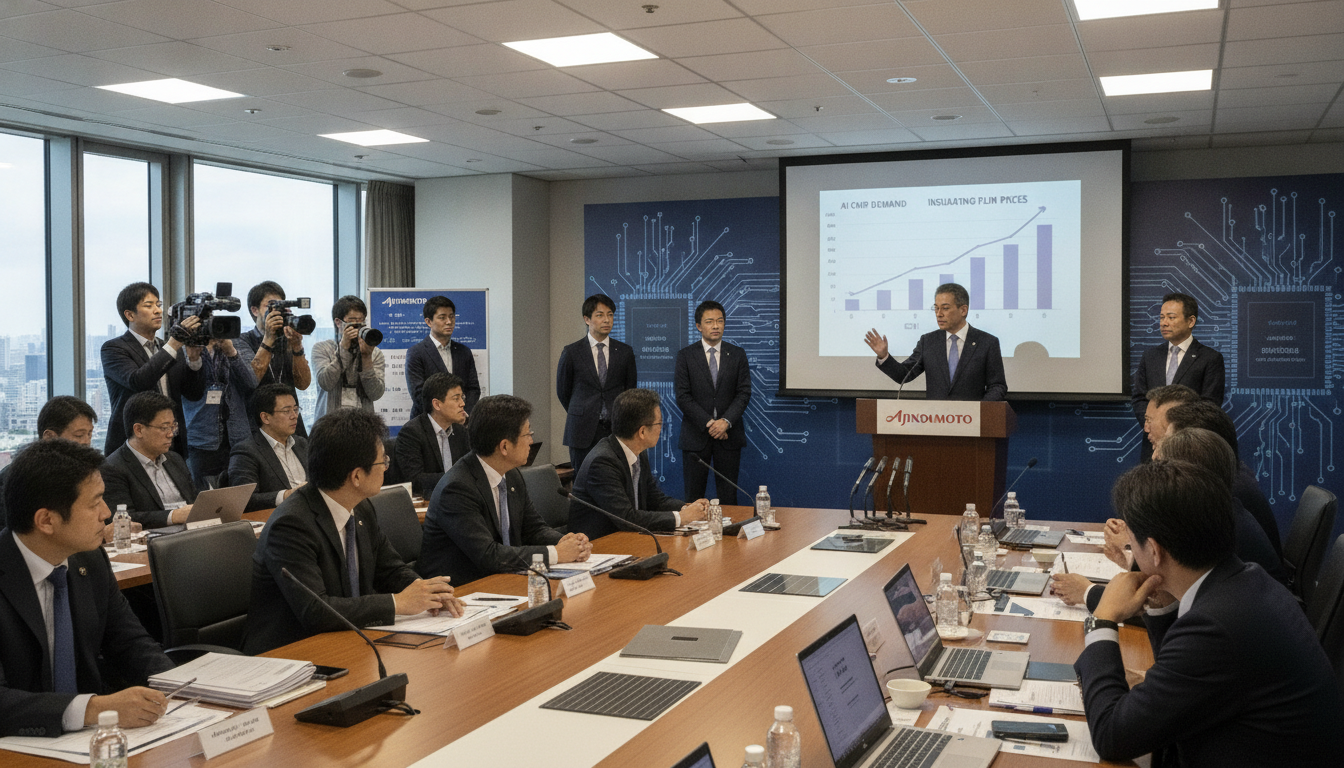
Ajinomoto Faces Investor Push to Raise Insulating Film Price Amid AI-Driven Chip Demand
Ajinomoto insulating film price comes under investor pressure as activist Palliser urges the food maker to increase fees for semiconductor-grade insulating film to capture AI-related demand.
Investor Palliser presses for price increases
Palliser, an activist investor, has urged Ajinomoto to raise the price of its insulating film used in semiconductor production, arguing the company should better monetize rising demand linked to artificial intelligence. The move reflects a broader push by shareholders to extract higher margins from specialty materials businesses as chipmakers expand capital expenditure.
The proposal reportedly called for an across-the-board price rise, a strategy Palliser says would allow Ajinomoto to position itself as a higher-margin chip-materials company. The investor emphasized the company’s evolving identity from a traditional food and amino-acid producer toward a supplier of advanced materials for electronics.
Ajinomoto resists blanket increases but signals selective raises
Ajinomoto has rejected a request for an across-the-board hike, saying a blanket price increase could strain relationships with key semiconductor customers. Company executives have indicated willingness to consider targeted price adjustments for specific product lines or regions where demand and capacity justify higher margins.
The firm’s caution reflects concerns about competitive dynamics and long-term contracts that shape sales to major chip manufacturers. Ajinomoto has highlighted its broader strategy of balancing growth in electronic materials with stable supply and customer partnerships.
AI-driven chip demand fuels materials pricing debate
The call to raise the Ajinomoto insulating film price is rooted in robust demand for semiconductors driven by generative AI, high-performance computing and data center expansion. Semiconductor manufacturers are increasing procurement of critical materials, including insulating films that play a role in chip fabrication and packaging.
Analysts note that when end-market demand accelerates, suppliers of specialty inputs often gain pricing power if capacity cannot be expanded quickly. That supply-demand imbalance has prompted activist investors to press companies that supply niche materials to capture more value through higher pricing or improved product mixes.
Supply-chain and customer impact considerations
Customers of Ajinomoto’s insulating films — which include wafer and packaging makers — could face higher input costs if prices rise, potentially passing costs further down the electronics value chain. Chipmakers typically negotiate long-term arrangements and volume discounts, making selective price increases more practical than blanket hikes.
Suppliers adjacent to Ajinomoto may see margin pressure if the company is forced to absorb costs to retain market share. Conversely, if Ajinomoto successfully implements targeted increases, it may improve profitability without materially disrupting production schedules for critical semiconductor customers.
Market and investor implications for Ajinomoto
The investor push highlights growing attention from the market on Ajinomoto’s non-food operations as the company seeks to be viewed more as a materials and chemicals supplier. Shareholders have shown a willingness to press management for strategies that capture higher returns from the firm’s specialty-product lines.
Any decision on the Ajinomoto insulating film price will be closely watched by investors assessing the company’s ability to translate growth in electronic materials into durable profit expansion. Strategic pricing decisions could influence Ajinomoto’s valuation and its appeal to both growth- and income-oriented investors.
Analysts weigh risks to relationships and margins
Industry analysts caution that aggressive pricing without clear value justification can risk customer relationships and long-term contracts that underpin steady revenue. They recommend a measured approach that targets premium segments, differentiates product quality, and leverages technological advantages to justify price increases.
At the same time, analysts acknowledge that suppliers with critical technologies can command higher returns when demand outstrips near-term capacity. For Ajinomoto, calibrating the Ajinomoto insulating film price to reflect product quality, supply stability and customer needs will be key to securing both revenue and strategic partnerships.
The debate over pricing at Ajinomoto underscores a broader trend of legacy manufacturers repositioning themselves amid the AI-driven semiconductor boom, seeking to capture higher margins while maintaining crucial customer ties. Observers say the outcome will reveal how firms balance short-term profitability with long-term market positioning.

