
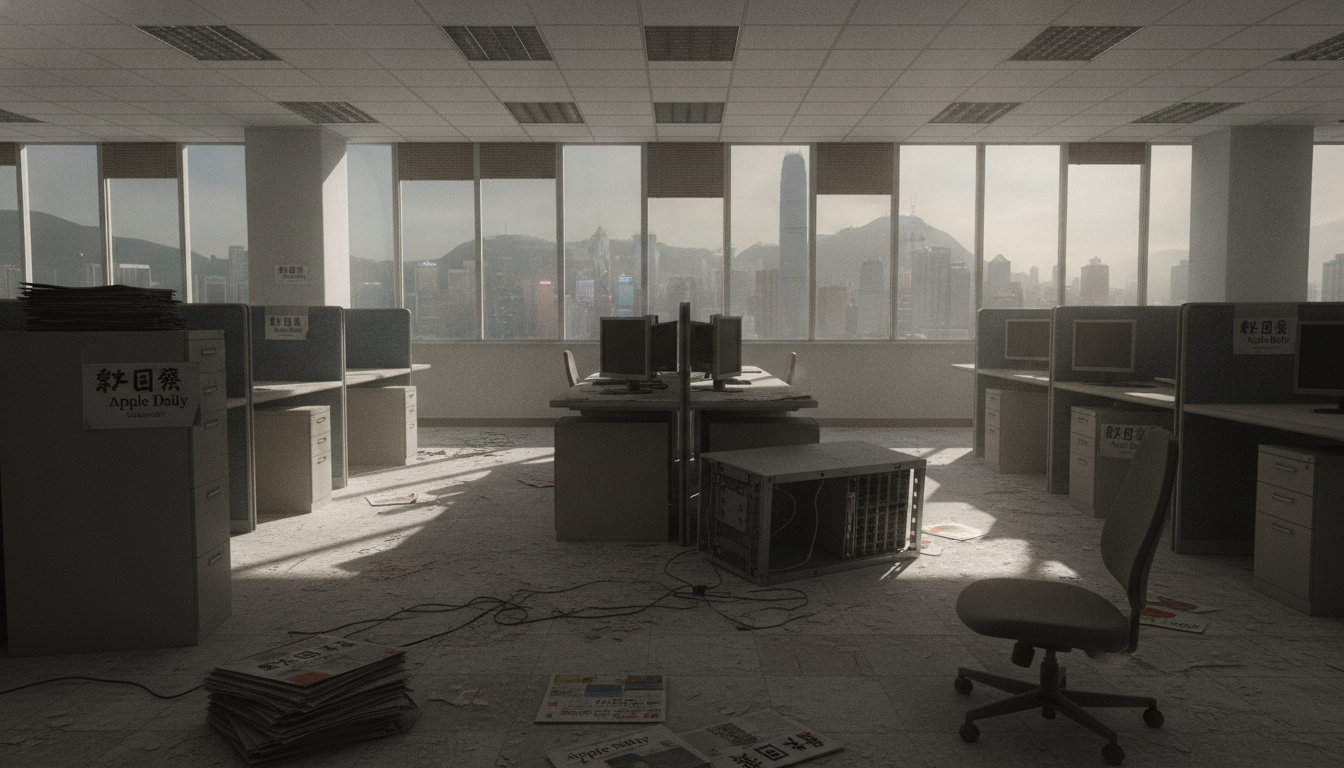
Five Years Since the Apple Daily Closure: Hong Kong Security Law Reshapes Regional Media
On the fifth anniversary of the Apple Daily closure, reporters and press freedom advocates say Hong Kong’s national security law has fundamentally altered newsrooms, legal risks and editorial practices across the city and the region.
Anniversary Marks Five Years Since Final Issue
June 24, 2026 marks five years since the final edition of Apple Daily was published on June 24, 2021, closing a chapter on one of Hong Kong’s most prominent pro-democracy outlets. The Apple Daily closure followed a series of high-profile police actions, the freezing of assets and prosecutions linked to the national security law introduced in 2020. For many journalists and rights groups the date has become a milestone for assessing the changing landscape of press freedom in Hong Kong.
Police Actions and Financial Measures That Forced Closure
In the weeks preceding the final issue, law enforcement executed raids on newsroom facilities and froze company accounts, measures that staff said made continued publication impossible. Those steps, taken under provisions of the national security framework, left the paper unable to pay suppliers, staff or print distributors. Executives and journalists faced criminal charges that further constrained operations and signalled to other media outlets the legal exposure possible under the new regime.
Founder and Staff Legal Troubles Highlight Risks
The paper’s founder and publisher faced repeated legal challenges that underscored the heightened risk environment for outspoken journalists in the city. Arrests and prosecutions against senior figures at the company became emblematic of the legal reach of the security law, creating a chilling effect in newsrooms. Legal uncertainty has since factored into editorial decisions, with many editors treating investigative stories as higher-risk undertakings.
Impact on Newsrooms and Journalist Careers
The Apple Daily closure accelerated an exodus of reporters, editors and support staff who either left the profession or relocated overseas, according to former employees and observers. Several staff members moved to other publications, non-profits or academic roles, while younger journalists cited career concerns and personal safety when changing paths. Newsrooms that remained have adapted by narrowing beats, reducing investigative capacity and relying more on cautious sourcing.
Regional Media Response and Self-Censorship Trends
Media organizations across Asia watched the Apple Daily closure closely, recalibrating their own risk assessments and compliance practices where political sensitivities overlap with legal exposures. Editors in neighboring markets reported greater caution when covering cross-border political issues, and some international journalists said they adjusted reporting methods to protect local contacts. Rights groups and press associations have documented a rise in self-censorship and guarded language in coverage related to political dissent and national security.
Legal Context: The Security Law’s Broader Effects
The national security law introduced a framework that broadened definitions of offences and expanded investigative powers, altering the legal calculus for publishers and journalists. Critics argue those provisions have been applied in ways that chill critical reporting, while authorities maintain they are necessary for public order and sovereignty. The legal environment now requires news organizations to weigh editorial independence against potential criminal or financial consequences in a way that was far less pronounced before mid-2020.
The Apple Daily closure has had financial as well as symbolic consequences, with advertising markets, distribution networks and supplier relationships all affected by the perception of legal vulnerability. Advertisers reassessed partnerships and service providers grew wary of association with politically sensitive outlets, further squeezing revenue options for independent journalism.
Journalists and media rights defenders mark this anniversary with calls for renewed attention to safeguards for a free press, even as practical protections appear limited within the current legal framework. International organizations continue to document changes in Hong Kong’s press environment, and some former Apple Daily staff have pursued legal and advocacy avenues to challenge aspects of the authorities’ approach.
The closure also prompted a reassessment among news consumers about the availability and reliability of local investigative reporting. Readers who once relied on a plurality of voices now often turn to international outlets, social media, or niche platforms for coverage of governance and civic issues. That shift has implications for democratic discourse and the public’s access to diverse viewpoints.
Looking ahead, media analysts say the long-term trajectory will depend on legal developments, enforcement patterns and economic pressures facing publishers. Some outlets have sought to carve out safer niches or to bolster legal teams, while others have forged partnerships with foreign media or nonprofit journalism initiatives. The balance between editorial ambition and legal prudence remains a central dilemma for newsroom leaders.
The fifth anniversary of the Apple Daily closure is both a moment of remembrance for journalists who lost colleagues and a practical checkpoint for media strategy in Hong Kong. As newsrooms adapt to new constraints, the broader question for the region is how resilient independent reporting will be under sustained legal and financial pressures.

