
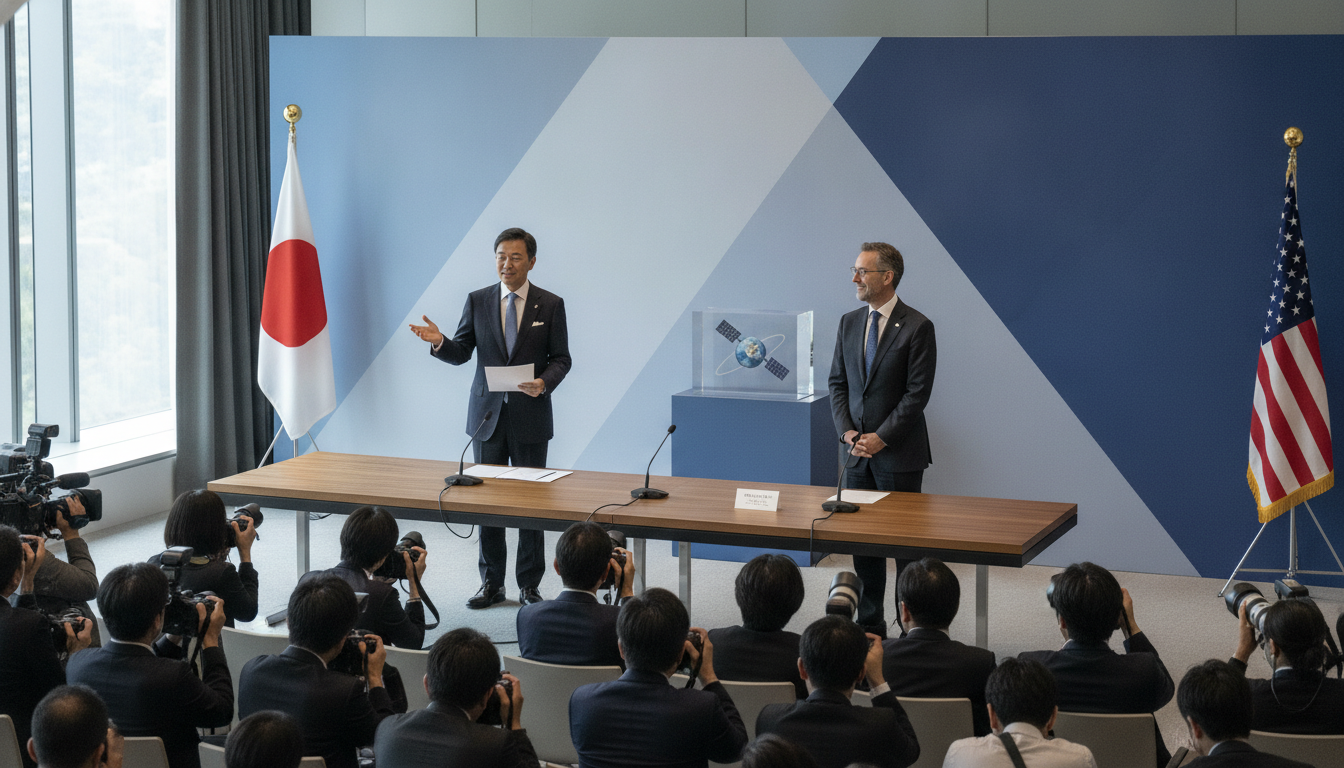
Rakuten and AST SpaceMobile joint venture to launch direct-to-mobile satellite service in Japan
Rakuten and AST SpaceMobile form Japan satellite joint venture to buy and operate satellites and deliver direct-to-mobile service amid Starlink-based rivals.
Rakuten and AST SpaceMobile will create a satellite business joint venture in Japan this year to purchase and operate satellites and offer direct-to-mobile connectivity, the companies said. The Rakuten and AST SpaceMobile joint venture aims to enable standard mobile phones to connect directly to satellites without new handsets or local ground stations. The move intensifies competition in Japan’s emerging satellite-to-phone market where rivals are deploying services using SpaceX’s Starlink network.
Deal structure and stated objectives
Rakuten and AST SpaceMobile said the joint venture will be capitalized to acquire satellites and related ground infrastructure to provide direct-to-mobile communications across Japan. The companies described the arrangement as a commercial partnership that leverages AST SpaceMobile’s satellite designs and Rakuten’s mobile-market presence and regulatory experience in Japan. Officials indicated the joint venture will target coverage in low-density and remote areas while also supporting roaming and disaster-resilient connectivity.
How direct-to-mobile satellite service works
Direct-to-mobile services route signals between low Earth orbit satellites and standard mobile handsets using dedicated payloads and wide-beam antennas on board spacecraft. The technology bypasses traditional satellite phones by linking directly with existing cellular devices, enabling voice and basic data without extra hardware for many users. Companies pursuing this model emphasize spectrum management, footprint planning and integration with mobile operators’ core networks to maintain service quality.
Competitive landscape and Starlink-based rivals
The Rakuten and AST SpaceMobile joint venture enters a field where competitors are experimenting with satellite-cell integration using SpaceX’s Starlink or other satellite constellations. Several global telecom firms and satellite startups have announced partnerships or trials to extend mobile coverage via satellites, often relying on different technical approaches and commercial agreements. Industry observers say Japan’s market will be shaped by how operators price services, secure spectrum rights and coordinate with device manufacturers.
Timeline, satellite procurement and operations
Rakuten and AST SpaceMobile indicated the new company will begin satellite procurement and operational planning this year, with launches and service rollouts to follow based on regulatory approvals and satellite manufacturing schedules. The partners did not disclose a precise launch calendar or the number of satellites to be procured, but they emphasized phased deployment tied to coverage goals. Procurement will likely include spacecraft with dedicated direct-to-mobile payloads and ground systems to manage traffic and interconnect with Japan’s mobile networks.
Regulatory and industry implications in Japan
Japanese regulators will play a central role in authorizing spectrum use, orbital slots and market access for the joint venture’s services, industry sources say. Spectrum coordination is critical because direct-to-mobile signals must coexist with terrestrial mobile bands and other satellite services without causing interference. The joint venture could prompt regulatory reviews of roaming, emergency communications rules and how satellite-delivered traffic is classified for mobile carriers and consumers.
Commercial prospects and consumer impact
The joint venture could expand connectivity for users in remote islands, mountainous regions and rural communities, improving access to emergency services and digital applications. For urban consumers, initial impacts may be limited, but the service may offer enhanced roaming options for travelers and backup connectivity during network outages. Analysts caution that commercial success will depend on pricing, handset compatibility, network integration and the ability to scale coverage while keeping latency and data speeds within acceptable ranges.
Rakuten’s experience in mobile services and AST SpaceMobile’s satellite expertise combine commercial reach with technical capability, but the venture faces challenges common to satellite-to-phone initiatives, including high capital costs, regulatory complexity and competition from alternative technical models. The partnership signals an acceleration of satellite-based mobile services in Japan and could influence how operators and device makers approach universal coverage and resilient communications going forward.

