
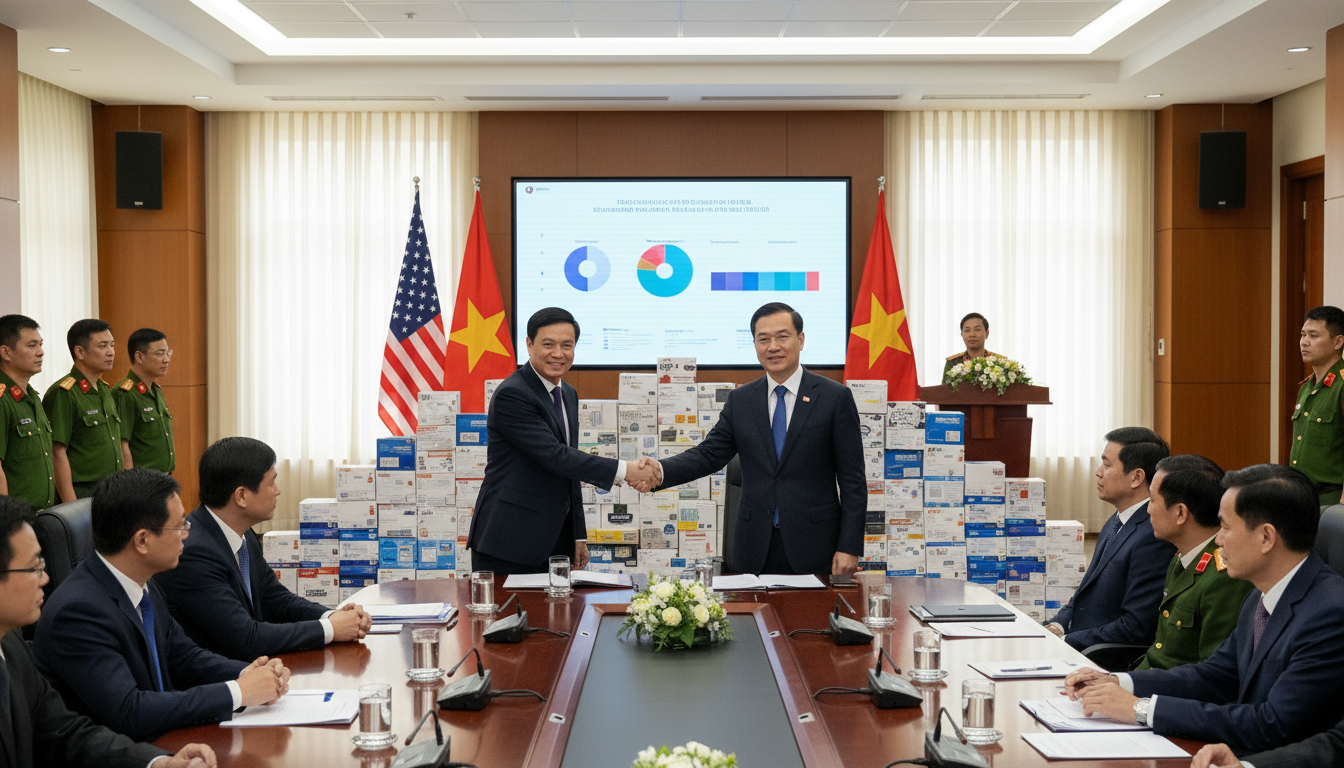
Vietnam counterfeit crackdown intensifies as Hanoi moves to secure U.S. export access
Vietnam counterfeit crackdown escalates after a U.S. intellectual-property report; Hanoi tightens enforcement to protect access to the U.S. export market.
Opening summary
Vietnam counterfeit crackdown has accelerated after a U.S. government report singled out the country for intellectual property concerns, prompting Hanoi to step up raids, seizures and regulatory pressure.
Officials say the measures aim to reassure trading partners and preserve access to the U.S. export market as scrutiny of supply chains intensifies.
Traders, manufacturers and diplomats are watching enforcement actions closely for signs of sustained policy change.
U.S. report labels and diplomatic pressure
A recent U.S. report on intellectual property abuse applied its sternest language to Vietnam, a designation that has heightened diplomatic urgency.
The report accused the country of widespread availability of counterfeit and pirated goods, a finding that can influence trade negotiations and market access decisions.
Vietnamese authorities have since signaled they will move to reduce infringement and demonstrate compliance with international norms.
Scenes of counterfeits in urban markets
In Ho Chi Minh City and other urban centers, counterfeit products continue to be openly sold in some malls and street markets, according to observers.
These goods range from branded apparel and electronics to spare parts and cosmetics, complicating enforcement in dense retail environments.
Merchants and consumers face mixed incentives: counterfeit supply can be lucrative for sellers while buyers often seek lower prices.
Hanoi’s enforcement push and legal measures
Hanoi has launched targeted operations against sellers and distributors of fake goods, increasing inspections at wholesale hubs and retail outlets.
Authorities report higher numbers of seizures and fines, and prosecutors are reviewing cases that could lead to stiffer penalties for repeat offenders.
Officials also say they will strengthen customs controls and improve coordination between local police, trade regulators and customs agencies.
Trade strategy and U.S. market access
Analysts interpret the crackdown as part of a broader effort by Vietnam to protect its export credentials and avoid trade penalties.
Some trade experts contend that the country’s large trade surplus with the United States has drawn extra scrutiny and made demonstrating enforcement a strategic priority.
By reducing visible infringement, Hanoi aims to reassure U.S. partners and preserve preferential access that benefits Vietnamese exporters.
Business community responses
Manufacturers and legitimate brand operators have welcomed tougher enforcement but warned that inconsistent application could harm small businesses.
Export-oriented firms say stronger intellectual property protections can boost investor confidence, but they call for clear rules and fair enforcement to prevent disruption.
Retailers dependent on low-cost supply chains caution that reducing counterfeit availability requires affordable alternatives for consumers and better legal channels for dispute resolution.
Challenges in implementation
Experts note that enforcement alone will not eliminate the problem; effective reduction of counterfeits requires improved legal frameworks and public awareness.
Capacity constraints at local enforcement agencies, complex supply networks and demand-side factors all complicate long-term compliance.
International cooperation on tracing supply chains and sharing intelligence is likely to play a pivotal role in durable results.
Vietnamese authorities must balance swift action with measures that support legitimate trade and protect livelihoods, while the international community watches for signs of institutional change.
Sustained transparency in enforcement statistics, clearer penalties, and streamlined procedures for rights holders to report abuses would strengthen claims of progress.
How Hanoi manages this transition will influence its trade relationships and the confidence of overseas buyers and investors.

