
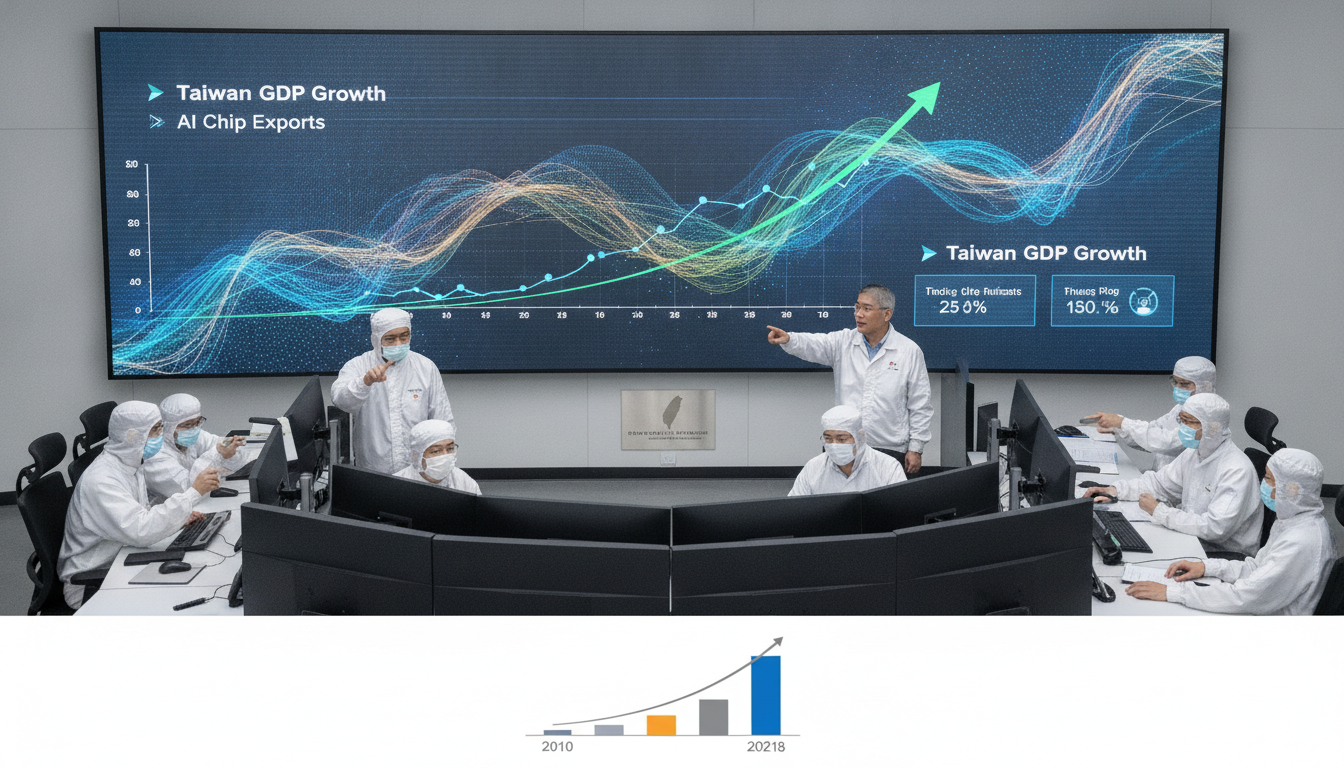
Taiwan trade surges as AI-driven chip demand propels fastest growth since 2010
Taiwan trade is climbing to record levels as booming global demand for artificial intelligence chips lifts exports and manufacturing, setting the island on track for its strongest expansion since 2010.
Strong export momentum fuels headline growth
Taiwan trade has accelerated sharply this year, driven by surging orders from overseas technology firms seeking advanced semiconductors and related components. Export volumes and shipments from key ports have expanded, reflecting rising demand for hardware that supports generative AI and data center upgrades. Analysts say the surge has pushed overall economic activity up, contributing to forecasts of the fastest growth the island has seen in more than a decade.
Ports and terminals report higher throughput, and manufacturers have extended shifts to meet order books. The cumulative effect is visible across shipping manifests and factory gates, indicating a broad-based lift rather than an isolated uptick in one or two product lines.
Semiconductor industry at the center of the boom
The semiconductor sector remains the principal engine behind the export surge, with foundries and packaging firms reporting sustained inquiries for nodes and chips used in AI systems. Investment in production capacity and equipment has accelerated as companies race to secure supply for complex processors and custom AI accelerators. This heightened production cycle has not only raised export values but also increased demand for upstream suppliers in chemicals, machinery and testing equipment.
Supply-chain tightness around specialised components has prompted closer coordination between chipmakers and global customers. Both contract manufacturers and integrated device manufacturers are expanding capacity where economically and technically feasible, contributing to a virtuous cycle of orders and output.
Ports, logistics and shipping adapt to higher flows
Major harbors, including Keelung and Kaohsiung, have seen steeper traffic as container volumes and time-sensitive semiconductor shipments grow. Terminal operators report longer operating hours and more frequent sailings on key trade lanes to handle the spike in cargo. Logistics providers are also reallocating resources to prioritize semiconductor shipments, which often require temperature control and rapid transit.
Rail and truck capacity has been supplemented to move goods between factories and ports efficiently. Industry sources note that faster turnaround times and improved coordination have been necessary to prevent bottlenecks that could ripple into production delays.
Policy response and corporate investment plans
Taiwanese authorities have highlighted the importance of maintaining smooth export channels and supporting industrial investment to capitalise on the AI-driven demand surge. Government agencies are focusing on infrastructure resilience, workforce training for advanced manufacturing, and incentives to attract both domestic and foreign capital into chip-related projects. These measures aim to sustain momentum without overheating the economy.
At the corporate level, firms across the technology supply chain have announced plans to increase capital expenditure, hire additional technicians, and expand wafer fabs and assembly lines. Such private-sector commitments complement public efforts to bolster long-term competitiveness in semiconductor production.
Global implications and trade partner dynamics
The revival in Taiwan trade has implications beyond the island, as international technology firms depend on Taiwanese semiconductors for AI deployments and consumer electronics alike. Increased shipments have tightened global supply conditions for certain components, affecting pricing and delivery schedules in multiple markets. Trading partners are responding by securing longer-term agreements and diversifying procurement strategies to manage risk.
Economic observers say the strength of Taiwan’s exports underscores the island’s central role in the global technology ecosystem. The momentum is likely to influence investment flows and industrial planning in countries that either rely on Taiwanese chips or seek to build their own domestic capacities.
Risks and constraints amid rapid expansion
Despite strong trade figures, challenges remain that could temper the pace of growth. Capacity constraints in specialized fabrication and testing, potential supply-chain disruptions, and geopolitical tensions are all factors that could affect future export performance. Inflationary pressures and wage adjustments tied to high-demand skilled labor could also weigh on margins across manufacturing sectors.
Market watchers warn that sustaining the current trajectory will require careful management of supply constraints and continued investment in infrastructure and talent. Contingency planning by both companies and policymakers will be crucial if demand moderates or unexpected disruptions occur.
The current upswing in Taiwan trade reflects a convergence of technological demand and production capability, positioning the island to benefit from the global AI investment cycle while underscoring the importance of supply-chain resilience and strategic planning.

