
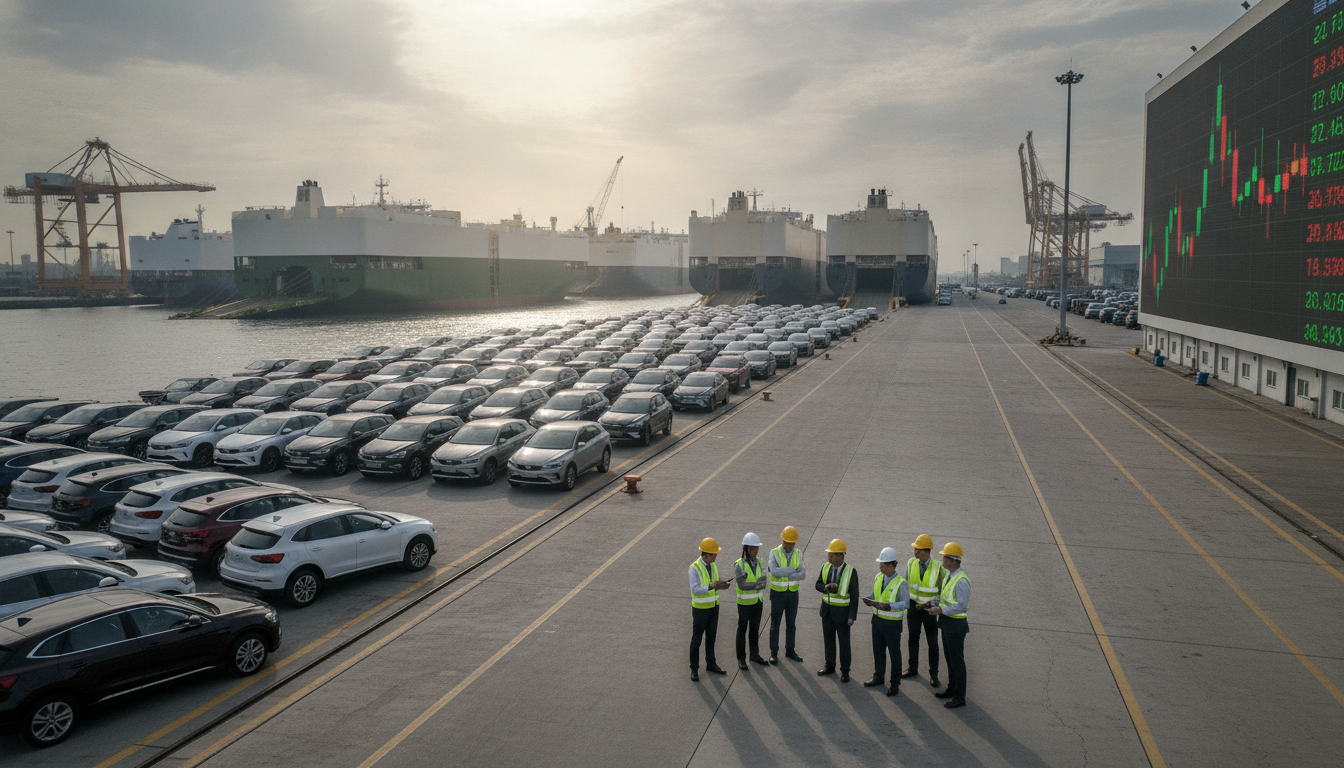
China EV exports surge offsets weak domestic demand, automakers pivot abroad
China EV exports are rising rapidly as domestic sales slow, with manufacturers shifting production and sales strategies to overseas markets amid mounting external risks.
China’s accelerating electric vehicle exports are increasingly compensating for sluggish demand at home, industry officials and analysts say. Major manufacturers have expanded overseas shipments while showcasing new models at regional auto shows, as companies seek growth beyond the domestic market. The export push has underlined a widening gap between strong factory output and weak domestic consumption in China’s auto sector, prompting firms to retool sales strategies and logistics networks to serve foreign buyers.
Exports cushion falling domestic sales
Autmakers report that overseas deliveries have helped sustain production volumes as Chinese consumer purchases ease. Several domestic brands have redirected inventory to ports and foreign distributors, reducing pressure on factory utilization rates and employment at some plants. This shift is not uniform across the industry: larger groups with export-ready models and established overseas partnerships have adapted more quickly than smaller players that remain reliant on local demand.
Manufacturers accelerate overseas model launches
Car companies are accelerating launches tailored to foreign markets and adjusting specifications to meet regional safety and emissions rules. Electric vehicle makers in particular have focused on affordability, range and local service networks to make inroads in Southeast Asia, Europe and parts of Latin America. Executives have emphasized that sustained investment in overseas after-sales support and financing partnerships is now as important as competitive vehicle pricing.
Logistics and supply-chain strain increases costs
The surge in exports has placed additional strain on shipping capacity and supply chains already coping with broader global volatility. Automakers face longer transit times and higher freight costs for some routes, prompting the use of alternative hubs and the expansion of regional assembly or knock-down facilities. Suppliers are under pressure to synchronize components for multiple markets, complicating inventory management and exposing manufacturers to foreign currency and freight rate fluctuations.
Geopolitical and regulatory headwinds complicate expansion
Industry insiders warn that political tensions, new tariff regimes and divergent regulatory standards create a "complex and volatile" external environment for exporters. Compliance with safety certifications, data rules for connected vehicles, and local content requirements has added layers of cost and lead time for market entry. Analysts say that while demand exists abroad, the landscape requires careful navigation and contingency planning to avoid sudden market disruptions.
Policy incentives and strategic responses in China
Beijing and local authorities have continued to support manufacturing through targeted incentives and export facilitation measures, while also encouraging firms to diversify their sales channels. Some regional governments offer logistical subsidies, export tax rebates, and trade mission support to help auto firms access new buyers. Meanwhile, several state-backed funds and private investors have increased capital allocations to companies that demonstrate credible overseas growth plans.
Consumer reception and dealer networks overseas
Early adopters in target markets have responded positively to competitively priced Chinese EVs that offer generous equipment levels for the price, according to dealers and market observers. Yet establishing reliable dealer networks and trusted service centers remains a hurdle for many brands, and consumer concerns about resale values and parts availability persist. To build confidence, companies are increasingly offering extended warranties, localized financing and partnerships with established distributors.
As automakers continue to shift focus toward export markets, they are balancing near-term production needs against longer-term brand-building objectives. The export surge is helping to sustain China’s vehicle factories for now, but success abroad will require firms to manage regulatory complexity, logistics costs and local consumer trust while maintaining competitiveness at home.
Market watchers say the coming quarters will be critical in determining whether exports can deliver sustained demand growth or merely provide a temporary buffer for an industry adapting to weaker domestic consumption.

