
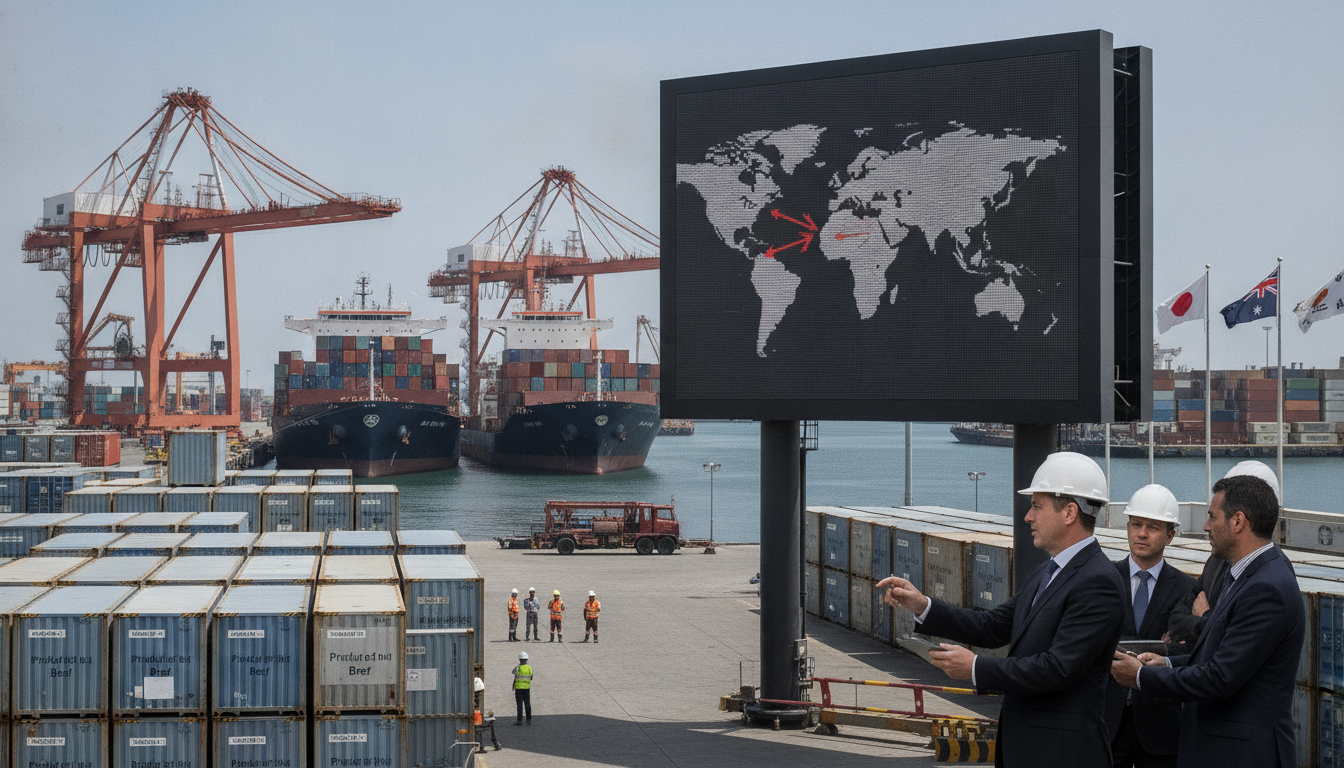
Australian beef exports to China hit quota limit as exporters reroute shipments
Australia’s beef exports to China are facing fresh constraints as Beijing’s tariff-quota measures and slower demand force exporters to redirect cargoes and adjust trade strategies.
China’s Tariff-Quota Hits Australian Beef Shipments
Chinese authorities have implemented tariff-quota measures intended to support domestic breeders while limiting the volume of imported beef, and Australian exporters are approaching the quota cap for the year. Market sources say the policy change has compressed the window for shipments, intensifying logistical pressure on suppliers in Australia and exporters who rely on predictable access to the Chinese market.
The tariffs are part of a broader trade policy that favors local producers, officials have signaled, but the measures come at a time when overall demand in China has softened. That combination has created a complex environment for meat traders balancing contractual obligations, freight schedules, and shifting price signals.
Exporters Reroute Cargoes as Quotas Close
Faced with restricted entry into China, many exporters have begun redirecting consignments to alternative markets across Asia, the Middle East and to domestic channels in Australia. Traders report accelerating sales efforts to buyers in South-East Asia and the Gulf states, where demand remains relatively resilient and tariff conditions differ.
Rerouting shipments requires rapid operational adjustments, including renegotiating contracts, changing shipping documentation and finding new cold-chain buyers on short notice. These shifts raise costs and can erode margins for producers already contending with rising input prices and tighter financing conditions.
Policy Aims to Boost Domestic Breeders
Beijing’s stated objective for the tariff and quota approach is to strengthen local cattle and beef production by reducing import competition and supporting farm gate prices for Chinese breeders. Analysts note the move aligns with a longer-term strategy to improve China’s food security and to stabilize rural incomes.
However, industry participants caution that policy support for breeders will take time to translate into expanded domestic production and that short-term market distortions may persist. Domestic herd rebuilding and improvements in processing capacity are longer-term efforts that do not immediately offset reduced import volumes.
Retail and Wholesale Prices Respond in China
On the demand side, a sluggish economy and subdued consumer spending have curtailed growth in meat consumption, even as supply-side measures alter the import landscape. Retailers in major Chinese cities have reported mixed price movements, with some cuts at the wholesale level offset by localized shortages of specific cuts.
Supermarket buyers and distributors are adjusting assortment and procurement strategies to manage both cost and consumer preference, prioritizing enduring demand for value cuts while scaling back expensive or premium-grade imports when margins are squeezed. These purchasing shifts feed back into exporters’ decisions on which products to allocate and where to divert shipments.
Regional Markets Absorb Redirected Supply
Countries in South-East Asia and the Middle East are emerging as primary recipients of redirected Australian beef, offering alternative outlets for frozen and chilled consignments. Importers in those regions benefit from increased availability and occasionally more competitive pricing as exporters seek to move cargo quickly.
Some exporters are also expanding marketing efforts closer to home, increasing sales into Australia’s domestic foodservice and retail sectors, where demand for high-quality beef remains steady. The redistribution of supply has the potential to reshape trade flows across multiple markets for the remainder of the year.
Industry Responses and Risk Management Steps
Australian producers and exporters are pursuing a range of measures to manage the disruption, including diversifying buyer portfolios, entering longer-term contracts with alternative customers and adjusting production schedules. Forward-looking firms are also investing in market intelligence and logistics flexibility to respond rapidly to policy shifts.
Trade associations and exporters have called for clearer communication on quota implementation timelines and for smoother customs processes to reduce costly bottlenecks. At the same time, some processor groups are reassessing crop-and-livestock integration strategies to buffer margins against volatile export demand.
Outlook for the coming months remains mixed as exporters navigate constrained access to China and seek to capitalise on alternative demand. The interplay between Chinese policy intent to bolster domestic breeders and the practical need for steady import supplies will continue to influence price formation and trade patterns. The industry’s ability to adapt—through market diversification and operational resilience—will determine how deeply Australian beef exports to China and to other markets feel the impact of these policy changes.

