
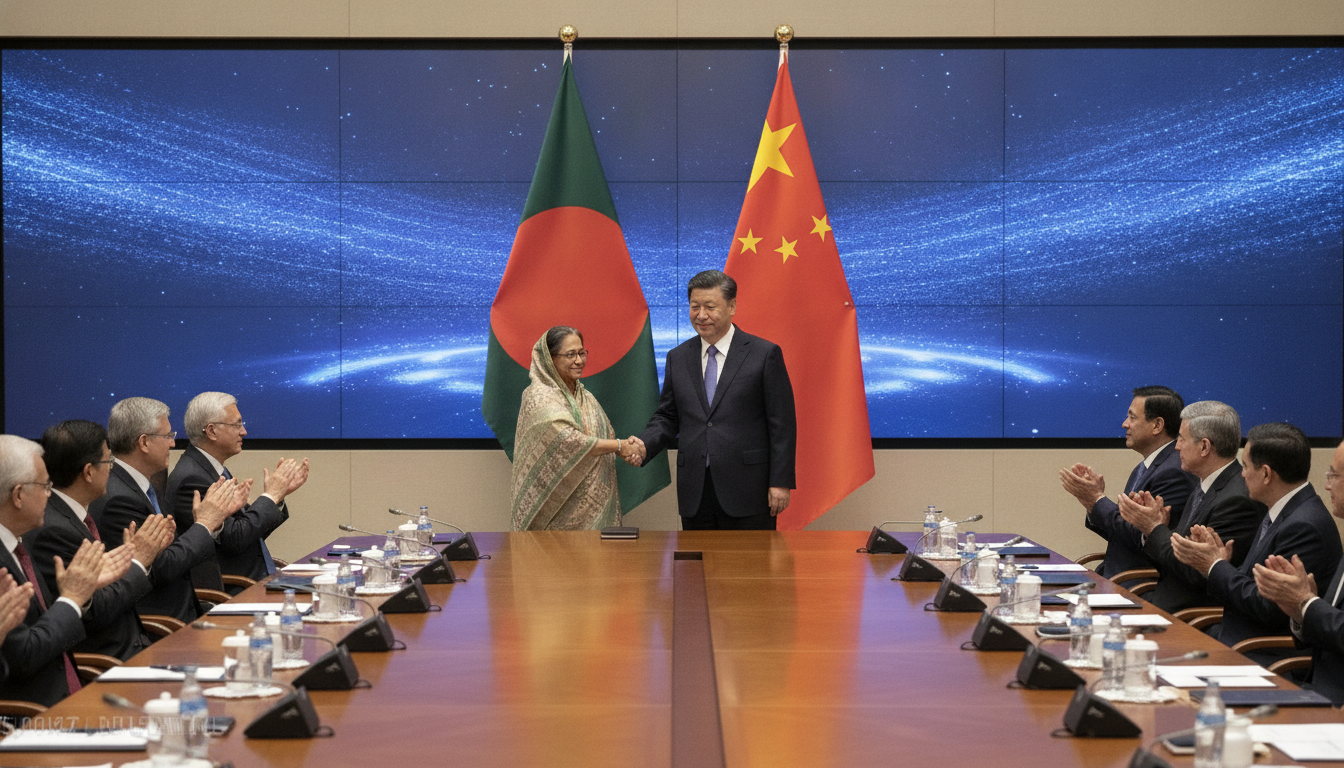
Bangladesh-China cooperation deepened as Tarique Rahman secures Beijing commitments
Bangladesh-China cooperation took centre stage in Beijing as Bangladeshi Prime Minister Tarique Rahman concluded talks with Chinese leaders, seeking trade growth, infrastructure financing and a recalibration of Dhaka’s regional ties. Rahman met Chinese President Xi Jinping on Friday and discussed a package of measures intended to expand economic and strategic collaboration. The visit aims to secure funding and technical support for major projects while diversifying Bangladesh’s foreign partnerships away from an overreliance on a single neighbour.
Rahman meets Xi Jinping in Beijing
Tarique Rahman held a formal meeting with President Xi Jinping at the Great Hall of the People, where both sides expressed interest in deepening bilateral ties. Officials said the discussions covered a broad range of areas including trade, infrastructure and investment, reflecting a mutual desire to elevate the relationship.
The talks were accompanied by working-level meetings between Bangladeshi and Chinese ministers and business delegations. Those sessions focused on translating political commitments into concrete agreements and timetables for cooperation.
Agreements aim to boost trade and market access
Chinese and Bangladeshi officials signalled intentions to remove barriers and expand bilateral trade, with an emphasis on agricultural goods, textiles and technology services. Commitments included measures to facilitate customs clearance and strengthen supply chain linkages that could benefit exporters on both sides.
Analysts noted that improved trade facilitation and targeted market access could help Bangladesh diversify its export destinations and reduce logistical costs. The move is part of a broader effort to embed Bangladesh-China cooperation within long-term economic planning.
Infrastructure financing at centre of discussions
A central objective of Rahman’s visit was to secure financing for large-scale infrastructure projects, including roads, energy and port upgrades. Chinese officials discussed a mix of concessional loans, equity investment and potential public-private partnerships tailored to Bangladesh’s needs.
Bangladesh faces a pressing need for modern infrastructure to sustain its growth trajectory, and Chinese finance is seen as one viable source of capital. Both governments emphasised a preference for projects that support connectivity and industrial capacity without imposing unsustainable debt burdens.
Technology and industrial cooperation proposed
Beyond hard infrastructure, the two sides explored cooperation in technology transfer, industrial parks and vocational training to support Bangladesh’s manufacturing ambitions. Proposals discussed include joint ventures in special economic zones and Chinese participation in skill development programmes.
Officials highlighted the potential for Chinese companies to bring manufacturing know-how and for Bangladesh to offer a growing, skilled labour force. This element of Bangladesh-China cooperation aims to move beyond financing toward longer-term productive links.
Diplomatic rebalancing and regional implications
Rahman framed the Beijing visit as part of Dhaka’s strategy to rebalance its diplomatic relationships, reducing overdependence on any single regional power. The outreach to China is intended to provide Bangladesh with more strategic maneuverability in South Asia and enhance bargaining leverage on economic and security matters.
Observers in the region said the deepening ties could prompt careful diplomatic recalibration by neighbouring capitals. New Delhi will likely monitor developments closely, as Dhaka’s closer engagement with Beijing may affect established bilateral dynamics.
Officials discuss terms, safeguards and implementation timelines
Both delegations acknowledged the need for clear implementation plans and financial safeguards to ensure projects deliver economic returns. Chinese officials reportedly offered to structure financing with mixed instruments while Bangladeshi negotiators sought safeguards on interest rates, maturities and local-content provisions.
Stakeholders stressed the importance of transparency and competitive procurement to maximise value for money and minimise fiscal risks. Implementation timelines and coordination mechanisms were identified as priorities for follow-up work by ministries and state agencies.
Bangladesh-China cooperation during the visit was presented as pragmatic and project-focused, with officials prioritising deliverables that can be monitored and measured. Both governments agreed to set up joint working groups to oversee agreements and to issue progress reports on a regular basis.
The visit also included meetings with Chinese business leaders and bankers to accelerate private-sector engagement and to explore co-financing options. Delegation members said the private sector’s role would be crucial to mobilise capital beyond official lending.
Despite pledges, analysts cautioned that successful outcomes will depend on rigorous project appraisal and disciplined fiscal management. Bangladesh’s ability to negotiate favourable terms and to integrate new investments into a coherent national development plan will determine how effectively the new cooperation translates into growth.
The Rahman delegation indicated that follow-up visits and technical discussions are already scheduled, underscoring a shared commitment to move from intent to implementation. For Dhaka, the immediate test will be converting political goodwill into signed agreements and bankable projects that deliver jobs, infrastructure and sustainable growth.

