
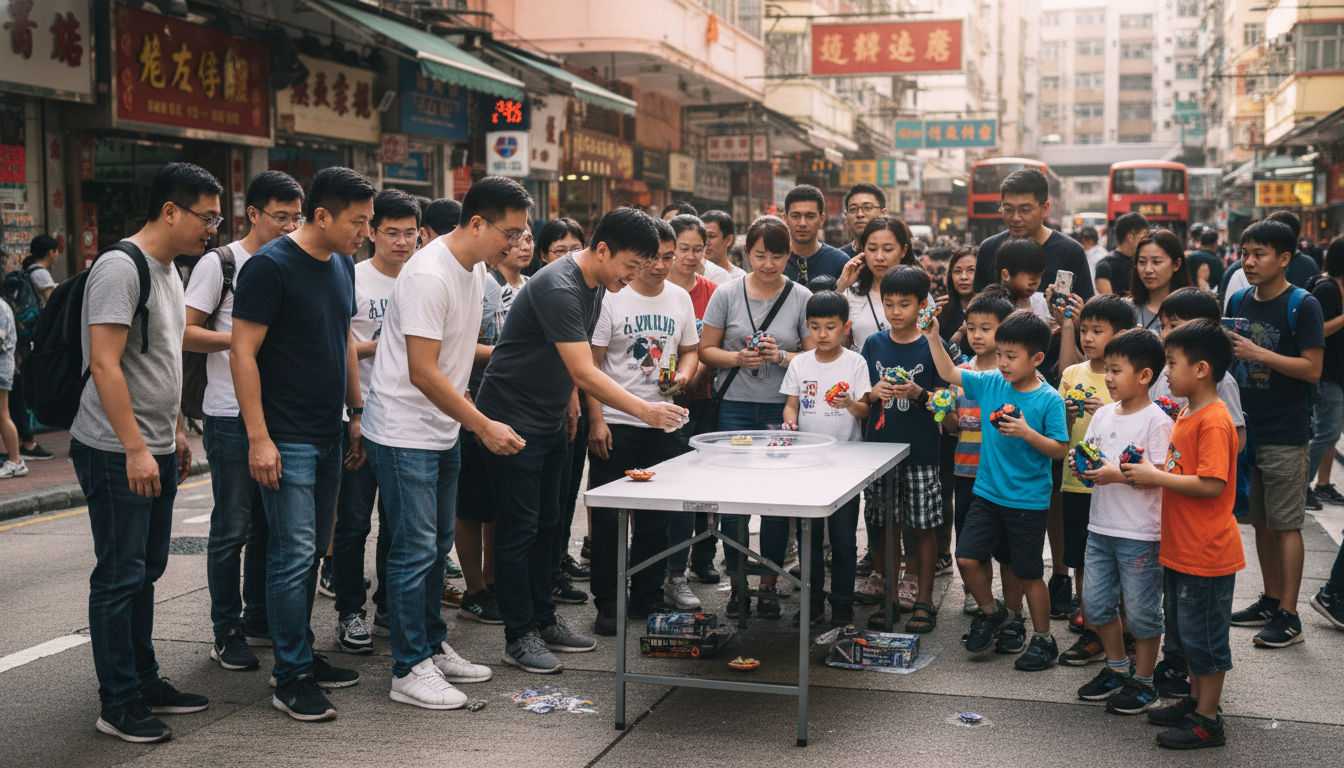
Beyblades Make a Comeback in Hong Kong as Tournaments and Toy Sales Surge
Beyblades surge through Hong Kong as nostalgia meets a new generation; tournaments, collectors and retailers report rising sales and expanding fan communities.
Beyblades have re-emerged as a prominent cultural and commercial phenomenon in Hong Kong, drawing in older fans who grew up with the toy and a fresh wave of children and teens. The spinning-top battles, played in circular Beystadiums, have moved from bedroom floors into dedicated tournament halls and specialty shops across the city. Retailers, event organizers and hobbyists say the mix of customization, competition and social media exposure is driving renewed interest in the brand.
Nostalgia and New Fans Drive Revival in Hong Kong
Longtime enthusiasts cite memories of the original 1999 release as a key reason older collectors are returning to the hobby. Many adults are buying updated or vintage parts to recreate childhood configurations, while introducing Beyblades to their children. The result is a multigenerational player base that shops, trades and competes together, boosting both secondary markets and official sales.
Social media communities and short-form video platforms have amplified the revival, showcasing dramatic battles and creative customizations. Clips of tournament play and modification tips have attracted new players who may never have encountered Beyblades in stores. That online visibility has translated into in-person interest at events and in retail footfall.
Tournaments Draw Younger Players Into Organized Play
Local competitions have proliferated, with weekend tournaments and school club competitions bringing structure to casual play. Organizers report steadily growing entry lists, particularly among primary and secondary school students who appreciate the strategic and mechanical aspects of the toy. Events are often split by age and preferred play style, allowing novices and veterans to compete on equal footing.
Tournament formats emphasize both knockout and league-style play, encouraging repeat attendance and club formation. Prizes range from new tops and parts to trophies and sponsored gear, which incentivizes continued participation among youth. Several independent promoters have begun livestreaming finals, widening audience reach beyond the physical venue.
Retailers See Increased Beyblade Sales Across Categories
Toy shops and hobby retailers in shopping districts and suburban malls report noticeable upticks in Beyblade-related sales. Stores say demand spans complete starter sets, single replacement parts and exclusive collaboration releases. Specialty outlets also note an increase in purchases of tools and accessories for customizing weight, balance and tip performance.
Secondary marketplaces have likewise become active, with collectors seeking limited releases and vintage pieces. Some sellers have introduced appraisal and repair services to capture aftermarket demand. Retail staff describe a pattern in which parents buy starter kits and return with their children for upgrades and trade parts as interest deepens.
Collector Communities Organize Swap Meets and Demonstrations
Collector groups and hobbyist forums have staged swap meets that combine trading tables with live demonstrations and training sessions. These gatherings provide a space for enthusiasts to exchange rare parts and discuss modification techniques in person. They also function as recruitment hubs where experienced players mentor newcomers on construction and strategy.
Community leaders emphasize the hobby’s social benefits, noting friendships formed across generations and neighborhoods. Clubs are collaborating with local schools and youth centers to introduce safe, supervised play. The emphasis on community building is helping sustain interest beyond fleeting trends.
Toymakers Update Designs and Release Limited Editions
Manufacturers and license holders have responded to the resurgence with refreshed product lines and limited-edition releases tailored to collectors. New models emphasize modularity, durable materials and aesthetic collaborations that appeal to both nostalgic adults and contemporary youth. Seasonal drops and region-specific variants have created urgency in the market and encouraged repeat purchases.
Product updates also include clearer safety guidance and modular kits for younger players to assemble under supervision. Some firms are experimenting with tournament-grade parts and official ranking systems to professionalize competitive play. These moves aim to balance commercial opportunity with a longer-term ecosystem for organized competition.
Safety, School Policies and Public Play Spaces
As Beyblade play moves into public spaces and schools, administrators are reassessing policies to balance enthusiasm with safety and noise considerations. School clubs typically set clear rules about permitted equipment and supervised times to reduce disruptions to classes. Municipal community centers hosting events coordinate scheduling and venue layout to ensure safe play areas.
Parents and teachers report that supervised play has educational benefits, including lessons in sportsmanship, problem solving and basic mechanics. At the same time, some venues have instituted guidelines on the materials and speeds allowed in Beystadiums to minimize the risk of parts breaking and causing injury. These precautions aim to sustain the hobby while addressing legitimate concerns.
The Beyblade resurgence in Hong Kong illustrates how a well-known toy can be revitalized by social dynamics, nostalgia and organized play. With retailers restocking, manufacturers releasing new lines and communities forming around tournaments and swaps, the trend appears durable for now. Observers say continued growth will depend on maintaining accessible entry points for children, clear safety practices, and the ability of organizers to scale events responsibly.

