
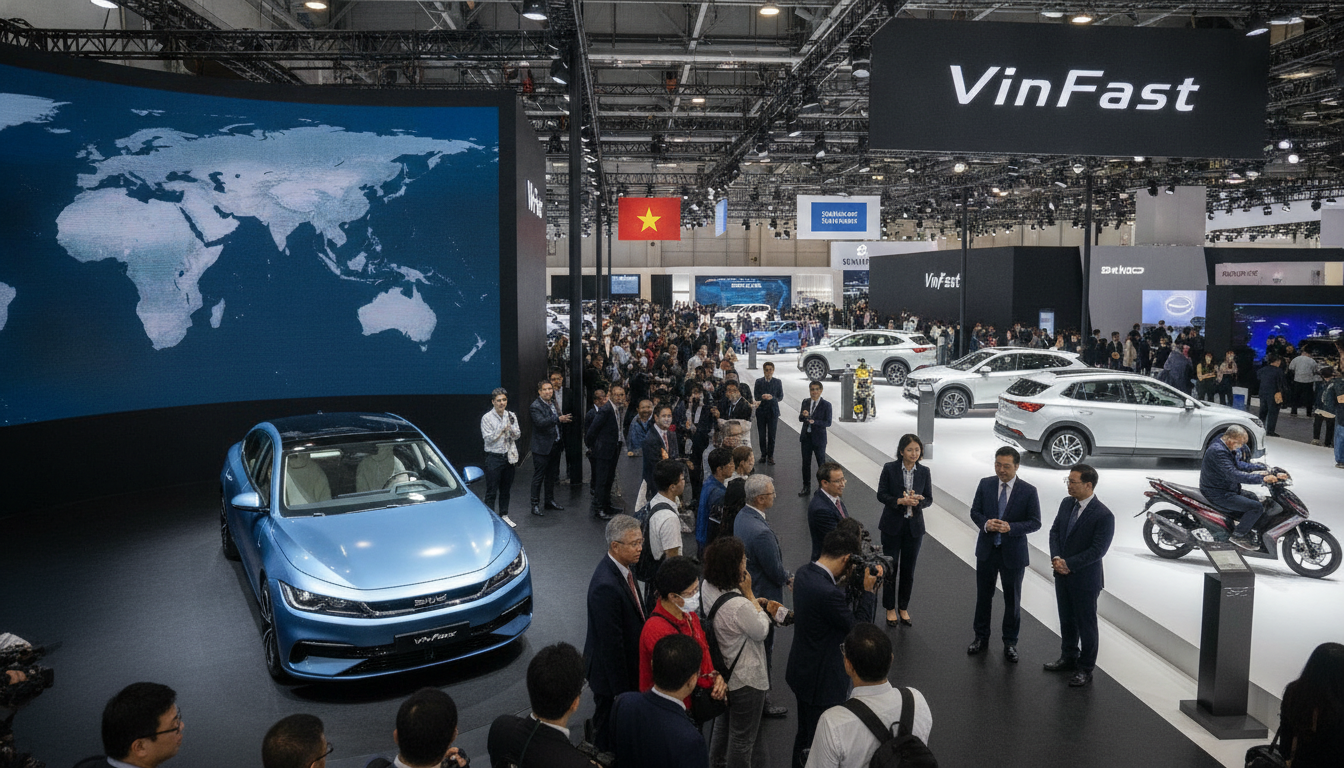
Southeast Asia electric vehicle market surges as BYD expands beyond EVs and VinFast boosts Vietnam
Growing demand for electric vehicles is reshaping the Southeast Asia electric vehicle market, with Chinese maker BYD introducing hybrids and Vietnamese producer VinFast lifting Vietnam to parity with Thailand in sales momentum.
TOKYO/JAKARTA/KUALA LUMPUR/SINGAPORE — Accelerating consumer interest in electric vehicles is powering a shift across Southeast Asia, changing how manufacturers sell models and where they invest. At the Jakarta International Auto Show, which runs July 30–Aug. 9, 2026, automakers showcased a mix of battery-electric vehicles and plug-in hybrids to address regional concerns about charging and range. The momentum is particularly visible as BYD expands its lineup and VinFast’s sales help Vietnam close the gap with long-dominant Thailand.
BYD Pushes Into Hybrid Models at Jakarta Auto Show
BYD unveiled a plug-in hybrid at the Jakarta show, signaling a tactical move to capture drivers wary of charging infrastructure and long-distance travel limitations. Company representatives framed the model as a bridge product to attract buyers who want lower tailpipe emissions without the anxiety of relying solely on public charging.
Industry observers say the shift shows Chinese automakers are diversifying their regional strategies, offering both full battery EVs and hybrid alternatives to accelerate market penetration. This approach is intended to appeal to a broader customer base while local charging networks catch up.
VinFast Sales Lift Vietnam to Competitive Position with Thailand
VinFast’s recent sales performance has been cited by market watchers as a key factor in Vietnam drawing level with Thailand in certain segments of new-vehicle registrations. The Vietnamese company’s combination of aggressive pricing, marketing and a rapid rollout of models has helped stimulate domestic demand and exports.
Analysts note that VinFast’s growth is reshaping regional competition, forcing established players to recalibrate product mixes and aftersales strategies. The result is a more crowded marketplace where nimble new entrants can move quickly to capture share.
Indonesia and Malaysia See Demand for Practical EV Options
In Indonesia, automakers are tailoring offerings to the archipelago’s unique geography by promoting plug-in hybrids and longer-range models that reduce reliance on nascent charging networks. Dealers told attendees at the Jakarta event that many buyers prioritize vehicles capable of inter-island travel, where charging stations remain sparse.
Malaysia is witnessing similar patterns, with consumers weighing the economics of ownership against available infrastructure. Local partnerships, test-drive campaigns and leasing options are increasingly used to lower barriers to adoption and reassure first-time EV buyers.
Government Policy and Investment Shape Market Trajectories
National policies across Southeast Asia—ranging from tax incentives to investment incentives for local assembly—are helping redirect industry investment and production decisions. Governments are balancing the desire to attract foreign manufacturers with the need to develop domestic supply chains and charging ecosystems.
Public and private investment in charging stations, grid upgrades and battery recycling is accelerating, but officials caution that infrastructure will take years to reach the density seen in more mature EV markets. Meanwhile, trade and investment agreements continue to influence where automakers locate factories and distribution hubs.
Supply Chains and Local Manufacturing Influence Competitiveness
Chinese automakers’ vertical integration and ability to supply EV components at scale is giving them an advantage in price-sensitive Southeast Asian markets. Local assembly agreements and joint ventures are enabling faster model introductions and reduced costs for consumers.
At the same time, regional firms and global brands are investing in local production to secure market access and comply with incentive rules. The interplay between global suppliers and local manufacturing will shape which companies gain long-term market share.
Market Outlook and Consumer Uncertainties into 2027
As the Southeast Asia electric vehicle market expands, automakers will continue to test hybrid, plug-in hybrid and full EV strategies to find the most effective routes to scale. Consumer acceptance will hinge on price competitiveness, aftersales support and the pace of charging infrastructure deployment.
Industry participants say the coming 12 to 18 months will be critical for establishing brand loyalty and distribution networks, with auto shows and model launches acting as key battlegrounds. How quickly governments and private investors upgrade energy and charging systems will also determine whether electrification proceeds smoothly or in staggered phases.
The region’s auto market is in the midst of a structural shift driven by technology, policy and new entrants, leaving manufacturers to adapt product strategies while consumers weigh the trade-offs of electrified mobility.

