
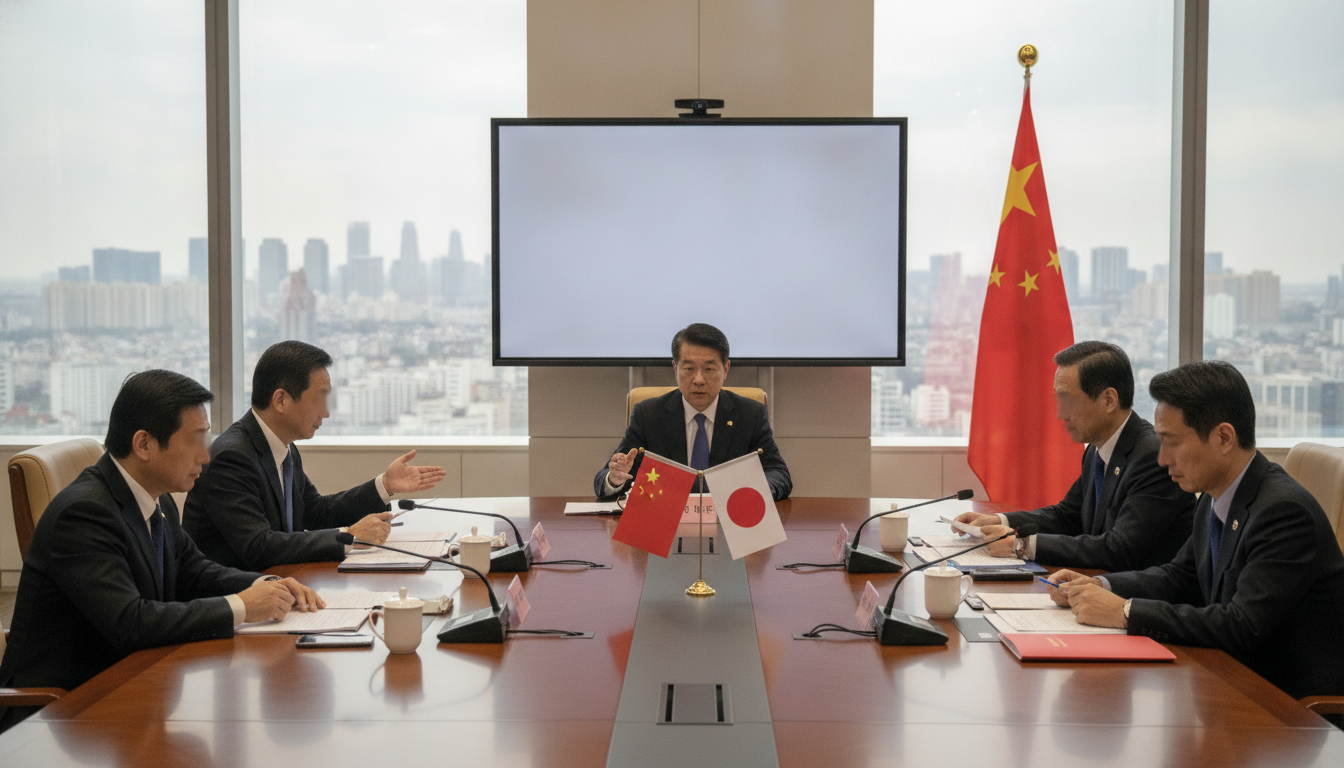
Japan-China tensions deepen as Beijing imposes export controls on dozens of Japanese firms
China imposed export controls on dozens of Japanese firms, escalating Japan-China tensions and raising compliance and supply-chain risks for dual-use technology.
China on Monday announced export controls targeting dozens of Japanese companies, a move Beijing framed as a response to what it called Tokyo’s “new form of militarism,” deepening Japan-China tensions and unsettling markets and manufacturers across the region. The controls, described by Chinese authorities as measures to protect national security, cover items with potential dual-use applications and are expected to increase compliance burdens for affected firms. Tokyo said it would seek clarification through diplomatic channels while businesses scramble to assess the immediate impact on operations and contracts.
Beijing’s announcement and official rationale
China’s commerce ministry said the export restrictions were introduced to prevent sensitive items from contributing to military capabilities abroad, citing national security concerns. State media and official statements framed the measures as a defensive step in response to shifts in Japan’s defense posture, language that underlines the growing political strain between the two governments. The ministry provided a list of categories of controlled goods and a list of companies affected, though details released so far are limited and subject to later regulatory guidance.
Analysts note that Beijing’s explanation emphasizes legal authority under China’s export control framework, which has been expanded and used more frequently in recent years. The announcement is consistent with a pattern of trade-related measures being deployed as instruments of strategic leverage, observers said. Officials in Beijing also warned that noncompliance would carry penalties, signaling an intent to enforce the new restrictions robustly.
Scope of controls and sectors likely affected
The export controls target goods and technologies with potential dual-use military and civilian applications, according to the Chinese notice. These typically include advanced manufacturing components, certain chemicals, and electronics that can be repurposed for defense systems. While the public statement listed categories rather than exhaustive product names, industry compliance teams are already mapping the classifications to their inventories and supplier networks.
Manufacturing suppliers, technology vendors and trading houses with operations in China or dependence on Chinese sourcing are among those most exposed. Companies that export critical components to global customers may face delays or new licensing requirements for shipments to and from China. Legal advisers warn that the practical implications will depend on the specifics of China’s licensing procedures and whether exemptions or streamlined approvals are introduced.
Tokyo’s diplomatic response and domestic political fallout
Japan’s foreign ministry said it had summoned senior officials for consultations and would raise the matter through diplomatic channels, seeking clarification and urging that trade be conducted in accordance with international rules. Japanese leaders framed the move as an escalation that complicates bilateral relations, and opposition politicians pressed the government to outline support measures for affected companies.
Tokyo has historically balanced economic interdependence with strategic competition in dealing with Beijing, and this development adds pressure to that approach. Cabinet ministers convened crisis briefings to review potential impacts on industry and to coordinate messaging with Japanese businesses operating in China. Officials also signalled that Japan might pursue reciprocal measures if the controls are applied in a discriminatory or politicized manner.
Business and supply-chain implications
Companies with integrated supply chains spanning Japan and China now face increased compliance risk and potential disruption to production timelines. Firms dependent on components categorized as dual-use will need to navigate new licensing processes and possibly identify alternative suppliers or reengineer products to avoid controlled inputs. That could translate into higher costs and longer lead times for electronics, automotive parts and advanced manufacturing sectors.
Procurement teams and legal departments are intensifying audits to determine which product lines and contracts are exposed. Multinational corporations noted that even indirect exposure—through third-party suppliers—could trigger complications. Financial markets may react to prolonged uncertainty, particularly for firms whose revenues rely heavily on cross-border trade between Japan and China.
Strategic context and regional security implications
The move comes amid a broader deterioration in Japan-China relations, driven by disputes over security policies, maritime activity and historical grievances. Beijing’s citation of “militarism” in Tokyo’s policy statements reflects deeper disagreements over defense cooperation and regional alignments. Policymakers in both capitals are now likely to reassess the balance between economic engagement and strategic rivalry.
Regional partners and allies are watching closely, as trade measures of this kind can ripple across supply chains and encourage diversification of sourcing. The European Union, the United States and other economies with significant technology trade ties to East Asia have previously urged restraint when export controls are used for political leverage. The latest measures may prompt renewed calls for clearer multilateral rules governing export controls and supply-chain resilience.
Analysts caution that while economic ties remain substantial, the politicization of trade instruments increases the likelihood of prolonged frictions. That could accelerate corporate strategies to relocate sensitive production, stockpile critical components or invest in supply-chain redundancy.
The new export controls mark a significant intensification in Japan-China tensions and will require careful legal, commercial and diplomatic responses from both governments and private-sector actors. Companies with exposure to China or Japanese suppliers will need to navigate the evolving regulatory landscape while policymakers weigh the broader geopolitical consequences.

