
U.S.-China Energy Disconnect Deepens After Beijing Summit
Beijing’s approach to energy security took center stage at the recent U.S.-China summit, highlighting a growing U.S.-China energy disconnect as leaders debated oil sourcing and strategic reserves.
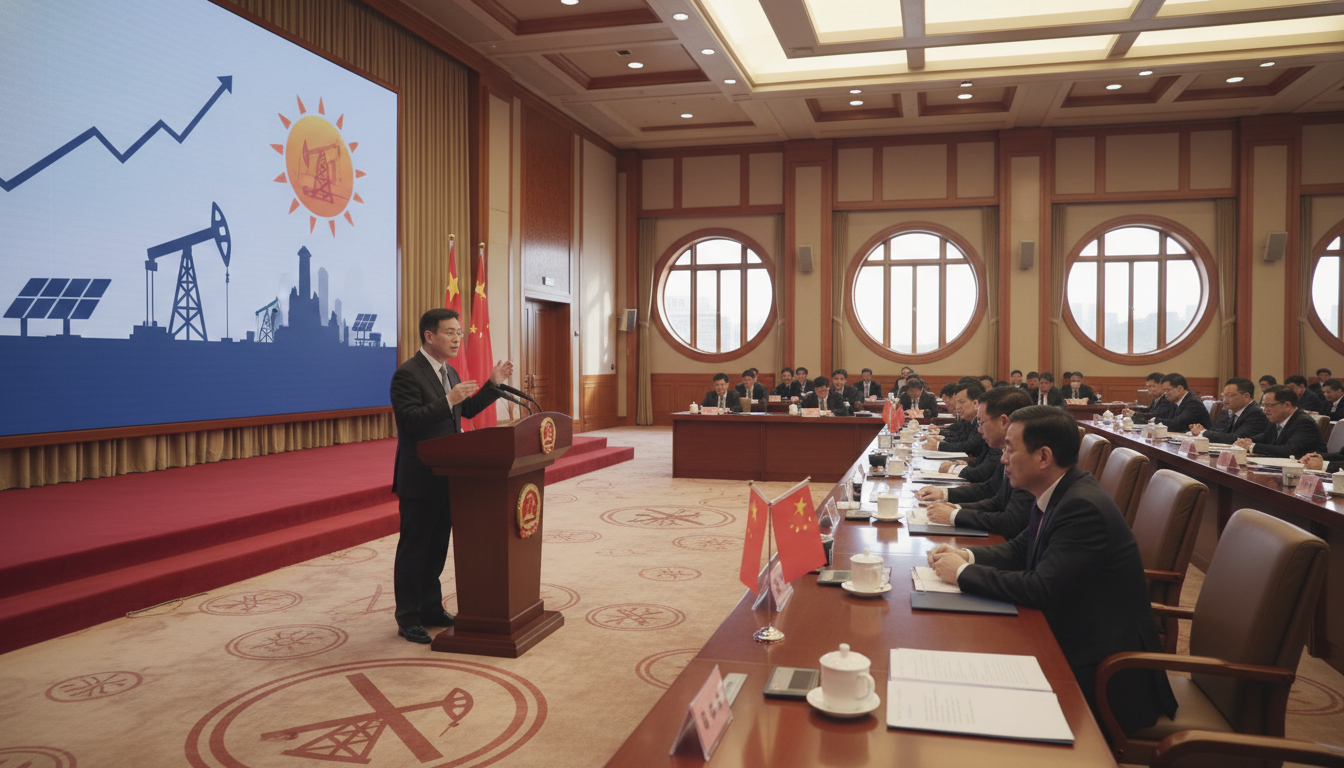
TOKYO — The U.S.-China energy disconnect was on full display during the May 14–15 summit in Beijing, where discussions about crude supplies, sanctions and strategic stockpiles underscored divergent priorities between Washington and Beijing. Chinese leaders signalled a drive to reduce vulnerability to Middle Eastern chokepoints even as the United States pushed for bilateral energy sales and market cooperation. (investing.com)
Summit exposed strategic energy rift
The two-day visit revealed that energy is no longer merely a commercial issue but a geopolitical lever for both capitals. U.S. officials described efforts to encourage Chinese purchases of American oil as a way to diversify China’s supply lines away from the Strait of Hormuz. Chinese statements were more focused on autonomy and alternative partnerships rather than rapid pivoting to Washington. (investing.com)
China’s public readouts did not mirror the U.S. emphasis on near-term purchases, reflecting a gap in expectations that analysts say will shape follow-up talks. That mismatch points to a broader U.S.-China energy disconnect, where each side prioritizes different security, commercial and domestic outcomes from any deal. (axios.com)
China accelerating strategic stockpiles and domestic output
Beijing has intensified efforts to bolster strategic and commercial reserves, accelerating construction of storage sites and lifting crude purchases when market conditions allow. State-linked projects scheduled for 2025–26 aim to add hundreds of millions of barrels of capacity, part of a longer campaign to reduce short-term vulnerability to supply shocks. (tradingview.com)
At the same time, Chinese state firms have sought to boost domestic oil production and refine throughput to blunt reliance on volatile global shipments. Officials argue that a mixture of higher local output and larger reserves gives Beijing greater room to manoeuvre during regional instability without being forced into policy moves dictated by outside powers. (kelo.com)
Shifting supplier mix and new diplomatic alignments
China’s supplier map has been evolving, with increased volumes coming from Russia and selectively from Middle Eastern producers depending on price and political risk. Beijing’s diplomatic outreach to resource-rich partners has translated into longer-term contracts and infrastructure deals that aim to make supplies more predictable. (apnews.com)
Those ties complicate U.S. efforts to use energy sales as a lever on Beijing’s foreign policy choices. While Washington proposed expanded commercial energy ties during the summit, many Chinese energy buyers and state enterprises continue to weigh geopolitical alignment and price discounts against the potential diplomatic cost of shifting suppliers. (investing.com)
Market consequences of Beijing’s strategy
China’s buying patterns and strategic fill-ups have a tangible effect on global oil markets, at times softening prices when it absorbs surplus barrels and at others tightening the market when it curtails imports. Analysts warned that unpredictable demand from the world’s top crude importer increases volatility and complicates market forecasting. (axios.com)
For energy traders and refiners, the U.S.-China energy disconnect means institutions must plan for a wider range of scenarios, from increased Chinese demand for discounted Russian crude to sudden stockpile draws that could stabilize prices. The result is a market environment where political signals matter as much as macroeconomic data. (archive.ph)
Policy choices and diplomatic friction ahead
Officials in Washington face a choice between treating energy as a transactional opening with Beijing or linking future sales to broader strategic objectives. Beijing, conversely, appears determined to use energy diversification and reserve-building as tools to insulate itself from sanctions, chokepoint risk and external pressure. (investing.com)
That divergence will complicate negotiations on related issues such as technology transfer, sanctions relief, and trade mechanisms. Observers expect follow-up technical talks but caution that any concrete agreement on energy will require reconciling not just prices and volumes but the strategic frameworks each side brings to the table. (axios.com)
Domestic implications for Beijing and Washington
Domestically, Chinese leaders must balance energy security with economic goals such as stable fuel supplies, manageable refining margins and support for heavy industry. For U.S. policymakers, promoting exports to China can help American producers but risks appearing to undercut broader strategic pressure if not coordinated across departments. Both capitals therefore face internal trade-offs that will shape how the energy disconnect evolves. (tradingview.com)
The practical upshot is that energy diplomacy will be tested repeatedly in the months ahead as each side pursues measures to insulate domestic markets while seeking leverage abroad. Expect more targeted negotiations rather than a single sweeping settlement.
As the dust settles from the Beijing summit, the U.S.-China energy disconnect looks set to persist as a defining feature of bilateral relations, with consequences for supply chains, commodity markets and regional security. Markets and policymakers will be watching closely to see whether pragmatic commercial deals can bridge the strategic gap or whether energy will remain another arena of competition between the world’s two largest economies.

