
China launches national children’s blood and DNA database to study brain disease
China’s Institute for Brain Research launches a national children’s blood and DNA database of 33,000 samples to map brain-disease patterns and risk factors.
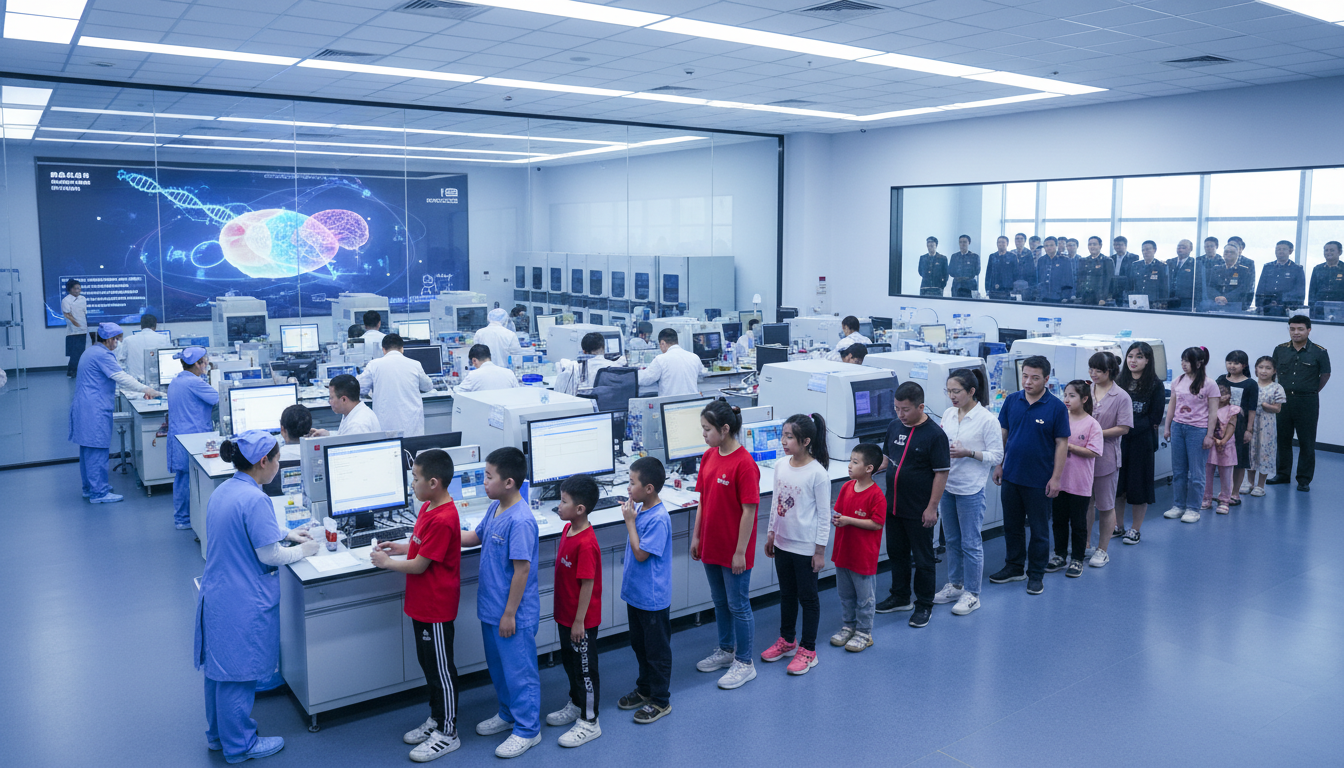
A Beijing-based initiative will assemble a national children’s blood and DNA database of 33,000 samples aimed at identifying patterns of brain disease and their associated risk factors. The project was conceived after researcher Zhang Li returned from the United States, where he observed rapid tissue processing and same-day data extraction that he said transformed his approach to biomedical science. Zhang, now at the Chinese Institute for Brain Research, described biomedical data as essential to finding disease solutions and slowing aging, while robotic systems at the facility already organize collected specimens for analysis.
Beijing institute to collect 33,000 pediatric samples
The Chinese Institute for Brain Research has confirmed plans to gather blood and DNA from 33,000 children, creating one of the country’s largest pediatric biobanks focused on neurology. Recruitment and sample collection will be phased to cover diverse regions and communities in order to capture a broad range of genetic and environmental exposures. Organizers say the scale is intended to reveal statistical patterns that smaller studies cannot, particularly for early-life risk factors linked to later neurological conditions.
Researcher cites U.S. workflow as catalyst
Zhang Li has credited a U.S. laboratory model for inspiring the project after observing tissue extraction in the morning and data mining the same afternoon. He told staff that streamlined logistics and rapid data turnaround changed his view of what a modern biomedical pipeline could deliver. That operational model — combining fast sample processing, automation and immediate data capture — underpins the institute’s blueprint for the new database.
Sampling methods and data management described by organizers
Project planners say samples will be processed using automated handling systems to reduce human error and preserve molecular integrity, with robotic arms already visible in the institute’s specimen labs. Blood and DNA samples will be catalogued, barcoded and stored in a central biorepository that the institute describes as scalable and secure. The team also intends to pair biological data with clinical information and lifestyle questionnaires to enable multi-dimensional analyses of brain health trajectories.
Scientific goals focused on brain-disease patterns and risk factors
Investigators expect the database to enable large-scale searches for genetic variants, biomarkers and environmental correlations linked to developmental and degenerative brain disorders. The primary goal is to identify early indicators and modifiable risk factors that could inform prevention strategies and clinical interventions. In addition to disease discovery, researchers anticipate the resource will support longitudinal studies of cognitive development and aging pathways.
Ethics and privacy safeguards under development
The institute says ethical review and informed consent protocols will guide the project, with parental consent required for child participation. Officials have signaled plans to anonymize data and implement controlled-access policies for researchers, though specific governance structures are still being finalized. The institute emphasized that data security and participant confidentiality are priorities as it builds access procedures and oversight mechanisms.
Funding, collaborations and timeline for rollout
Organizers indicate the initiative will draw on government and institutional funding supplemented by research grants, and they are exploring collaborations with hospitals, pediatric clinics and academic centers across China. A staged recruitment schedule is anticipated, beginning with pilot sites to test logistics before expanding nationwide. Researchers stress that maintaining sample quality and consistent procedures will be critical to the project’s scientific value.
This national children’s blood and DNA database aims to accelerate research into the causes and early signals of brain disease, offering a centralized resource for genetic and clinical study. Zhang and his colleagues say the project will not only support discovery science but also help build the operational capacity for rapid, reliable biomedical data generation in China.

