
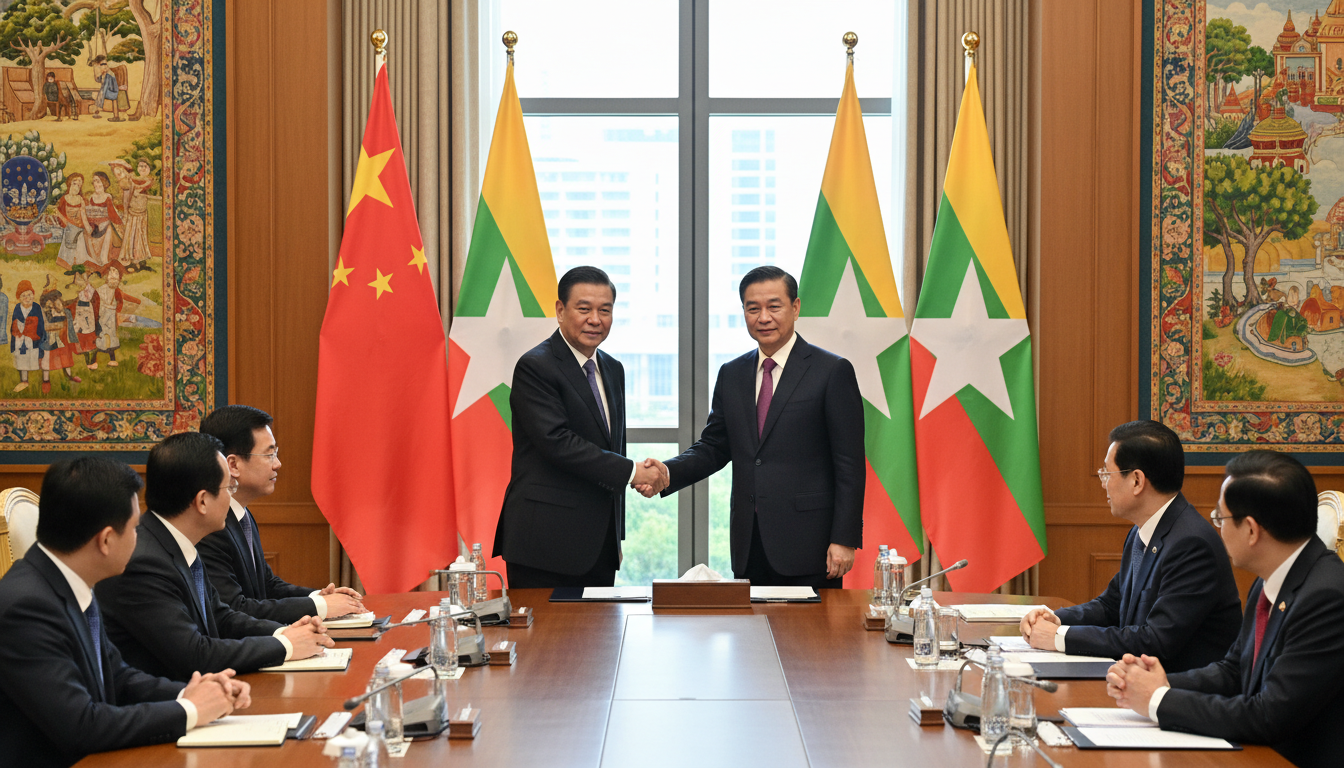
Wang Yi Visits Myanmar to Cement China-Myanmar Ties After Military Leader’s Inauguration
Wang Yi visits Myanmar, meeting President Min Aung Hlaing in Naypyitaw to reinforce China-Myanmar ties while discussing ASEAN engagement, border stability and security cooperation.
Wang Yi Meets Min Aung Hlaing in Naypyitaw
China’s top diplomat, Wang Yi, arrived in Naypyitaw and held talks with President Min Aung Hlaing on Saturday in a visit that underscored Beijing’s close political engagement with Myanmar’s new leadership. Wang Yi visits Myanmar to signal Beijing’s readiness to deepen cooperation after Min Aung Hlaing was sworn in as president on April 10 following an election widely criticized by international observers.
State-run Myanmar media reported that the discussions covered strengthening Myanmar’s international relations and cooperation within the Association of Southeast Asian Nations. The meeting also highlighted Beijing’s prompt congratulatory message from President Xi Jinping sent soon after Min Aung Hlaing’s election, a move Chinese and Myanmar officials described as affirming bilateral ties.
Topics of Discussion and Official Statements
According to Myanmar’s state broadcaster, the two sides exchanged views on border stability, trade, cybercrime cooperation and internal peace initiatives. Officials emphasized practical measures for cooperation, framing the agenda around security, economic links and regional diplomacy rather than electoral legitimacy.
Chinese and Myanmar statements highlighted a mutual interest in resuming fuller engagement with ASEAN, while Beijing reiterated its stance on non-interference and stability along the shared border. The visit came as part of Wang’s broader regional tour, intended to reassure partners and advance China’s strategic priorities in Southeast Asia.
Economic and Strategic Interests at Stake
China remains Myanmar’s largest trading partner and a major investor in infrastructure projects that include pipelines, mining and energy ventures. Beijing’s long-term investments and cross-border economic projects make stability in Myanmar an urgent priority for Chinese planners and private firms.
Beyond commerce, China and Myanmar maintain significant defense and security ties, with Beijing among the principal suppliers of military equipment to Naypyitaw. Analysts say the visit reflects Beijing’s calculation that close engagement with the military-led government best protects its financial and strategic investments in the country.
ASEAN Relations and Diplomatic Repercussions
The Association of Southeast Asian Nations withheld recognition of Myanmar’s recent election, citing the exclusion of key opposition groups and widespread restrictions on dissent and voting access. Myanmar’s military leaders were previously barred from attending ASEAN meetings after failing to implement a bloc-endorsed peace plan agreed in April 2021.
Min Aung Hlaing has publicly prioritized restoring ties with ASEAN since his inauguration, and Saturday’s meetings with Wang highlighted that goal. Still, ASEAN members remain divided over formal engagement, balancing pressure for accountability with concerns about regional stability and humanitarian access.
Border Security and Ethnic Armed Groups
China maintains separate, pragmatic ties with several ethnic armed organizations operating near its border, including the influential Three Brotherhood Alliance that has long sought greater autonomy. The alliance expanded control over territory in border regions between late 2023 and 2024, prompting concern in Beijing over cross-border security and refugee flows.
A series of China-brokered ceasefires in the past year helped slow rebel advances and created space for the Myanmar military to retake contested areas, allowing government forces to regain momentum by mid-2025. Observers caution that these fragile agreements leave open the risk of renewed clashes if political grievances are not addressed.
International Response and Human Rights Concerns
China is among a small number of states that publicly congratulated Min Aung Hlaing and signaled support for closer ties following the election, a stance that has drawn scrutiny from Western capitals and rights groups. Critics argue that international endorsement or rapid normalization without tangible reforms risks entrenching military rule and sidelining civilian voices.
Humanitarian organizations continue to raise alarms about restrictions on aid and the displacement of civilians in conflict zones, factors that complicate diplomatic engagement. The Myanmar government’s limited opening to humanitarian assistance has been described by some agencies as insufficient to meet urgent needs.
Wang Yi’s visit, while focused on technical cooperation and regional diplomacy, thus plays out against a backdrop of contested legitimacy and ongoing conflict, with Beijing positioned as a key interlocutor that can influence outcomes on the ground.
The trip is likely to ease immediate diplomatic friction between Naypyitaw and Beijing, but analysts say long-term stability in Myanmar will depend on progress toward inclusive political dialogue, improved humanitarian access and meaningful engagement with ASEAN and other international actors.

