
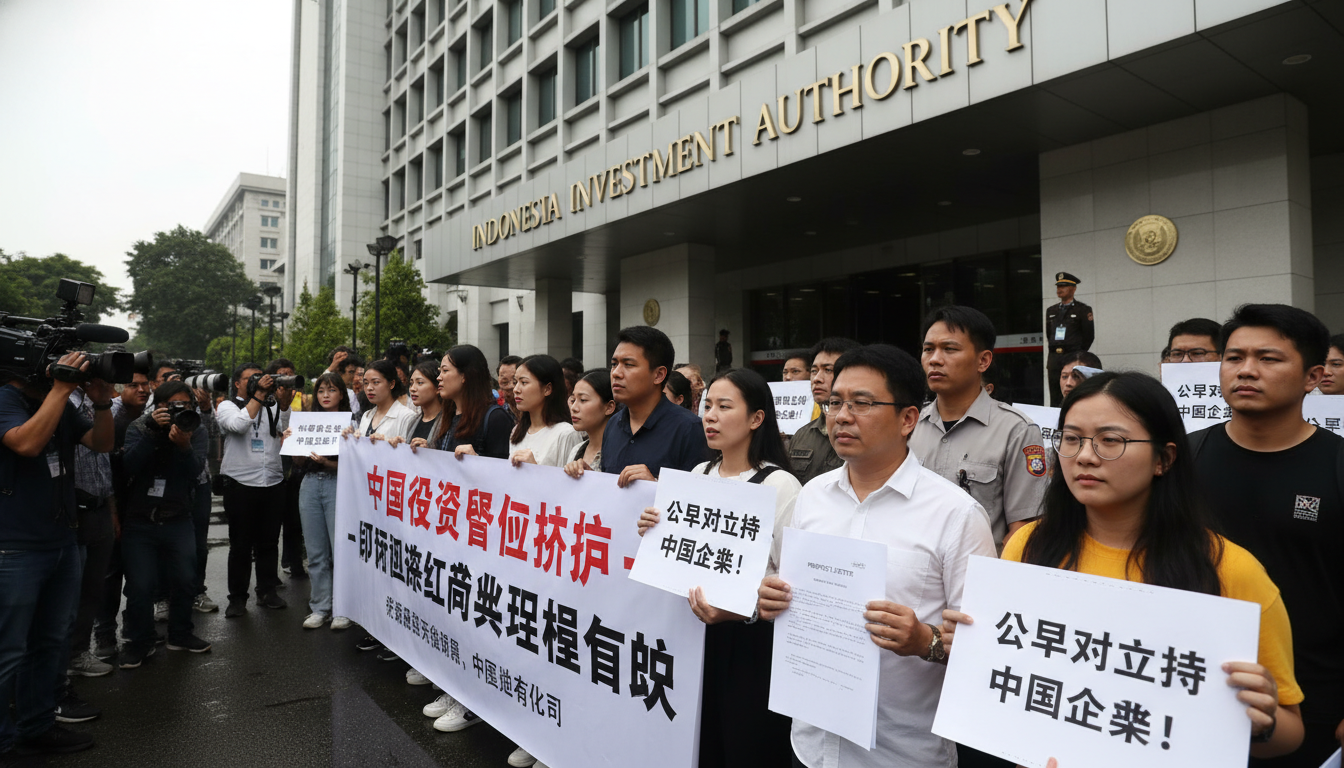
Chinese lobby protest and Western warnings deepen investor concerns about the business climate in Indonesia
Chinese business lobby’s protest to President Prabowo and Western industry warnings highlight investor concern about the business climate in Indonesia.
A major Chinese business lobby has sent a formal protest letter to President Prabowo Subianto, escalating scrutiny of the business climate in Indonesia as foreign investors voice unease. The letter, delivered to the presidential office, joins recent statements from Western industry groups that say many sectors are facing "a lot of difficulties." The developments come amid high-profile enforcement actions, including a May 13 ceremony in which authorities handed over $579 million in fines tied to alleged environmental and regulatory breaches.
Chinese Lobby Group Sends Protest Letter
The protest from the Chinese business group centers on what it describes as sudden regulatory shifts and obstacles to ongoing projects, according to business community accounts. The letter urges direct engagement with Jakarta to resolve outstanding disputes and to clarify rules that foreign firms say have become unpredictable.
Lobby representatives told officials they were concerned about the cumulative effect of enforcement measures and policy changes on existing investments. While details of contractual complaints were not publicly released, the intervention signals that large-scale Chinese commercial interests are increasingly prepared to press political channels for remedies.
Western Industry Groups Say Sectors Face "A Lot of Difficulties"
Separately, Western industry associations have publicly warned that multiple sectors in Indonesia are experiencing operational and administrative hurdles. Those groups say the challenges range from permitting delays to legal uncertainty, and that these issues are weighing on decisions by multinational companies.
The Western warnings amplify the message contained in the Chinese protest and suggest that investor apprehension is not limited to a single country’s private sector. Trade associations and business chambers have urged clearer guidance from regulators to prevent further erosion of confidence.
Forestry Fines and a High-Profile Handover on May 13
A prominent event in recent weeks was a May 13 ceremony in which the forestry task force presented $579 million collected in fines from companies accused of environmental and other alleged violations. The transfer was publicly staged by the presidential office as part of a broader enforcement campaign to hold firms accountable for compliance breaches.
Officials described the funds as restitution for environmental damage and other alleged offenses, framing the action as part of an effort to enforce laws more rigorously. Business groups warned, however, that the size and pace of such penalties may unsettle investors if enforcement is perceived as inconsistent or retroactive.
Investor Reaction: Caution and Reassessment of Projects
Market participants and corporate counsel say the combination of protest letters and large fines has prompted many companies to temporarily reassess investment timetables. Some executives are reportedly pausing greenfield projects or conditioning expansion plans on firmer legal guarantees and improved regulatory clarity.
Analysts warn that a prolonged period of uncertainty could slow foreign direct investment flows and complicate Indonesia’s ambitions to attract higher-value manufacturing and clean-energy projects. For now, investors appear to be seeking more explicit commitments from authorities on permit processes, dispute resolution and the treatment of foreign capital.
Government Messaging and Administrative Priorities
The presidential office has highlighted enforcement actions as evidence of a commitment to the rule of law and environmental protection, portraying penalties as necessary steps to correct past abuses. Government officials have also said they want to ensure that Indonesian natural resources and communities benefit from corporate activity.
At the same time, Jakarta faces the practical task of balancing enforcement with the need to sustain investor confidence. Officials have signaled openness to dialogue with business representatives, but the contours of any administrative review or procedural reform remain under discussion.
Sectoral Impact and Diplomatic Implications
The dispute has rippled across sectors with heavy foreign participation, including forestry, mining, infrastructure and manufacturing. Companies with long-term supply chain exposure in Indonesia may press home governments and trade partners to seek clearer protections and consultation mechanisms.
Diplomatically, the episode tests Jakarta’s relations with major economic partners. Both Chinese and Western commercial appeals indicate that international stakeholders expect transparent channels for resolving commercial grievances without undermining regulatory objectives.
Looking ahead, the trajectory of investor confidence in Indonesia will hinge on whether authorities can pair firm enforcement with predictable, transparent rules and responsive dispute-resolution mechanisms. Business groups are calling for clearer guidelines and structured engagement to prevent ad hoc outcomes and restore the confidence of international investors.
Officials and industry representatives say upcoming meetings between government ministries and foreign chambers will be closely watched, as they may reveal whether Jakarta intends to recalibrate enforcement practices or to tighten regulatory oversight further.
Investor decisions over the coming months will reflect the degree to which policy signals and administrative conduct reduce perceived risk and improve predictability in the business climate in Indonesia.

