
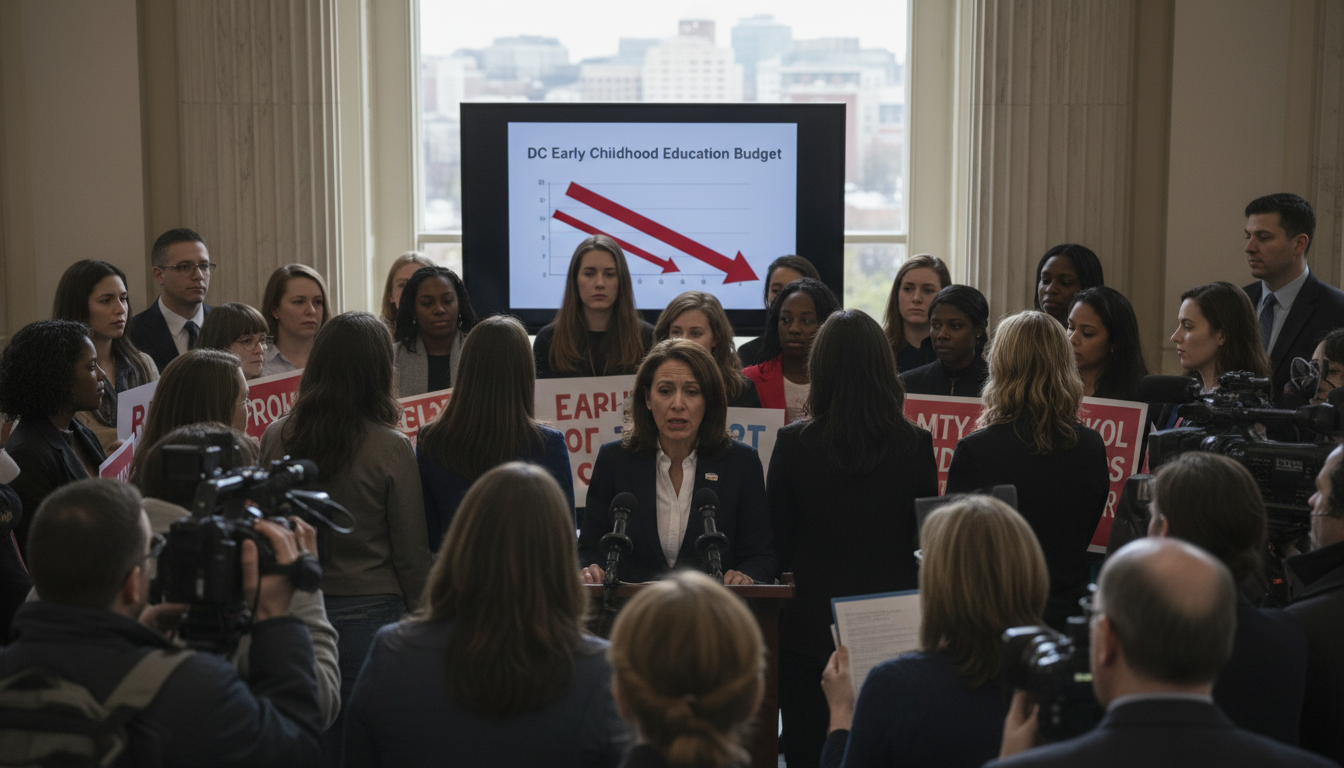
D.C. pay equity fund under threat in Bowser budget, imperiling early educator wages
Bowser’s 2026 budget proposes cutting the D.C. pay equity fund, risking raises for 3,300 early educators and threatening child care access and stability.
The city’s proposed 2026 budget would eliminate the D.C. pay equity fund, placing raises for roughly 3,300 early childhood educators in jeopardy and prompting urgent pushback from providers, parents and council members. The fund, enacted in 2022 to raise teacher pay by $7,000 to $25,000 depending on credentials, has become central to Washington’s strategy to stabilize child care and improve quality. Mayor Muriel E. Bowser defends the proposal as a necessary step to close a reported $1.1 billion budget gap and preserve core services, while opponents say the cut risks shrinking child care supply and undermining workforce retention.
Mayor frames cut as fiscal necessity
Bowser has presented the elimination of the pay equity fund as part of a broader effort to balance the city’s books amid what her administration describes as difficult economic constraints. Officials argue the fund’s cost nearly doubled within two years and that funds must be prioritized for mandatory services such as Medicaid. The mayor’s office set aside $12 million to maintain health care for child care workers and proposed $94 million for child care subsidies, but said those measures do not remove the need to weigh the pay equity fund’s sustainability.
City officials also note that a portion of the fund’s spending — they report about $7.6 million this fiscal year — benefited providers that do not participate in the city’s subsidy program. The administration has questioned whether the fund has directly increased overall child care capacity, and said further scrutiny is needed before committing long-term funding.
Program transformed wages and retention, advocates say
Supporters of the D.C. pay equity fund say it has been transformative for the child care workforce and for program quality across the District. Before the fund, average annual pay at day care centers was reported at about $36,000; the new stipend structure raised compensation by thousands of dollars for many teachers. Researchers cited by advocates, including studies by national policy groups, have linked the fund to higher-quality classrooms and improved teacher retention.
Center directors say the additional pay allowed staff to make essential life improvements and motivated many to pursue further credentials. Teachers who had considered leaving for higher-paying retail or food-service jobs instead remained in the field, supporters say, reducing turnover and the disruption to families who rely on steady child care.
Council pushback and electoral stakes
The D.C. Council has signaled it will fight to restore funding as budget negotiations proceed. Council Chairman Phil Mendelson emphasized the need to consider not only immediate budget balancing but also longer-term strategies to prevent recurring shortfalls. Other council members, including Christina Henderson, argued the fund was designed to stabilize the market so slots would be available when families return to work, and they criticized framing the initiative solely as income support.
Child care is also a central theme of the mayoral campaign. Top candidates have pledged to protect and expand the pay equity fund and child care subsidies. One candidate outlined plans to increase supply through zoning changes and employer incentives, while another has proposed expanded tax measures to ensure more predictable funding for early childhood programs. The budget debate is likely to become an early test of those campaign commitments.
Service providers warn of closures and wait lists
Operators and advocacy groups say cutting the fund could force centers to reduce hours, lay off staff, or close outright, particularly in programs that serve the city’s most vulnerable families. Coalition leaders presented research indicating strong economic returns from teacher pay increases and warned that a combination of cuts to the pay equity program, subsidy reductions, or lower reimbursement rates could destabilize the sector.
Families already face limited options in a city with high child care costs despite public investments such as free prekindergarten for most 3- and 4-year-olds. Advocates say that while the administration’s subsidy allocation is sizeable, it is insufficient to prevent new wait lists if the pay equity fund is removed and provider capacity shrinks.
Personal stories underscore stakes for workforce
The debate is not abstract for educators on the front lines. One teacher who moved to the District after being paid more in a grocery deli than as a child care teacher in Florida described how the fund enabled her to buy a car, move into a two-bedroom apartment, and return to school. She said the prospect of losing the supplemental pay would prompt her to move back to Florida and possibly leave the profession.
Center directors echoed those concerns, describing staff who took vacations by plane for the first time and families who benefited from more stable classrooms. Administrators serving families that have experienced homelessness or abuse said the higher wages were essential to maintaining qualified teams who could support children with complex needs.
Debate over funding options and next steps
As council members weigh alternatives, arguments have surfaced over how to target funds more efficiently and whether to expand revenue streams for early childhood programs. Some advocates call for predictable, multi-year commitments that would end the annual instability around the pay equity fund, while others urge stricter eligibility rules so dollars are concentrated on providers serving subsidized families. Proposals floated by candidates and advocates include tax changes, employer incentives for onsite child care, and zoning reforms to expand in-home and workplace-based care.
Negotiations at the council level and decisions by city leaders in the coming weeks will determine whether the pay increases remain in place, are restructured, or are phased out. The outcome will affect not only teachers’ paychecks but the availability and quality of child care across the District.
For thousands of early educators and the families who depend on them, the budget debate will be a test of whether the city can balance short-term fiscal pressures with long-term investments in a workforce that supports economic participation and child development.

