
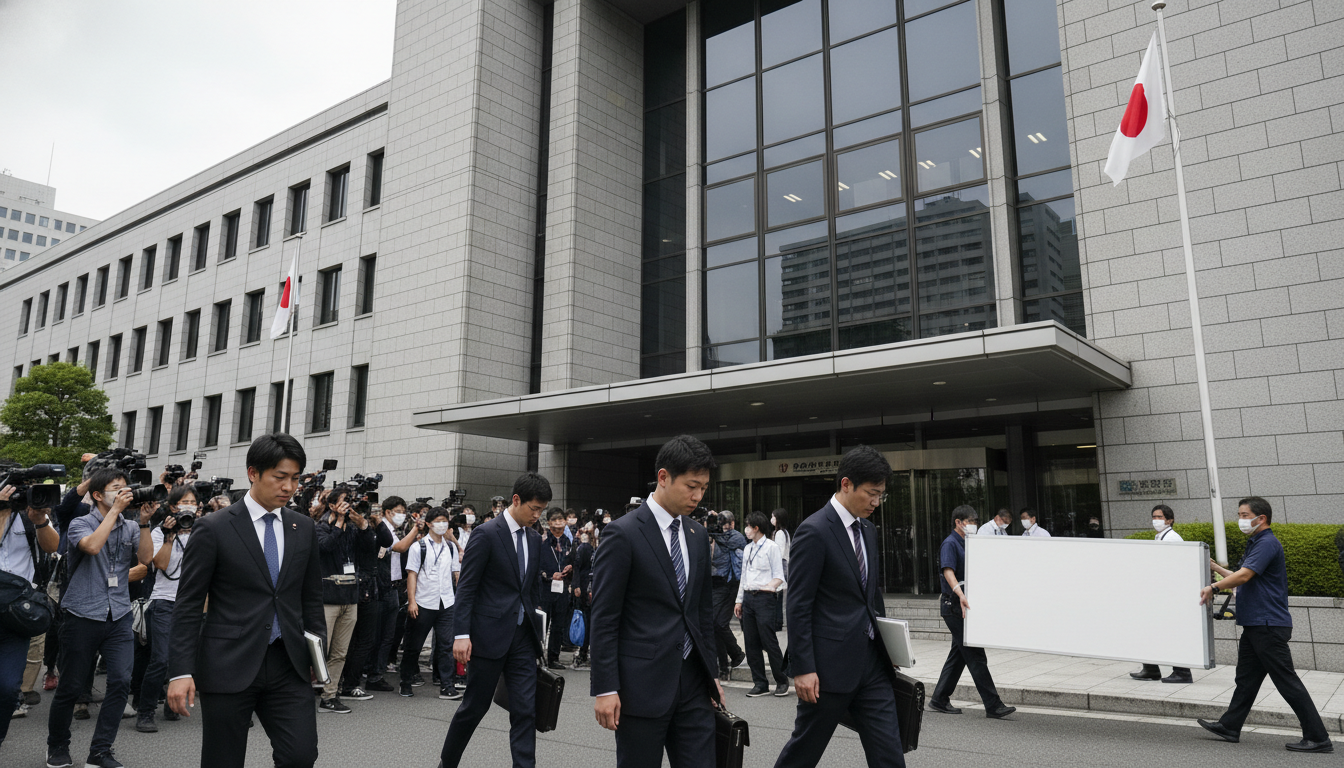
MEXT Finds Violation of Political Neutrality in Education After Henoko Boat Accident
MEXT finds Doshisha Kokusai High School breached political neutrality in education following the Henoko boat overturning that killed two students, prompting expert concern.
The Ministry of Education, Culture, Sports, Science and Technology (MEXT) has determined that the educational content delivered by Doshisha Kokusai High School violated provisions on political neutrality in education after a March 2026 training trip to Henoko, Okinawa, during which two female students died in a boat overturning. The finding, issued amid ongoing safety and accountability questions, has intensified debate over the scope and meaning of political neutrality in education. Waseda University political education specialist Takahiro Kondo warned that conflating safety failures with assessments of neutrality risks chilling teachers and undermining peace education.
MEXT ruling and administrative roles
MEXT concluded that the school’s peace-learning program breached the political neutrality requirement set out in the Education Basic Act, prompting administrative scrutiny of the curriculum and guidance provided during the trip. The decision places responsibility not only on the private school that organized the visit but also raises questions about oversight by Kyoto prefectural education authorities that supervise the institution. Education officials say the ruling is intended to enforce legal standards, while critics argue the determination requires clearer criteria and independent review.
Local government offices and the school have faced inquiries into both instructional content and operational oversight since the accident, and the MEXT finding complicates separate inquiries into safety management. Officials have emphasized that assessing compliance with the Education Basic Act is distinct from criminal or civil investigations of the incident itself. Still, the administrative classification of the school’s program as politically non-neutral may influence subsequent disciplinary or corrective measures.
Details of the Henoko overturning and safety concerns
In March 2026, two small vessels carrying 18 students on a peace-study trip near Henoko in Nago City overturned, killing two female students and injuring 14 others with varying severity. The accident has prompted scrutiny of the trip’s planning, risk assessment, and on-site supervision, with investigators and school officials acknowledging shortcomings in safety management. Families and community members continue to press for transparent accounting of how foreseeable hazards were evaluated and mitigated prior to the voyage.
Experts and investigators emphasize that safety lapses and pedagogical content are separate axes of accountability. While the loss of life has rightly focused attention on operational failures, educators and legal scholars caution that using a fatal accident primarily as evidence of political partiality risks obscuring the immediate, remedial actions needed to prevent future tragedies. The distinction between ensuring student safety and policing curricular perspective remains central to public debate.
Academic perspective: Kondo’s concerns about neutrality judgments
Professor Takahiro Kondo of Waseda University, a specialist in political education, told reporters that judgments about political neutrality are inherently fraught because they often rest on observers’ subjective views of what counts as acceptable perspective. He argued that when administrative bodies or local governments with vested interests set the standards for neutrality, the process becomes self-referential and potentially arbitrary. Kondo warned that such an approach can permit politically motivated enforcement and constrain legitimate classroom discussion.
Kondo also stressed the danger of a chilling effect on teachers who may avoid complex or contested topics out of fear of administrative sanction. He said that narrowing educators’ ability to engage students on issues of peace and democracy would undermine an important civic function of schooling, especially when lessons aim to foster critical thinking and historical understanding. His analysis calls for procedural safeguards to prevent neutrality rules from being applied in ways that silence educational inquiry.
Definitional and legal challenges in applying neutrality rules
Determining whether a lesson or activity violates political neutrality poses legal and practical challenges because the concept lacks a single, objective standard. The Education Basic Act mandates political neutrality, but it leaves room for interpretation about what constitutes advocacy versus education. Courts and policymakers have historically grappled with balancing the state’s interest in neutrality against teachers’ academic freedom and schools’ mission to educate informed citizens.
Observers note that the ambiguity allows for wide variance in enforcement across regions and institutions, increasing the likelihood that assessments reflect local political climates rather than consistent legal principles. This inconsistency creates uncertainty for schools planning fieldwork or addressing contemporary public issues, and it fuels disputes about whether civic education that engages with contested sites—such as Henoko—should be treated as inquiry or as advocacy.
Proposals for clearer standards and independent review
Scholars and education advocates responding to the MEXT ruling propose several reforms to reduce arbitrariness and protect meaningful civic education. Suggestions include establishing independent review panels composed of legal experts, educators, and civic scholars to evaluate contested cases, creating transparent criteria for differentiating advocacy from education, and reinforcing protections for teachers who conduct balanced, evidence-based instruction. These measures aim to ensure that neutrality enforcement does not substitute political preference for pedagogic judgment.
At the same time, experts stress that any reform must not weaken accountability for operational safety during school activities. Strengthening risk-assessment protocols, clarifying lines of administrative oversight for off-campus programs, and ensuring rapid, independent reviews of accidents are practical steps that can reduce harm without constraining curricular freedom. Combining improved safety governance with clearer neutrality standards could help restore trust among families, schools, and authorities.
The MEXT decision in the wake of the Henoko tragedy has placed the contested phrase "political neutrality in education" at the center of a national conversation about the role of schools in teaching about contested history and public policy. As debates continue, educators, legal experts and policymakers face the urgent task of defining standards that protect students’ safety, uphold legal obligations, and preserve the capacity of schools to foster informed civic engagement.

