
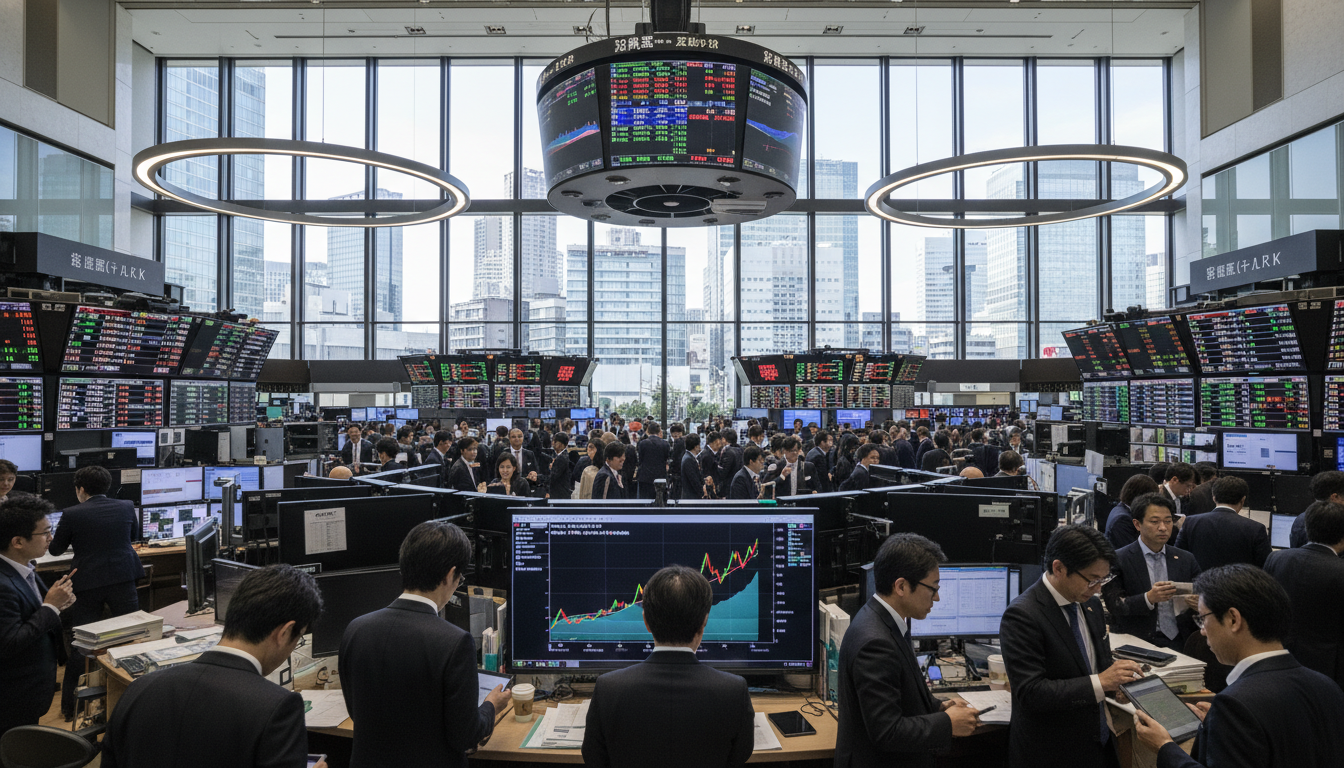
Trading Value of Japanese Blue Chip Stocks Doubles as Foreign and Retail Flows Boost Liquidity
Average trading value of Japanese blue chip stocks has doubled in 12 months, fueled by foreign capital and retail short-term trades, lifting market liquidity.
TOKYO — The average trading value of Japanese blue chip stocks has doubled over the past year, driven by a substantial influx of foreign capital and a marked rise in short-term trades by small domestic investors. The shift has pushed turnover and liquidity across major Tokyo listings to levels not seen in recent years, reshaping intraday dynamics on the exchange. Market participants said the combination of international flows and retail activity is changing price discovery and execution patterns for large-cap names.
Trading Value Doubles in 12 Months
The headline doubling of average trading value underscores a rapid change in market depth and participation across Tokyo’s benchmark listings. Institutional allocators overseas have increased exposure to Japan while domestic retail brokers report a spike in day trading and short-holding patterns. Together, these forces have increased the volume of hands exchanging large-cap stocks and compressed bid-ask spreads in many active names.
Foreign Investment Surge
Foreign investors have lifted allocations to Japanese equities amid valuations that blend corporate governance gains with attractive dividend yields, according to market observers. Increasingly frequent cross-border flows have been visible in order books for leading exporters and heavyweight financials, elevating turnover in those sectors. Brokers say the mix of long-only funds and momentum-driven global strategies has translated into steadier one-way flows at times, amplifying trading value when combined with domestic activity.
Retail Short-term Trading Escalates
Small investors have contributed disproportionately to the uptick in short-term trades, often using online platforms that facilitate rapid order placement and execution. The growth in retail activity has altered intraday patterns, with spikes in trade count and execution velocity around economic releases and corporate news. Such behavior has increased liquidity at the top of the market but also heightened sensitivity to headline flows, producing sharper intraday swings in certain names.
Liquidity Gains and Volatility Trade-offs
Higher average trading values have generally improved market liquidity, making it easier for larger participants to transact without carrying extended execution risk. However, market makers and risk desks caution that increased turnover driven by short-term retail flows can also raise sudden liquidity vacuums during stress periods. The net effect has been a market that feels deeper in normal conditions but remains exposed to episodic volatility when correlated trades or stop-driven flows occur.
Brokerage and Exchange Responses
Brokerages and the Tokyo Stock Exchange have adapted to the changing profile by enhancing trading infrastructure and order-routing capabilities to handle greater message traffic. Some firms report ramping up pre-trade risk controls and expanding algorithmic execution offerings to meet demand from institutional customers seeking to navigate a busier market. Exchanges are also monitoring market microstructure metrics to ensure orderly trading as average value and turnover continue to rise.
Implications for Investors and Corporates
For long-term investors, improved liquidity can lower transaction costs and broaden the investor base for major Japanese companies, potentially supporting valuation re-rating over time. Corporates may find it easier to tap equity markets and engage with a more diverse shareholder mix, while activist attention could increase as share turnover rises. At the same time, short-term traders and portfolio managers must recalibrate execution strategies to account for faster intraday dynamics and the greater role of retail-driven flows.
Looking ahead, market participants expect the elevated trading values to influence how capital is allocated within Japan and how large-cap stocks are traded internationally. While the doubling of average trading value signals deeper participation and renewed interest in Japanese blue chip stocks, it also places a premium on robust execution, risk controls, and market oversight to sustain orderly conditions.

